
Clifton, VA Real Estate: The Definitive Guide to the Historic Victorian Town, 5-Acre Occoquan Conservation Estates & Equestrian Acreage
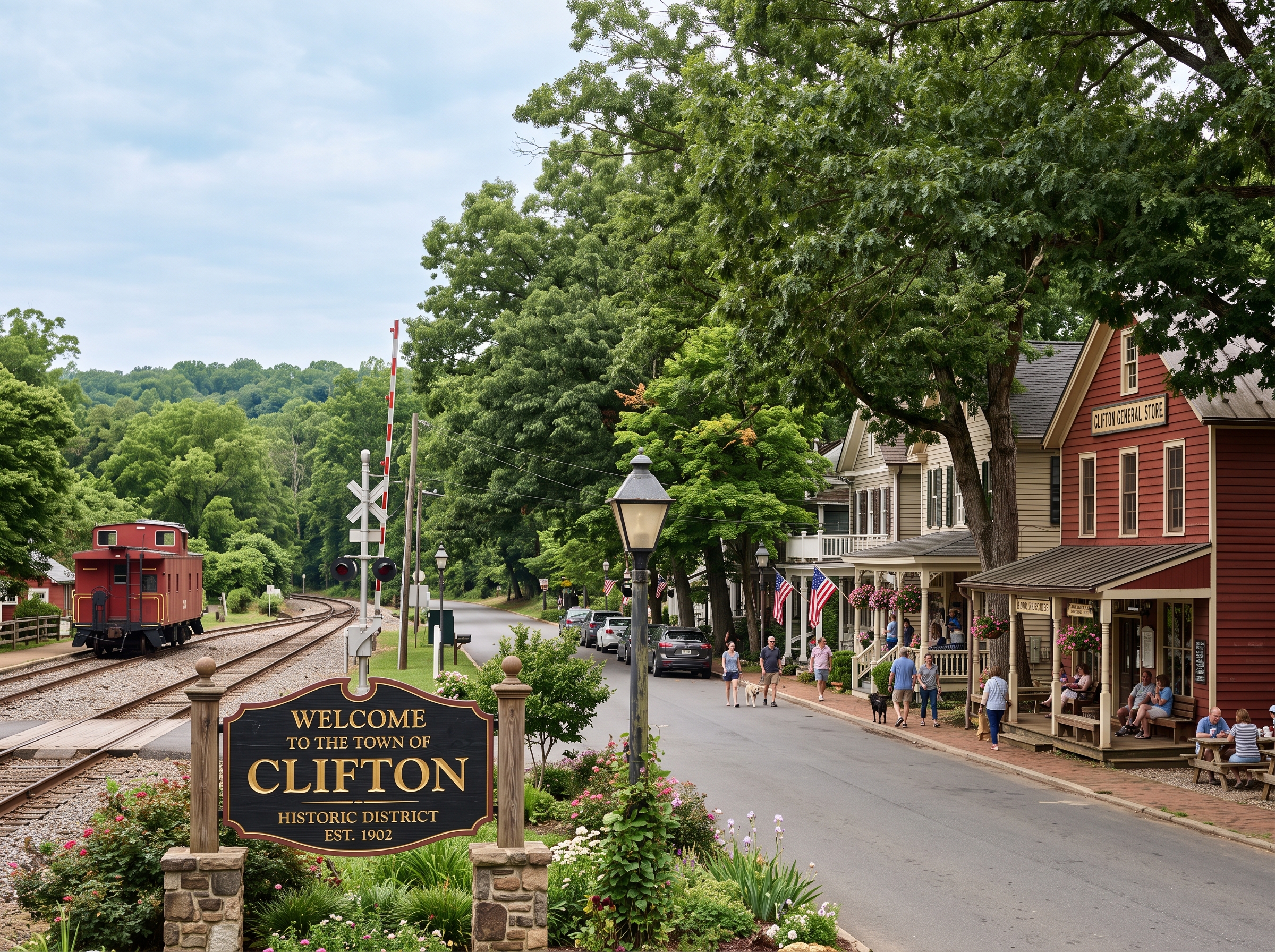
1. Executive Summary & Foundational Takeaways
Clifton, Virginia, represents the undisputed crown jewel of historic small-town charm, low-density pastoral living, and master environmental conservation in Fairfax County. Centered primarily within postal ZIP code 22024 in the county's southwestern quadrant, Clifton is distinguished by a rare legal and spatial duality: an authentic, incorporated historic Victorian town chartered in 1902, enveloped by expansive, rolling woodlands protected by the landmark 1982 Occoquan Watershed 5-acre conservation downzoning.
The Town of Clifton is an independent municipality spanning roughly 0.25 square miles, governed by its own Mayor, Town Council, and Historic Preservation Commission. The entire town is listed on the National Register of Historic Places, preserving a picturesque streetscape of late nineteenth-century Queen Anne, Italianate, and Carpenter Gothic clapboard homes.
Surrounding the historic town is greater unincorporated Clifton, governed directly by the Fairfax County Board of Supervisors within the Springfield Magisterial District. Here, Fairfax County's R-C (Residential Conservation) zoning mandates a minimum lot size of five contiguous acres per home. This landmark planning policy preserves pristine private estates, championship equestrian facilities, dense hardwood forest buffers, and the regional Occoquan drinking water reservoir, all located within a convenient 30-mile commute of Washington, D.C.
The Six Structural Pillars of Clifton Real Estate
- The 1982 Occoquan 5-Acre Downzoning Mandate. Over 41,000 acres in the Occoquan basin zoned R-C, permanently barring suburban tract subdivisions and guaranteeing five-acre minimum lot sizes for custom estates.
- Incorporated Historic Victorian Village. The oldest incorporated town in Fairfax County (1902), listed on the National Register of Historic Places with vibrant Main Street dining and preserved late 19th-century architecture.
- Premier Northern Virginia Equestrian Haven. Right-to-farm horse keeping provisions permitting private barns, riding arenas, fenced paddocks, and direct access to miles of public and private bridle trails.
- Universal Well & Septic Infrastructure. Complete reliance on private drinking water wells and engineered on-site septic drainfields, establishing a structural barrier against dense rezoning.
- Celebrated Public School Pyramids. Anchored by the beloved, community-centric Clifton Elementary School, feeding into the high-achieving Centreville High School and Robinson Secondary pyramids.
- Bull Run & Occoquan Natural Buffers. Hemlock Overlook Regional Park, Bull Run Regional Park, and the 17.5-mile Bull Run Occoquan Trail shielding the community from outer-suburban sprawl.
2. Comprehensive Historical Evolution
Clifton's heritage is deeply intertwined with the development of the American railroad system, the tactical campaigns of the Civil War, late nineteenth-century resort society, and twentieth-century environmental law.
Railroad Origins & The Civil War (1860s)
In the mid-nineteenth century, the area was known as Devereux Station, establishing a vital water stop, depot, and telegraph station along the Orange and Alexandria Railroad (O&A RR). During the American Civil War, the station served as a critical logistical supply depot for Union armies operating in northern Virginia, defended by Federal cavalry and artillery fortifications guarding the wooden railroad bridge over Popes Head Creek against Confederate raids led by Colonel John S. Mosby.
Gilded Age Resort Era & Incorporation (1870s–1902)
Following the war, developer Harrison G. Otis acquired extensive acreage around the depot, surveying a formal town street grid and renaming the settlement Clifton. During the 1880s and 1890s, Clifton emerged as an elite summer resort for wealthy Washingtonians, federal statesmen, and foreign diplomats. Visitors escaped the summer humidity of the capital via express train to drink from local mineral springs and lodge at the luxurious Clifton Hotel.
In 1902, the Virginia General Assembly formally granted Clifton its municipal charter, establishing it as the first incorporated town in Fairfax County. In 1985, the entire town boundary was designated on the National Register of Historic Places, preserving its authentic Victorian streetscape for future generations.
The 1982 Occoquan Downzoning Watershed
In July 1982, the Fairfax County Board of Supervisors made one of the most consequential land-use decisions in modern American zoning history. To protect the Occoquan Reservoir—the primary source of drinking water for more than one million Northern Virginia residents—from catastrophic urban stormwater runoff and siltation, the Board downzoned 41,000 acres in the Occoquan basin to R-C (Residential Conservation).
This bold action mandated that any future residential construction require a minimum lot size of five acres per single-family dwelling. Despite extensive legal challenges from speculative development syndicates, Virginia courts upheld the county's police power to safeguard public drinking water. The decision permanently halted tract suburbanization across greater Clifton, establishing the five-acre wooded estate landscape that defines the community today.
3. The Town of Clifton: Historic Village Core
The incorporated Town of Clifton represents a peaceful, pedestrian-friendly contrast to modern suburban living. Governing roughly 300 residents across a quarter-square-mile grid, the town retains its authentic nineteenth-century scale and architectural rhythm.
Historic Preservation & Architectural Review
Every building within town limits is protected by the Town of Clifton Historic Preservation Commission (ARB). Homeowners adhere to strict guidelines governing exterior alterations, historic wood clapboard siding, authentic multi-pane fenestration, paint palettes, and standing-seam metal roofs.
Main Street Cultural & Culinary Anchors
Clifton's picturesque Main Street serves as a vibrant culinary and gathering destination for Northern Virginia:
- Trummer's on Main: An internationally recognized fine-dining destination housed in a historic multi-level building, celebrated for modern American culinary excellence and an extensive wine cellar.
- The Main Street Pub: A beloved historic tavern operating within the historic 1930s general store building, providing community gathering spaces.
- Clifton Cafe & Peterson's Ice Cream Depot: Quaint local establishments offering outdoor patio seating, artisan coffees, and artisanal ice cream beneath mature canopy trees.
4. Greater Unincorporated Clifton: 5-Acre Conservation Estates
Beyond the town boundaries lies the expansive sanctuary of greater unincorporated Clifton. Here, properties occupy generous five- to twenty-acre parcels nestled deep in dense stands of virgin hardwood, rolling meadows, and secluded stream valleys.
Private Luxury Enclaves
Neighborhoods such as Balmoral, Clifton Crest, Twin Beech, and the scenic corridors along Popes Head Road and Chapel Road feature grand custom brick, stone, and cedar manor homes. Built predominantly from the 1980s through the present, these residences boast 6,000 to 12,000+ square feet of finished living space, circular paver motor courts, multi-car garages, finished lower-level walkout terraces, custom swimming pools, and dedicated private tennis and pickleball courts.
Equestrian Estates & Hobby Farms
Clifton is renowned as Northern Virginia's leading equestrian address. Multi-acre properties frequently feature professional multi-stall horse barns, hot/cold wash stalls, climate-controlled tack rooms, fenced riding arenas, and post-and-rail turnout pastures, with many properties providing direct access to public bridle trails.
5. Housing Stock Typologies & Architectural Stratification
Clifton's real estate market offers four prominent architectural housing typologies:
1. Historic Victorian Village Residences
Located within the incorporated town boundary, these homes date from the 1870s to 1910s and showcase authentic Victorian, Queen Anne, Italianate, and Carpenter Gothic architecture. Featuring wrap-around verandas, decorative turned porch posts, gingerbread trim, multi-pane double-hung windows, and high ceilings, these properties sit on charming village lots within easy walking distance of Main Street shops and dining.
2. 5-Acre Custom Stone & Brick Luxury Manors
The dominant architectural tier across greater Clifton: substantial, custom-built residences constructed between 1985 and the modern era. Sited on 5 to 10 wooded acres, these homes feature natural fieldstone and brick exteriors, grand two-story foyers, commercial-grade chef kitchens, spa-like primary bathroom suites, and resort-level outdoor living environments.
3. Modern Farmhouses & Contemporary Infill
A growing contemporary tier where custom builders construct modern farmhouse and transitional luxury residences featuring board-and-batten siding, black architectural windows, open-concept floor plans, and smart-home integrated energy systems.
4. Equestrian Ranches & Agricultural Holdings
Parcels of 10 to 25+ acres dedicated to equestrian sport, hobby farming, or private forest conservation, complete with secondary guest cottages, equipment barns, and extensive equestrian facilities.
6. Zoning, Land-Use Governance & The R-C Mandate
Land use in Clifton is governed under two distinct regulatory structures:
Fairfax County R-C (Residential Conservation) Zoning
Throughout unincorporated Clifton, the county's R-C district establishes a strict minimum lot size of five acres (217,800 square feet) per residential dwelling. Subdividing parcels below this statutory threshold is strictly prohibited by law. In addition, the code enforces generous setbacks, limits maximum lot coverage, and mandates tree canopy retention to maintain the rural viewshed and protect the watershed.
Town of Clifton Municipal Zoning & ARB
Within the incorporated town, land use is governed by the Town of Clifton Zoning Ordinance. The town operates distinct Historic Residential (HR) and Historic Commercial (HC) districts, with strict Historic Preservation Commission oversight evaluating architectural massing, exterior materials, roof pitches, and signage.
Private Well & Engineered Septic Infrastructure
Neither the incorporated town nor the surrounding R-C conservation district is served by public municipal sewer mains. All residences rely on private drinking water wells and state-approved engineered on-site sewage disposal systems (septic drainfields). The requirement for extensive primary and reserve drainfield absorption areas acts as an immutable physical barrier preventing dense residential development.
7. Environmental & Watershed Protections: The Occoquan Reservoir
Clifton serves as the primary environmental filter for the Occoquan Reservoir, a critical freshwater reservoir supplying drinking water to Fairfax and Prince William Counties.
Under the Chesapeake Bay Preservation Act, statutory 100-foot Resource Protection Areas (RPAs) border all perennial waterways, including Popes Head Creek, Johnny Moore Creek, and Bull Run. Within these RPA corridors, indigenous tree clearing and ground disturbance are tightly restricted to prevent nonpoint-source sediment runoff and protect stream bank integrity.
8. Multimodal Transportation & Commuter Arteries
While Clifton feels like an idyllic pastoral retreat, it provides rapid connectivity to Northern Virginia's key economic arteries:
- Scenic Arterial Roadways: Clifton Road (Route 645), Chapel Road, Popes Head Road, and Compton Road wind through picturesque forested terrain, providing swift access north to Route 29 (Lee Highway), Interstate 66, and the Fairfax County Parkway (Route 286).
- Route 28 & Dulles Tech Corridor Access: Direct western connections link Clifton to Route 28 (Sully Road), allowing an easy commute to Dulles International Airport, Reston, and the Dulles Technology Corridor.
- Virginia Railway Express (VRE) Commuter Rail: Three VRE commuter rail stations—Burke Centre Station and Rolling Road Station on the Manassas Line, and Manassas Park Station—are located within a 10-to-15 minute drive, providing direct train transit to Alexandria, Crystal City, and Washington Union Station.
9. Public Education & Academic Pyramids
Clifton is served by the prestigious Fairfax County Public Schools (FCPS) system, celebrated for its high academic standards and collegiate admissions success:
Clifton Elementary School
Located on Clifton Road, Clifton Elementary School is one of the most cherished community schools in Fairfax County. Boasting small student-to-teacher ratios, exceptional state assessment scores, active parent-teacher involvement, and an intimate small-town culture, the school anchors community life for local families.
Secondary Educational Pyramids
Depending on precise boundary coordinates, middle and high school students advance through two acclaimed educational pyramids:
- Centreville High School Pyramid: Students attend Liberty Middle School before advancing to Centreville High School, known for its rigorous Advanced Placement (AP) curricula, competitive STEM academies, and championship athletic programs.
- Robinson Secondary School Pyramid: Bordering sections of eastern Clifton feed into Robinson Secondary School, an acclaimed 7–12 campus offering the prestigious International Baccalaureate (IB) World School Diploma Programme.
10. Parks, Recreation, Equestrian & Cultural Pursuits
Clifton offers an abundance of outdoor recreation and cultural events:
- Bull Run Occoquan Trail (BROT): A 17.5-mile scenic natural trail winding along Bull Run and the Occoquan Reservoir, offering rugged hiking, trail running, and equestrian access through protected wilderness.
- Hemlock Overlook Regional Park: Spanning 230 wooded acres on the banks of Bull Run, featuring historical remnants of Civil War encampments, challenge courses, and nature trails.
- Paradise Springs Winery: The first commercial winery in Fairfax County, situated on the forested edge of Clifton, offering wine tastings, tours, and outdoor grounds beneath towering hardwood trees.
- Clifton Day Festival: Held annually on the second Sunday of October, this beloved historic street fair closes Main Street to automotive traffic, drawing tens of thousands of visitors for artisan crafts, antique exhibits, live music, and a special passenger stop by the Virginia Railway Express train in the town center.
11. Equestrian Culture & Riding Networks
Horse ownership is deeply embedded in Clifton's cultural identity. Under Fairfax County R-C zoning, keeping horses is permitted by right on qualifying acreage (requiring two acres for the first horse and additional land per additional horse). Numerous private farms, boarding stables, and training academies dot the landscape. A network of dedicated equestrian easements and rural road shoulders allows riders to travel across the countryside, connecting with the Bull Run trail network.
12. Comprehensive Submarket Matrix Table
The matrix below outlines the primary residential submarkets across Clifton, contrasting architectural styles, lot sizes, utilities, and governance structures:
| Submarket / Sector | Primary Architectural Typology | Dominant Construction Era | Density & Lot Size Profile | Water & Wastewater Infrastructure | Governance & Tax Framework |
|---|---|---|---|---|---|
| Historic Town of Clifton | Victorian, Queen Anne, Italianate, Carpenter Gothic | 1870s – 1915 (Historic Restorations) | Village Density; 0.25 to 0.75 Acres | Private Well & Engineered Septic Systems | Incorporated Municipality; Town Tax + County Tax; ARB |
| 5-Acre Custom Luxury Manors | Custom Brick, Stone Manors, Modern Craftsman | 1985 – Contemporary Custom | R-C Conservation; 5.0 to 10.0+ Acres | Private Well & Engineered Septic Systems | Unincorporated Fairfax County; Solely County Tax; Non-HOA / Private Covenants |
| Equestrian & Agricultural Holdings | Custom Country Farmhouses, Equestrian Ranches | 1970s – Present | Very Low Density; 5.0 to 25.0+ Acres | Private Well & Engineered Septic Systems | Unincorporated Fairfax County; Right-to-Farm Equestrian Rights |
| Popes Head & Chapel Road Corridors | Transitional Estates, Modern Farmhouses, Custom Infill | 1990s – Contemporary Custom | R-C Conservation; 5.0 to 8.0 Acres | Private Well & Engineered Septic Systems | Unincorporated Fairfax County; Solely County Tax |
13. Taxation & Civic Governance
Clifton features a clear, dual-layer tax and administrative structure:
Fairfax County Ad Valorem Property Taxation
All real estate across greater Clifton is assessed annually at 100% fair market value by the Fairfax County Department of Tax Administration (DTA) in accordance with Virginia Code Title 58.1. Real estate taxes are billed semi-annually.
Town of Clifton Municipal Levy vs. Unincorporated Autonomy
Property owners residing inside the incorporated Town of Clifton pay a modest municipal town real estate tax in addition to the standard Fairfax County base tax. This municipal revenue funds local town sidewalk maintenance, historic preservation, and community park events. Conversely, property owners in greater unincorporated Clifton pay strictly the Fairfax County base real estate levy, exempt from town taxes, and enjoy complete freedom from suburban HOA dues and architectural restrictions on their private five-acre holdings.
14. 10 Comprehensive Evergreen FAQs
1. What is the difference between the incorporated Town of Clifton and greater Clifton?
The incorporated Town of Clifton is a self-governing historic municipality covering approximately 0.25 square miles with its own Mayor, Town Council, and Architectural Review Board. Residents in the town pay a modest municipal town real estate levy in addition to Fairfax County taxes. Greater Clifton refers to the expansive unincorporated rural-residential area in the Springfield Magisterial District governed directly by Fairfax County, where properties are not subject to town taxes.
2. What is the landmark 1982 Occoquan Watershed 5-acre downzoning (R-C zoning)?
In 1982, the Fairfax County Board of Supervisors enacted landmark conservation legislation downzoning 41,000 acres in the Occoquan Reservoir watershed to R-C (Residential Conservation), mandating a minimum lot size of 5 acres (217,800 square feet) per single-family dwelling. This statutory policy protected the primary regional drinking water supply and permanently preserved Clifton as a pastoral enclave of private custom estates, preventing suburban tract sprawl.
3. What architectural home styles define Clifton real estate?
Clifton features two distinct architectural worlds: within the historic town, meticulously preserved late Victorian, Queen Anne, Italianate, and Carpenter Gothic clapboard homes dating from the 1870s to 1910s; across greater unincorporated Clifton, grand custom brick and stone luxury manors, modern craftsman estates, and sprawling equestrian farmhouses situated on 5-acre to 20-acre wooded parcels.
4. Do homes in Clifton have municipal public water and sewer service?
Most properties throughout greater unincorporated Clifton rely on private drinking water wells and engineered on-site sewage disposal systems (septic drainfields). The absence of public sewer mains across the R-C conservation district is a deliberate planning mechanism that legally and physically reinforces the 5-acre minimum density requirement.
5. Which public schools serve Clifton residents?
Clifton is served by Fairfax County Public Schools (FCPS). Elementary students primarily attend historic Clifton Elementary School (renowned for high academic marks and community involvement) or Union Mill Elementary. Middle and high school students advance through the Centreville High School pyramid (via Liberty Middle School) or the Robinson Secondary School pyramid, depending on exact boundary coordinates.
6. What is the history of the Town of Clifton?
Originally developing around a rail siding on the Orange and Alexandria Railroad during the Civil War, Clifton Station became a fashionable late nineteenth-century summer resort destination for Washington dignitaries and politicians seeking clean country air and mineral springs. In 1902, it was formally incorporated as the first independent town in Fairfax County, and in 1985, the entire town was placed on the National Register of Historic Places.
7. Are equestrian properties and horse keeping permitted in Clifton?
Yes, Clifton is one of Northern Virginia's premier equestrian enclaves. Under Fairfax County R-C zoning, keeping horses is permitted by right on qualifying acreage, typically requiring a minimum of two acres for the first horse and additional land per additional animal. Many properties feature professional barns, fenced riding rings, and direct access to local bridle trails.
8. What parks and natural recreation areas border Clifton?
Clifton is bordered by extensive regional parkland, including Hemlock Overlook Regional Park (challenge courses and Bull Run nature trails), Bull Run Regional Park and the 17.5-mile Bull Run Occoquan Trail, the Webb Sanctuary, and Paradise Springs Winery on the town's forested fringe.
9. What major transportation corridors connect Clifton to regional employment centers?
Scenic two-lane arterial roads—including Clifton Road (Route 645), Chapel Road, Popes Head Road, and Compton Road—connect residents quickly to Route 28 (Sully Road), Route 29 (Lee Highway), Interstate 66, and the Fairfax County Parkway (Route 286). Commuter rail is accessible via the Virginia Railway Express (VRE) stations in Burke Centre, Rolling Road, and Manassas Park.
10. What is "Clifton Day" and how does it reflect community life?
Clifton Day is a famous annual festival held on the second Sunday of October that draws tens of thousands of regional visitors to Main Street. The historic town closes streets to automotive traffic, hosting hundreds of craft artisans, antique vendors, live music, and regional foods, with the Virginia Railway Express train making a special festival passenger stop in the center of town.
15. Legal & Fair Housing Disclaimer
This real estate and community monograph is published strictly for informational, educational, and demographic research purposes. All municipal boundaries, zoning districts, school attendance zones, tax assessments, and conservation codes are derived from official Fairfax County public records, the Town of Clifton municipal records, the Virginia Department of Transportation (VDOT), and the Code of Virginia, and are subject to periodic administrative modification. Prospective purchasers, sellers, and investors must independently examine official property disclosures, deed encumbrances, health department well/septic certifications, and historic preservation ordinances through licensed legal and real estate professionals prior to executing contractual agreements. This publication strictly adheres to Title VIII of the Civil Rights Act of 1968 (The Federal Fair Housing Act) and the Virginia Fair Housing Law, prohibiting discrimination on the basis of race, color, religion, sex, handicap, familial status, elderliness, or national origin.