
Culmore, VA Real Estate: The Definitive Guide to Spatial Morphology, Post-War Architecture, Lake Barcroft Borders, Justice High IB Pyramid & Route 7 Corridor
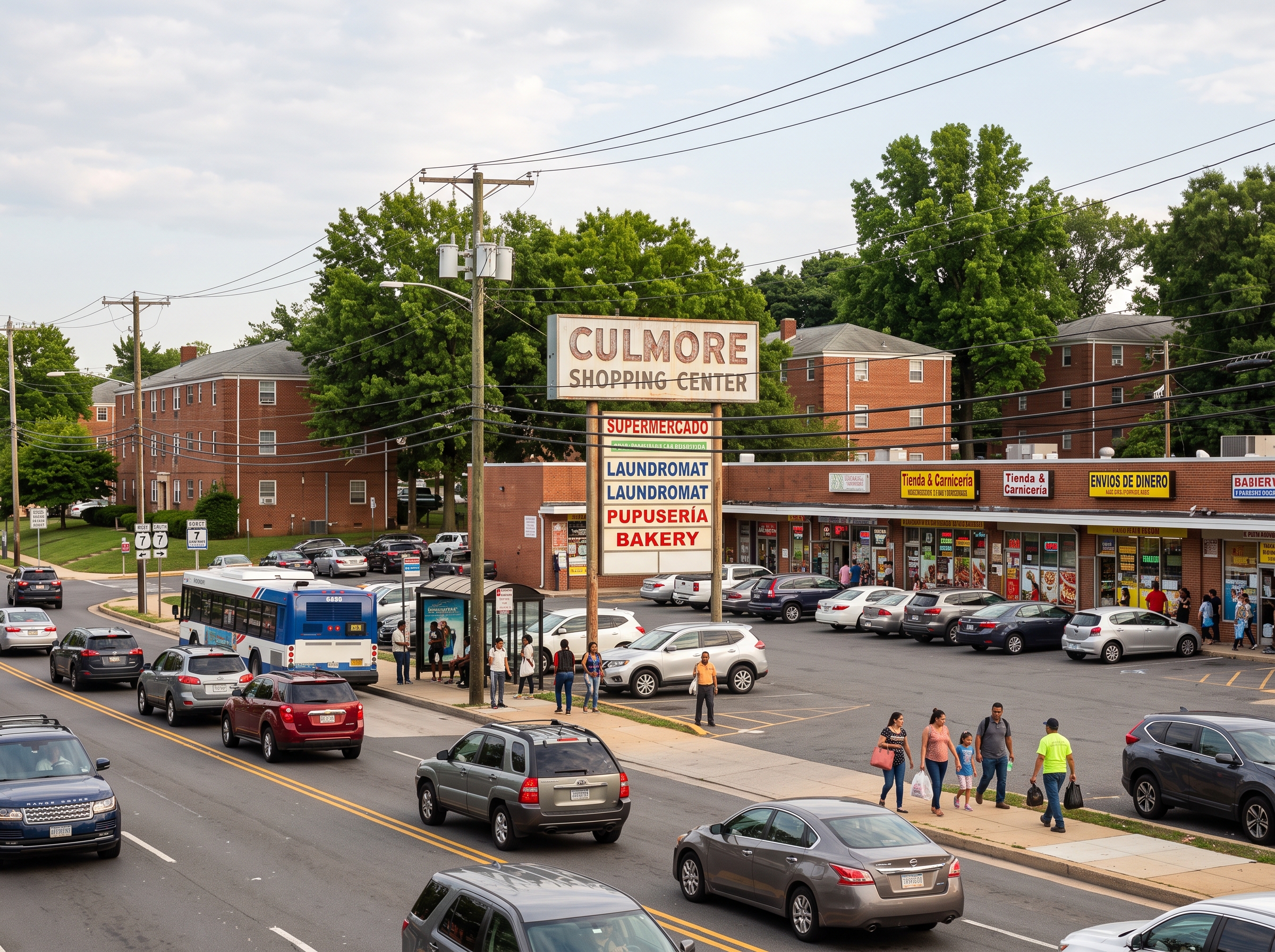
Executive Summary & Essential Community Takeaways
- Strategic Inner-Beltway Crossroads: Situated squarely within Fairfax County's Mason Magisterial District along State Route 7 (Leesburg Pike), Culmore occupies an exceptionally advantageous commuter position, positioned directly between Seven Corners to the north, Baileys Crossroads to the east, and the tranquil wooded perimeter of Lake Barcroft to the south and west.
- Mid-Century Suburban Heritage: Developed during the post-World War II suburban expansion of the late 1940s and 1950s, the community was master-planned around the historic Culmore Shopping Center (opened in 1952) and platted with durable all-brick ramblers, Cape Cods, and garden apartments designed for federal workers, military personnel, and growing families.
- Rich Architectural Diversity & Lake Barcroft Borders: Features an eclectic housing stock encompassing classic 1950s solid brick ramblers on mature quarter-acre wooded parcels, contemporary mid-century custom residences along Lake Barcroft's stream valleys, established multi-family garden communities, and modern executive townhomes.
- Premier FCPS Justice High School Pyramid: Feeds into Fairfax County Public Schools through Glen Forest Elementary School and Bailey's Elementary School for the Arts and Sciences, Glasgow Middle School (delivering the International Baccalaureate Middle Years Programme), and Justice High School (an authorized International Baccalaureate IB World School offering the prestigious IB Diploma Programme).
- Exceptional Multi-Corridor Commuter Mobility: Located less than seven miles from downtown Washington, D.C., with direct arterial connections via Route 7, Route 50 (Arlington Boulevard), and Columbia Pike leading straight to Rosslyn, the Pentagon, and Amazon HQ2 at National Landing, alongside proximity to East Falls Church Metrorail Station (Orange & Silver Lines).
- Dynamic Commercial & Cultural Epicenter: Home to a thriving, culturally rich culinary and retail scene centered on the historic Culmore Shopping Center, complemented by comprehensive regional shopping at Seven Corners Center (Target, Home Depot) and Baileys Crossroads (Trader Joe's, REI).
1. Spatial Morphology, Crossroads Geography & Regional Setting
Culmore is a distinct, historic unincorporated community located within the inner-Beltway territory of eastern Fairfax County, Virginia. Situated in the Mason Magisterial District and utilizing the Falls Church postal designation (ZIP code 22041) for postal delivery, Culmore is entirely under the governing jurisdiction of Fairfax County.
The spatial morphology of Culmore is anchored along State Route 7 (Leesburg Pike), one of Virginia's most historic transportation arteries connecting Alexandria to the Blue Ridge Mountains. The community occupies an undulating geographic plateau in the coastal plain-piedmont transition zone, flanked by several prominent regional submarkets:
- Northern Boundary: Bordered by the major regional commercial interchange of Seven Corners, where Route 7 intersects with Route 50 (Arlington Boulevard) and Wilson Boulevard.
- Eastern Boundary: Transitions directly into the commercial and residential corridors of Baileys Crossroads and the high-rise district of Skyline along Columbia Pike.
- Southern & Western Boundary: Directly abuts the tranquil, heavily forested residential sanctuary of Lake Barcroft, characterized by mature hardwood canopies, winding natural lanes, and stream valleys feeding Holmes Run and Tripps Run.
The natural topography of Culmore slopes gently from the elevated commercial ridgeline along Route 7 downward into quiet, protected residential hollows and wooded stream basins. This micro-topography provides a striking physical contrast: while the Route 7 corridor bustles with urban vitality, retail centers, and transit connections, the interior residential lanes just blocks away reveal peaceful, tree-lined suburban enclaves characterized by sprawling lawns, mature oaks, and minimal cut-through traffic.
2. Historical Lineage: Agrarian Turnpike to Post-War Suburban Hub
The historical lineage of Culmore spans two centuries of Virginia transportation and suburban evolution. Throughout the nineteenth and early twentieth centuries, the area consisted of pastoral dairy farms, fruit orchards, and dense timberland traversed by the historic Middle Turnpike (which evolved into modern Leesburg Pike / Route 7). Farm wagons and horse-drawn carriages utilized the road to transport agricultural produce from the farms of Loudoun and western Fairfax County into the historic port city of Alexandria.
The pivotal transition occurred following the conclusion of World War II. The monumental post-war expansion of the federal government, the Department of Defense at the Pentagon, and corporate commerce across the National Capital Region created an unprecedented surge in demand for quality suburban housing within close commuting distance of Washington, D.C.
In the late 1940s and early 1950s, prominent regional builders surveyed the agricultural tracts along Route 7. In 1952, developers opened the Culmore Shopping Center on Leesburg Pike. Conceived as a modern suburban retail hub, the center provided local residents with grocery stores, hardware shops, family pharmacies, and neighborhood dining, anchoring the burgeoning post-war community. Surrounding streets—such as Argyle Drive, Knollwood Drive, Glen Carlyn Road, and Peace Valley Lane—were systematically platted with solid red brick ramblers and Cape Cods designed to provide enduring homeownership for returning military veterans and young families.
Over subsequent decades, Culmore experienced a dynamic cultural evolution. Attracted by attainable housing, central inner-Beltway transit access, and top-tier Fairfax County public schools, families from around the world established roots in the community. Today, Culmore stands celebrated as one of Northern Virginia's most culturally diverse and vibrant enclaves, featuring authentic family-owned restaurants, international specialty markets, and an active civic spirit that bridges historic mid-century suburban roots with contemporary multicultural vitality.
3. Residential Architecture & Distinct Micro-Enclaves
Culmore presents an engaging architectural continuum spanning mid-century masonry craftsmanship, mid-century modern contemporary custom homes, and modern infill townhomes:
Classic 1950s Solid Brick Ramblers & Cape Cods
The core residential spine of Culmore is defined by solid red brick ramblers (ranch-style residences) and 1.5-story Cape Cods constructed between 1948 and 1960. Situated along quiet residential streets like Argyle Drive, Knollwood Drive, and Glen Carlyn Drive, these homes occupy generous parcels spanning 0.20 to 0.35 acres, framed by mature canopies of native white oaks, pin oaks, and dogwoods.
Key architectural features include solid multi-wythe brick masonry facades, poured concrete foundations, original hardwood oak strip flooring, formal living rooms with natural wood-burning brick fireplaces, and full finished subterranean walkout basements. Over the years, many of these homes have been updated with open-concept kitchen reconfigurations, modern quartz countertops, expanded rear sunrooms, and primary bedroom suite additions.
Lake Barcroft Perimeter Contemporary Custom Residences
Along the southern and western perimeters of Culmore—where residential lanes slope toward the protected waters and stream valleys of Lake Barcroft—the architectural character shifts toward mid-century contemporary custom architecture. These residences feature post-and-beam timber construction, vaulted tongue-and-groove ceilings, floor-to-ceiling glass clerestory windows, expansive stone hearths, and cantilevered rear decks that look out across lush wooded ravines and stream valleys.
Multi-Level Split-Levels & Split-Foyer Homes
Built during the late 1950s and 1960s, multi-level split-levels and split-foyers provide functional vertical zoning. These homes feature brick and architectural siding exteriors, lower-level family recreation rooms with walkouts to private rear lawns, integrated ground-level garages, and distinct upper-tier sleeping wings that offer privacy and separation of living spaces.
Executive Townhome Infill Communities
In recent decades, selective infill development has added modern multi-story townhome enclaves to Culmore. These three-to-four-level residences feature classic brick-front facades, rear-entry two-car garages, nine-foot main-level ceilings, gourmet center-island kitchens, primary suites with tray ceilings and ensuite soaking tubs, and private composite rooftop terraces.
4. Comprehensive Architectural Typologies Comparison Table
The following analytical matrix summarizes the primary residential typologies represented throughout the Culmore submarket, detailing structural footprints, building materials, and micro-enclave distributions:
| Architectural Typology | Primary Eras Platted | Finished Living Area | Structural & Facade Materials | Lot Profiles & Primary Enclaves |
|---|---|---|---|---|
| Solid Brick Ramblers | 1948 – 1960 | 1,800 – 2,900 sq ft (with finished walkout) | Solid all-brick masonry, concrete footings, dual fireplaces, asphalt gables | 0.20 to 0.35-acre lots; Argyle Dr, Knollwood Dr, Glen Carlyn Dr |
| Mid-Century Cape Cods | 1950 – 1958 | 1,600 – 2,400 sq ft (1.5 stories) | Brick veneer and wood dormers, steep gables, hardwood flooring | 0.20 to 0.28-acre curbed lots; Peace Valley Ln, Glen Carlyn Rd |
| Contemporary Custom Ranches | 1955 – 1970 | 2,200 – 3,600 sq ft (multi-level) | Timber post-and-beam, cedar siding, floor-to-ceiling glass, stone chimneys | 0.30 to 0.50-acre wooded lots; Lake Barcroft perimeter lanes |
| Multi-Level Split-Levels | 1958 – 1972 | 2,000 – 2,800 sq ft (tri-level) | Brick and siding, multi-tier rooflines, ground-level garages | 0.22 to 0.30-acre terraced parcels; Argyle Dr southern loop |
| Executive Infill Townhomes | 1990 – 2015 | 1,900 – 2,750 sq ft (3 to 4 levels) | Brick-front masonry, 2-car garages, open floorplans, composite decks | Zero-lot-line HOA communities; Route 7 adjacent infill enclaves |
5. The Public Education Feeder Network & The Justice High School Pyramid
Public education in Culmore is administered by the acclaimed Fairfax County Public Schools (FCPS) division, organized within the comprehensive Justice High School pyramid:
Glen Forest Elementary School & Bailey's Elementary
Elementary education is anchored by Glen Forest Elementary School, situated on Glen Forest Drive. Celebrated for educational innovation, Glen Forest provides robust literacy programs, hands-on STEAM laboratories, dedicated Advanced Academic Services (AAP), and an inclusive school community supported by an active parent organization.
Portions of the neighborhood also attend Bailey's Elementary School for the Arts and Sciences, a renowned magnet elementary school featuring an arts-integrated curriculum that blends music, theatre, and visual arts with scientific inquiry and mathematics.
Glasgow Middle School
For grades six through eight, students advance to Glasgow Middle School, located on Lincolnia Road. Glasgow Middle is an authorized International Baccalaureate Middle Years Programme (IB MYP) school, delivering a rigorous global curriculum that fosters interdisciplinary thinking, intercultural awareness, advanced mathematics (Algebra I and Geometry for high school credit), World Languages (Spanish, French, Arabic), and competitive robotics and music programs.
Justice High School
Secondary education culminates at Justice High School, an authorized International Baccalaureate (IB) World School. Justice High School is recognized across Virginia for academic rigor, offering the prestigious IB Diploma Programme, career and technical education pathways in computer science and health sciences, championship varsity athletics, and acclaimed theatrical and musical ensembles.
6. Commuter Logistics & Inner-Beltway Transit Advantage
Culmore boasts one of the most advantageous commuter transit orientations in the entire Commonwealth of Virginia, positioned inside the Capital Beltway less than seven miles from the Washington, D.C., boundary line:
Arterial Highway Infrastructure
- State Route 7 (Leesburg Pike): The primary commercial and transit spine traversing Culmore, providing direct access northwest to Seven Corners, the City of Falls Church, and Tysons Corner, and southeast through Baileys Crossroads into Alexandria.
- Route 50 (Arlington Boulevard): Accessible in under three minutes via Seven Corners, providing an unobstructed highway commute through Arlington to Rosslyn, the Roosevelt Bridge, and downtown Washington, D.C.
- Columbia Pike (Route 244): Located just one mile south, leading directly east past the Pentagon, Pentagon City, and Amazon HQ2 at National Landing.
- Interstate 395 (Shirley Highway) & I-66: Both major interstate expressways are reachable within five to eight minutes, offering rapid regional navigation.
Metrorail Access & Regional Bus Networks
- East Falls Church Metrorail Station: Located approximately 2.5 miles northwest, providing direct access to both the Orange Line and Silver Line for rapid subway transit into Arlington, D.C., Dulles International Airport, and Reston.
- Ballston-MU Metrorail Station: Located four miles northeast via Route 50, providing direct access to the Ballston dining and tech corridor.
- Extensive Bus Transit: The Route 7 corridor hosts high-frequency Metrobus and Fairfax Connector bus lines connecting Culmore directly to the Pentagon Transit Center, Ballston Metro, and Alexandria.
7. Parks, Trails & Outdoor Recreation Infrastructure
Recreational opportunities in Culmore are enhanced by neighborhood parks, regional recreation centers, and scenic water resources:
Neighborhood Parks & Lake Barcroft Wooded Borders
- Culmore Community Park: A local park offering athletic fields, children's playgrounds, and open green space for community recreation.
- St. Anthony's Park & Munson Hill Park: Wooded neighborhood green spaces featuring shade trees, walking paths, and passive recreation areas.
- Lake Barcroft Wooded Perimeter: Bordering immediately to the south, Lake Barcroft is a 135-acre private freshwater lake surrounded by mature forested parklands and tranquil stream valleys that provide a verdant, tranquil buffer for adjacent Culmore streets.
Regional Parks & Stream Valley Trails
- Upton Hill Regional Park (NOVA Parks): Located less than two miles north in Falls Church, featuring the Ocean Dunes Waterpark, batting cages, a miniature golf course, and wooded hiking trails.
- Holmes Run Stream Valley Park: A protected natural stream corridor featuring paved and natural multi-use trails that connect south through Fairfax County toward Cameron Run and Alexandria.
8. Commercial Corridors, Culinary Destinations & Retail Hubs
Culmore offers an extraordinary culinary and retail landscape blending historic neighborhood centers with massive regional shopping hubs:
The Historic Culmore Shopping Center
Established in 1952, the Culmore Shopping Center along Route 7 is a celebrated epicenter of international dining and specialty retail. The center and adjacent commercial strips host authentic Salvadoran pupuserias, Middle Eastern halal butchers and bakeries, Peruvian rotisseries, specialty international grocers, pharmacies, and family-owned service businesses.
Seven Corners Center & Baileys Crossroads
Located just two minutes north, Seven Corners Center provides major retail staples, including a multi-level Target, The Home Depot, Giant Food, Burlington, and diverse national restaurants.
Less than one mile east, Baileys Crossroads features Trader Joe's, REI, Dick's Sporting Goods, and dozens of big-box retail and dining establishments.
9. Cultural Vibrancy & Community Fabric
The civic fabric of Culmore is distinguished by its warm, inclusive, and culturally diverse community spirit. Supported by civic organizations, local faith communities, and county institutions—including the Fairfax County Bailey's Community Center and the Bailey's Health Center—Culmore provides robust community services, youth educational programs, adult language instruction, and health resources that support families across generations.
10. Structural Maintenance, Building Mechanics & Renovation Guidelines
Purchasing or updating a mid-century home in Culmore involves specific structural, mechanical, and site considerations:
Solid Brick Masonry & Mortar Care
The 1950s solid brick ramblers in Culmore exhibit exceptional structural durability. Homeowners should periodically inspect exterior brick mortar joints and execute tuckpointing using lime-compatible, vapor-permeable mortar to prevent water infiltration. Maintaining proper roof overhangs and clean seamless gutters protects brick facades from surface weathering.
Underground Sewer Lateral Video Scoping
Original sanitary plumbing for homes built between 1948 and 1962 relied on cast iron or vitrified clay sewer laterals connecting to the Fairfax County public municipal main. Over several decades, mature oak root systems can infiltrate joints. Conducting a fiber-optic video camera sewer scope inspection during home purchase evaluations is essential to verify structural integrity.
Electrical Service Panel Modernization
Original 1950s electrical services were typically configured for 60 to 100 amps. Modernizing to a 200-amp main breaker panel equipped with modern Arc-Fault Circuit Interrupters (AFCI) and Ground-Fault (GFCI) circuit protection ensures safe operation of modern central heat pumps, induction cooktops, and electric vehicle (EV) charging circuits.
11. Real Property Tax Equalization & Fairfax County DTA Assessment Framework
Real estate taxation in Culmore operates strictly under the statutory framework of the Commonwealth of Virginia and the administrative authority of Fairfax County. Because Culmore is an unincorporated community within Fairfax County, property owners are subject exclusively to Fairfax County real property tax levies, with zero municipal city or town taxes.
Virginia Code Title 58.1-3201: The 100% Fair Market Value Mandate
Under Virginia Code § 58.1-3201, all real property throughout the Commonwealth must be assessed for tax purposes at one hundred percent (100%) of its true fair market value. The Fairfax County Department of Tax Administration (DTA) conducts comprehensive annual reassessments of every taxable parcel in Culmore. Valuations are established via computerized mass appraisal market equalization based on verified arm's-length sales of comparable properties within identical neighborhood submarket codes, accounting for lot size, topography, structural improvements, and physical condition.
Annual Assessment Calendar & Payment Schedules
- January 1 (Statutory Effective Date): Property assessments are legally established as of January 1 of each calendar year, reflecting real estate market transactions occurring during the preceding twelve months.
- Late February (Assessment Notice Distribution): The DTA mails official Notice of Real Estate Assessment cards to all property owners, itemizing land value, structural improvement value, and total equalized taxable valuation.
- Semi-Annual Payment Deadlines: Real estate tax payments in Fairfax County are billed in two equal installments:
- First Installment: Statutorily due on or before July 28.
- Second Installment: Statutorily due on or before December 5.
- Countywide Dedicated Levies: Properties in Culmore are subject to the Countywide Stormwater Management Service District Tax, dedicated to maintaining stream valley restoration, dam safety, and regional watershed protection.
Statutory Assessment Appeals Mechanism
Property owners who believe their annual assessment exceeds fair market value, is non-uniform compared to contiguous properties, or contains clerical errors have the legal right to challenge the valuation through a formal two-tiered process:
- Administrative Review: An informal appeal submitted directly to the Department of Tax Administration, typically required by early April. An assigned county residential appraiser reviews structural data, square footage calculations, physical property condition, and relevant sales comps.
- Board of Equalization (BOE) Appeal: A formal evidentiary appeal submitted to the citizen-led Board of Equalization of Real Estate Assessments, typically requiring filing by June 1. If dissatisfied with the BOE ruling, property owners retain the statutory right to file a petition with the Circuit Court of Fairfax County under Virginia Code § 58.1-3984.
12. Frequently Asked Questions Regarding Culmore, VA Real Estate
Is Culmore an incorporated town or an unincorporated community in Fairfax County?
Culmore is an unincorporated community and neighborhood situated within the Mason Magisterial District of Fairfax County. It carries a Falls Church postal address (ZIP code 22041) for postal delivery, but it is entirely located within and governed by Fairfax County, outside the independent City of Falls Church. Public education, emergency services, and land-use zoning are administered by Fairfax County.
What was the historical development of Culmore?
Culmore transformed from agrarian countryside into a vibrant suburban residential enclave in the late 1940s and early 1950s. The opening of the Culmore Shopping Center in 1952 along Route 7 anchored the neighborhood, which was platted with solid brick single-family ramblers, Cape Cods, and garden apartments to house post-WWII civil servants and military personnel working in Washington, D.C., and the Pentagon.
What architectural styles characterize the residential fabric of Culmore?
Culmore features a diverse architectural spectrum: classic 1950s solid brick ramblers and Cape Cods on quarter-acre mature wooded parcels; mid-century contemporary custom residences along the Lake Barcroft woodland border; multi-level split-levels; established garden apartments; and contemporary executive townhome infill communities.
Which public schools serve the Culmore community?
Culmore is served by Fairfax County Public Schools (FCPS) within the Justice High School pyramid. Students attend Glen Forest Elementary School (or Bailey's Elementary for the Arts and Sciences), advance to Glasgow Middle School (featuring the International Baccalaureate Middle Years Programme), and attend Justice High School, an authorized International Baccalaureate (IB) World School.
What recreational facilities and parklands surround Culmore?
Recreational amenities include Culmore Community Park, St. Anthony's Park, Munson Hill Park, Upton Hill Regional Park (featuring batting cages and a water park), Holmes Run Stream Valley trails, and the scenic wooded waters of the adjacent 135-acre private Lake Barcroft.
How is commuter transit structured from Culmore to major employment hubs?
Residents enjoy exceptional inner-Beltway commuter transit via Route 7 (Leesburg Pike), connecting directly to Seven Corners and Baileys Crossroads. Route 50 (Arlington Boulevard) and Columbia Pike provide direct conduits to Rosslyn, the Pentagon, and downtown Washington, D.C. (under 7 miles away), with East Falls Church Metrorail Station (Orange/Silver Lines) located 2.5 miles northwest.
What commercial and retail centers serve Culmore residents?
The neighborhood is served by the historic Culmore Shopping Center (famous for international bakeries, specialty grocers, and diverse dining), Seven Corners Center (anchored by Target and Home Depot), Crossroads Center, and major retail hubs across Baileys Crossroads (featuring Trader Joe's and national retailers).
What structural maintenance considerations are important for 1950s brick homes in Culmore?
Key homeowner considerations include conducting fiber-optic camera sewer scope inspections of underground cast iron lateral sewer lines, upgrading electrical service panels to modern 200-amp capacity with AFCI/GFCI protection, evaluating exterior brick mortar joints, and maintaining proper exterior grading slopes to manage stormwater runoff toward local stream basins.
How does Culmore's border with Lake Barcroft influence residential living?
Culmore's southern and western edges directly abut the Lake Barcroft community, offering quiet, tree-lined residential streets, rolling woodland topography, mature hardwood canopies, and close proximity to natural stream valleys, creating a tranquil suburban retreat just minutes from the urban core.
How are real estate property assessments and taxes governed in Culmore?
Under Virginia Code § 58.1-3201, all real property in Culmore is assessed annually at 100 percent of fair market value by the Fairfax County Department of Tax Administration (DTA). Notices are mailed every February based on verified arm's-length market sales, with payments due semi-annually on July 28 and December 5, and statutory appeal rights through the Board of Equalization.
13. Academic References, Historic Archives & Statutory Legal Disclaimers
This architectural monograph, environmental assessment, and regional real estate reference treatise incorporates verified historical archives, public planning documents, and statutory legal frameworks:
- Fairfax County Comprehensive Plan: Area I, Mason Magisterial District Plan & Baileys Crossroads/Seven Corners Revitalization Guidance, Fairfax County Department of Planning and Development, Fairfax, Virginia.
- Fairfax County Public Schools (FCPS): Office of Facilities Planning, Justice High School Feeder Boundary Alignment Directory, Gatehouse Administration Center, Falls Church, Virginia.
- Virginia Department of Transportation (VDOT): Route 7 (Leesburg Pike) Multimodal Transportation Planning Study, Richmond, Virginia.
- Code of Virginia (Statutory Authority): Title 58.1 (Taxation), § 58.1-3201 (Fair Market Value Mandates) and § 58.1-3370 (Board of Equalization Procedures), Commonwealth of Virginia, Richmond, Virginia.
- United States Geological Survey (USGS): Falls Church and Annandale 7.5-Minute Topographic Quadrangles, Tripps Run and Holmes Run Watershed Surveys, Reston, Virginia.
Statutory Research & Regulatory Notice: This architectural monograph, environmental review, and submarket treatise is published strictly for informational, educational, and spatial orientation purposes. Real estate boundaries, school attendance zones, Metrorail service schedules, and tax assessment schedules are subject to ongoing administrative modifications by the Fairfax County Board of Supervisors, the Fairfax County School Board, and regional transit authorities. This publication does not constitute formal appraisal valuations, structural architectural inspections, or legal counsel. Prospective purchasers and property owners must verify official parcel-specific records directly with the Fairfax County Department of Tax Administration (DTA) and Land Development Services (LDS).