
Lincolnia, VA Real Estate: The Definitive Guide to Spatial Morphology, Academic Excellence, Historic Turnpikes & Residential Enclaves
Executive Summary & Essential Community Takeaways
- Home of America's #1 Public High School: Lincolnia is home to the landmark campus of Thomas Jefferson High School for Science and Technology (TJHSST), consistently recognized as the premier public STEM secondary school in the nation.
- Strategic Commuter Nexus: Situated immediately at the juncture of Little River Turnpike (Route 236), Beauregard Street, and Interstate 395 (Shirley Highway), providing express access to the Pentagon, Alexandria, and Washington, D.C.
- Historic Turnpikes & Civil War Heritage: Originally known as Lebanon, the community was established along the nation's first chartered paved toll road (Little River Turnpike, 1795) and renamed Lincolnia in the late 1860s in honor of President Abraham Lincoln.
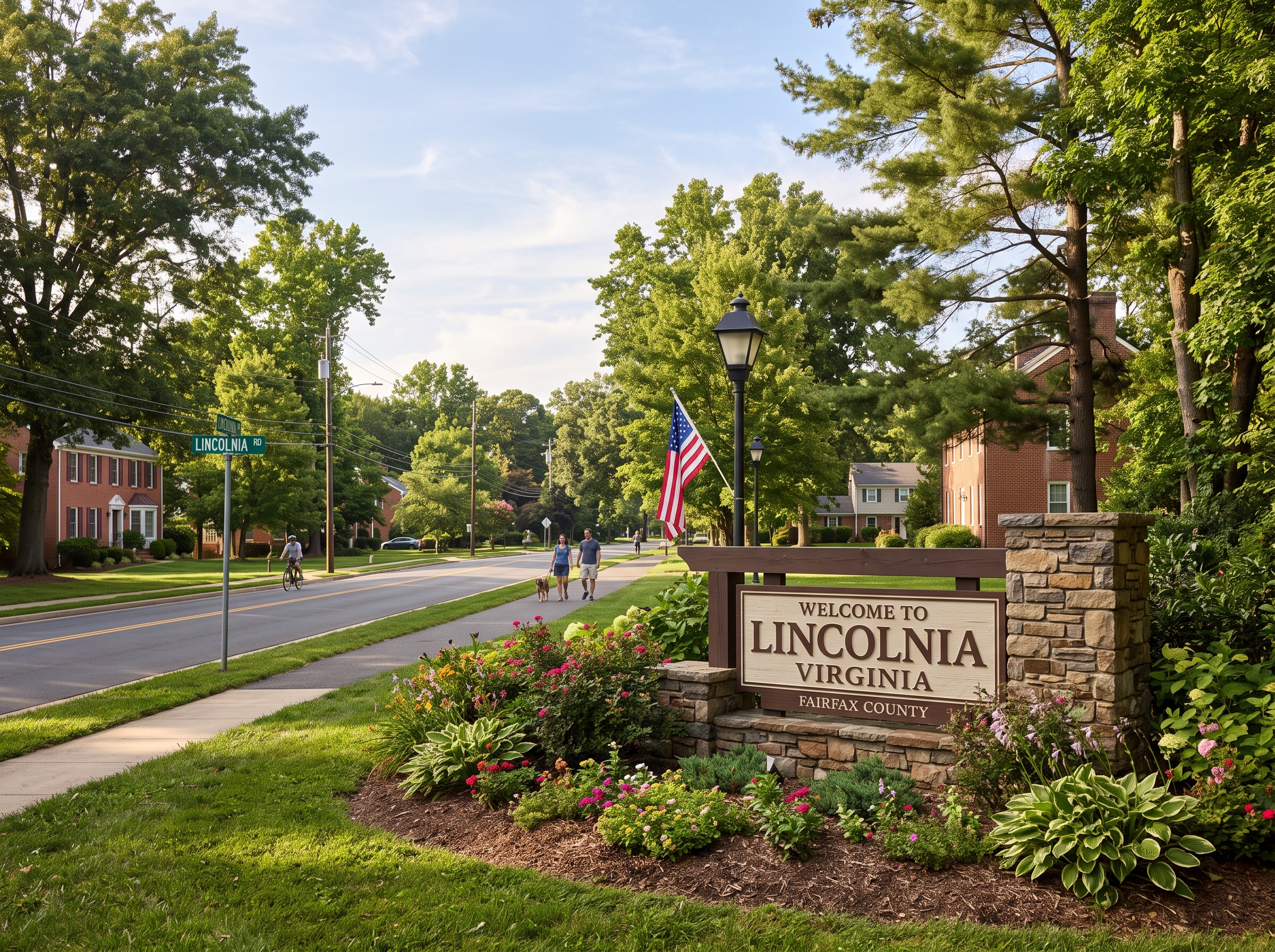
- Mature Post-War Residential Enclaves: Secluded residential subdivisions—such as Lincolnia Park, Weyanoke, and Indian Run—feature solid 1950s and 1960s brick ramblers, split-levels, and contemporary townhome clusters sheltered by deep native hardwood canopies.
- Abundant Stream Valley Parklands: Bordered by the protected natural corridors of Indian Run Stream Valley Park, Green Spring Gardens (a 31-acre public horticultural sanctuary), and Pinecrest Golf Course.
- Statutory Property Assessment Framework: Governed strictly under Virginia Code § 58.1-3201 statutory 100 percent fair market value standards administered through annual Fairfax County Department of Tax Administration (DTA) equalization cycles.
1. Spatial Morphology, Boundaries & Regional Context
Lincolnia occupies a highly strategic geographic position within eastern Fairfax County in the Mason Magisterial District (postal ZIP codes 22012 and 22312). Nestled between the bustling commercial corridors of Alexandria to the east and the established suburban expanse of Annandale to the west, Lincolnia functions as an essential gateway community bridging the inner urban core of Northern Virginia with western Fairfax County.
Topographically situated along the rolling headwaters of the Cameron Run watershed, Lincolnia spans an area of approximately five square miles. The community’s geographic perimeter is defined by key natural and man-made boundaries:
- East Boundary: The municipal corporate border of the City of Alexandria, running along North Beauregard Street, Van Dorn Street, and the historic Lincolnia Hills corridor.
- North Boundary: Columbia Pike (Route 244) and the southern shoreline bluffs of Lake Barcroft, transitioning into the residential streets of Sleepy Hollow.
- West Boundary: Backlick Road, Heritage Drive, and the historic center of Annandale along the Little River Turnpike commercial spine.
- South Boundary: Braddock Road and the extensive natural stream valley buffers of Turkeycock Run and the Bren Mar Park industrial and residential corridor.
2. Historical Evolution: From Colonial Lebanon to Civil War Crossroads and Post-War Suburb
The historical roots of Lincolnia stretch back to the late eighteenth century, closely intertwined with the development of commercial turnpike infrastructure and early Virginia agriculture.
The Settlement of Lebanon & The Little River Turnpike (1795–1850)
Throughout the late eighteenth and early nineteenth centuries, the rural crossroads settlement was originally known as Lebanon, named for the historic Lebanon Union Church and local agricultural estates. In December 1795, the Virginia General Assembly chartered the Little River Turnpike Company to construct a paved, privately funded toll turnpike connecting the agricultural farms of Loudoun and western Fairfax counties with the thriving seaport of Alexandria on the Potomac River.
Completed in 1806 as one of the first engineered macadamized toll roads in America, the Little River Turnpike (now Route 236) transformed Lebanon into a crucial waystation. Inns, blacksmith shops, wheelwrights, and general stores flourished along the turnpike, serving freight wagons laden with flour, grain, and tobacco heading east, and manufactured goods returning west.
The Civil War & The Naming of Lincolnia (1861–1870)
During the American Civil War, Lincolnia’s position along the Little River Turnpike placed it in the contested borderlands surrounding the defenses of Washington. Confederate pickets and Union cavalry patrols frequently clashed along the turnpike. Union troops constructed defensive outposts and telegraph lines connecting Alexandria with outposts in Annandale and Fairfax Court House.
Following the conclusion of hostilities, local residents and landholders sought a new civic identity for the crossroads. In the late 1860s, a formal post office was established, and the community was officially renamed Lincolnia in honor of President Abraham Lincoln. Historic community institutions, including Lincolnia United Methodist Church and the historic Lincolnia Schoolhouse, anchored the rural village into the early twentieth century.
Post-WWII Suburban Expansion & The Founding of TJHSST (1950–Present)
With the construction of Interstate 395 (Shirley Highway) in the late 1940s and 1950s—one of the nation’s first modern limited-access divided commuter expressways—Lincolnia underwent rapid transformation from farmland and dairy orchards into master-planned residential subdivisions. Subdivisions like Lincolnia Park, Indian Run, and Weyanoke were platted, offering solid-brick ramblers and split-levels for federal workers, military officers, and growing families.
In 1985, Fairfax County Public Schools made a historic decision that forever elevated the community's prestige: the conversion of the former Thomas Jefferson High School campus at 6560 Braddock Road into the Thomas Jefferson High School for Science and Technology (TJHSST), creating a world-renowned regional magnet center for secondary STEM education.
3. Residential Enclaves, Neighborhood Typologies & Architectural Anatomy
Lincolnia’s housing stock offers an attractive blend of mid-century single-family homes on generous, wooded lots, traditional multi-level townhomes, and modern residential infill enclaves.
| Residential Subdivision / Enclave | Primary Architectural Style | Construction Era | Typical Lot Dimensions | Fairfax County Zoning |
|---|---|---|---|---|
| Lincolnia Park | Solid Brick Ramblers & Split-Levels | 1952 – 1968 | 0.25 to 0.45 Acre Lots | R-3 (Single-Family Residential) |
| Weyanoke | Brick Ranchers, Split-Levels, Colonials | 1954 – 1972 | 0.22 to 0.38 Acre Parcels | R-3 / R-4 (Suburban Single-Family) |
| Indian Run Enclave | Mid-Century Ramblers, Contemporary Expansions | 1956 – 1974 | 0.30 to 0.50 Acre Forested Lots | R-2 / R-3 (Low-Density Residential) |
| Pinecrest Communities | Executive Townhomes & Garden Condos | 1984 – 1994 | Clustered Townhome & Multi-Family | PDH-8 / PDH-12 (Planned Development) |
| Bren Mar Park Vicinity | Post-War Cape Cods & Brick Cottages | 1948 – 1964 | 0.18 to 0.28 Acre Traditional Lots | R-4 (Medium Density Single-Family) |
| Lincolnia Hills & Beauregard Corridors | Modern Townhomes & Mid-Rise Condominiums | 1978 – 2005 | Integrated Urban Residential Campuses | R-20 / R-30 (Multi-Family Residential) |
Lincolnia Park: Traditional Mid-Century Brick Craftsmanship
Platted during the mid-1950s, Lincolnia Park features well-built single-story brick ramblers and split-level homes set along gently rolling, tree-lined streets. Properties are characterized by full masonry exterior facades, large double-hung windows, solid oak hardwood flooring, and full or partial walkout basements. Over the past two decades, many homeowners have undertaken sensitive architectural modernizations, adding second-story dormers, open-concept kitchen configurations, and expansive screened outdoor porches.
Weyanoke: Secluded Suburban Sanctuary
Adjacent to Weyanoke Elementary School and the Indian Run stream valley, the Weyanoke neighborhood features quiet cul-de-sacs and minimal vehicular traffic. Homes in this enclave showcase classic mid-century split-foyer and split-level layouts, offering functional separation between formal living areas and private lower-level recreational suites, all framed by mature native white oaks and flowering dogwoods.
The Pinecrest Master-Planned Enclave
Developed in the 1980s and 1990s around the scenic fairways of the municipal Pinecrest Golf Course, this planned residential cluster offers low-maintenance luxury brick townhomes and garden-style condominiums. Featuring attached garages, vaulted ceilings, skylights, private fenced garden patios, and direct walking trail connectivity to golf and tennis amenities, Pinecrest represents a premier option for executive commuters.
4. Structural Anatomy, Building Eras & Property Maintenance
Owning and evaluating residential real estate in Lincolnia requires technical familiarity with the building assemblies and mechanical systems installed during the mid-to-late twentieth century:
Single-Family Structural Assemblies (1950–1970)
- Foundations & Subsurface Drainage: Typically constructed with poured concrete footings supporting concrete masonry unit (CMU) block crawl spaces or full basement walls. Properties bordering stream valley ravines require functional exterior downspout conductor extensions and proper grading slope (minimum six inches of fall over ten feet) to prevent basement hydrostatic moisture penetration.
- Framing & Roof Trusses: Built with true dimensional 2x4 wall studs and site-framed rafter systems utilizing solid 1x6 wood roof sheathing. Roof pitches are typically low-to-medium (4:12 to 6:12). Upgrades to modern architectural fiberglass asphalt shingles with proper continuous ridge venting are essential to ensure proper attic thermal circulation.
- Electrical Service Infrastructure: Original installations often featured 60-amp or 100-amp electrical service panels. Modern residential demands require upgrading to 200-amp circuit breaker panels with whole-home surge protection, arc-fault circuit interrupters (AFCI), and ground-fault (GFCI) protection in wet locations to accommodate modern heat pumps and level-2 electric vehicle chargers.
- Plumbing Supply & Drainage Systems: Original branch supply lines were predominantly rigid copper (Type L or M), while drain-waste-vent (DWV) piping utilized heavy cast iron stacks. Homeowners should conduct fiber-optic camera sewer scope inspections of underground cast iron lines to evaluate for root penetration or internal rust scaling between the foundation wall and the municipal sewer main.
5. Academic Excellence: Thomas Jefferson High School (TJHSST) & FCPS Pyramids
The intellectual and educational identity of Lincolnia is defined by its role as the home of Thomas Jefferson High School for Science and Technology (TJHSST), widely celebrated as the nation's premier public secondary academic institution.
Thomas Jefferson High School for Science and Technology (TJHSST)
Situated at 6560 Braddock Road in Lincolnia, TJHSST was established in 1985 through a public-private partnership between Fairfax County Public Schools and regional technology leaders. Operating as a regional Governor's School for Science and Technology, TJHSST serves academically gifted students selected from across Fairfax, Arlington, Loudoun, and Prince William counties, and the cities of Falls Church and Fairfax.
The campus features world-class university-level research facilities, including specialized laboratories in:
- Robotics and Automated Systems
- Microelectronics and Supercomputing
- Quantum Physics and Optics
- Chemical Analysis and Nanotechnology
- Neuroscience, Genetics, and Biotechnology
- Oceanography and Environmental Geophysical Modeling
All TJHSST seniors must complete a year-long independent research mentorship or laboratory research project, publishing peer-reviewed findings and presenting at international scientific conferences.
Fairfax County Public Schools (FCPS) Pyramidal Alignments
In addition to TJHSST eligibility, neighborhood residential properties in Lincolnia are zoned into two high-performing FCPS school pyramids: the Annandale High School Pyramid and the Justice High School Pyramid.
| School Facility | Grade Levels | Pyramidal Feeder Alignment | Curriculum Programs & Academic Honors |
|---|---|---|---|
| Thomas Jefferson High (TJHSST) | Grades 9 – 12 | Regional Governor's Magnet | #1 Public High School in US, Advanced STEM Research Labs, Post-AP Curricula |
| Annandale High School | Grades 9 – 12 | Annandale Pyramid | International Baccalaureate (IB) World School, Full IB Diploma, AVID, Advanced Arts |
| Justice High School | Grades 9 – 12 | Justice Pyramid | International Baccalaureate (IB) World School, Full IB Diploma, STEM Programs |
| Holmes Middle School | Grades 6 – 8 | Annandale Pyramid | Honors Academic Curriculum, Advanced Mathematics, Technology Education Labs |
| Glasgow Middle School | Grades 6 – 8 | Justice Pyramid | International Baccalaureate Middle Years Programme (MYP), World Languages |
| Weyanoke Elementary School | Pre-K – Grade 5 | Annandale Pyramid | Advanced Academic Programs (AAP), STEAM Initiatives, Literacy Specialization |
| Parklawn Elementary School | Pre-K – Grade 5 | Justice Pyramid | Global Classroom Programs, Advanced Academic Talent Development, ESOL Services |
| Bren Mar Park Elementary | Pre-K – Grade 5 | Edison / Regional | Environmental Science Focus, Advanced Math Pathways, Inclusive Labs |
6. Transportation Logistics, Highway Arterials & Commuter Corridors
Lincolnia’s central location within the inner ring of Northern Virginia provides immediate, multi-directional highway access, making it one of the most commuter-friendly residential nodes in Fairfax County.
Primary Highway Corridors
- Interstate 395 (Shirley Highway): Located immediately at Lincolnia’s eastern border, I-395 provides express, multi-lane transit northeastward directly into the Pentagon, the National Landing / Crystal City tech hub (Amazon HQ2), the 14th Street Bridge, and downtown Washington, D.C. Heading south, I-395 merges seamlessly with I-95 toward Fort Belvoir and Richmond.
- State Route 236 (Little River Turnpike): The historic commercial artery passing directly through the community, connecting Lincolnia eastward to Duke Street, Landmark, and historic Old Town Alexandria, and westward to Annandale, the City of Fairfax, and Interstate 66.
- North Beauregard Street: A critical north-south connector linking Lincolnia directly to the Mark Center federal complex, Seminary Road, and Columbia Pike.
- Braddock Road: Provides an express suburban corridor westward toward George Mason University (GMU), Burke, and western Fairfax County.
Public Transit & Dedicated Express Bus Networks
Commuters residing in Lincolnia benefit from extensive, frequent public bus transit operated by Metrobus and the Fairfax Connector:
- Express Metrobus 29K & 29N: Provide direct peak-period transit along the Little River Turnpike corridor connecting directly to the Pentagon Metrorail Station (Blue and Yellow Lines) and Alexandria.
- Fairfax Connector Route 401 & 402: Rapid north-south circumferential routes operating along Backlick Road, connecting Lincolnia to the Franconia-Springfield Metrorail & VRE Station and the Tysons Corner transit center.
- DASH Bus Network Access: Direct connections along Beauregard Street into the City of Alexandria’s DASH transit grid, linking to the Van Dorn Street Metrorail Station and the Mark Center Transit Station.
7. Environmental Topography, Geology & Protected Regional Parklands
Geologically, Lincolnia is located near the Fall Line transition, where the ancient metamorphic bedrock of the Piedmont Province meets the unconsolidated sands and clays of the Atlantic Coastal Plain. This creates a visually dynamic landscape characterized by high, gravel-capped ridges descending into heavily wooded stream valley gorges.
The Indian Run & Cameron Run Watersheds
Lincolnia’s natural drainage network is anchored by Indian Run and Turkeycock Run, two primary tributaries of Holmes Run and Cameron Run, which flow southeastward into the Potomac River at Alexandria. Fairfax County maintains protected Environmental Quality Corridors (EQCs) along these stream beds, preventing development in floodplains, stabilizing stream embankments, and preserving continuous wildlife greenways.
Regional Parks & Public Recreation Assets
- Green Spring Gardens: Situated in northern Lincolnia along Braddock Road, this celebrated 31-acre Fairfax County public horticultural park features a 1784 historic manor house, 20 themed demonstration gardens, a greenhouse conservatory, a native plant trail, and educational botanical seminars.
- Indian Run Stream Valley Park: A linear, natural woodland park providing hiking trails, birdwatching spots, and tranquil forest paths weaving through established residential neighborhoods.
- Pinecrest Golf Course: A challenging, executive 9-hole public municipal golf course operated by the Fairfax County Park Authority, featuring manicured fairways, modern driving cages, and footgolf facilities.
- Bren Mar Park: A 17-acre community park offering lit athletic fields, multi-purpose sport courts, playground facilities, and forested picnic pavilions.
8. Real Estate Assessment Cycles & Virginia Statutory Tax Framework
Real estate taxation in Lincolnia is governed under the statutory authority of the Commonwealth of Virginia and the administrative oversight of the Fairfax County Department of Tax Administration (DTA). Because Lincolnia is an unincorporated census-designated place, property owners pay municipal real estate taxes solely to Fairfax County, with zero supplemental city-level property tax levies.
Virginia Code Title 58.1-3201: The 100% Fair Market Value Mandate
Under Virginia Code § 58.1-3201, all real property in Virginia must be assessed for tax purposes at one hundred percent (100%) of its true fair market value. The Fairfax County Department of Tax Administration conducts comprehensive annual reassessments of every taxable residential and commercial parcel in Lincolnia. Valuations are based on verified arm's-length sales of comparable properties within identical neighborhood submarket codes, accounting for lot size, topography, structural improvements, and property condition.
Annual Assessment Calendar & Payment Schedules
- January 1 (Statutory Effective Date): Property assessments are legally established as of January 1 of each calendar year, reflecting real estate market transactions occurring during the preceding twelve months.
- Late February (Mailing of Assessment Notices): The DTA mails official Notice of Real Estate Assessment cards to all property owners, itemizing land value, building value, and total taxable assessment.
- Semi-Annual Payment Deadlines: Real estate tax payments in Fairfax County are billed in two equal installments:
- First Installment: Statutorily due on or before July 28.
- Second Installment: Statutorily due on or before December 5.
- Countywide Dedicated Levies: Properties in Lincolnia are subject to the Countywide Stormwater Management Service District Tax, dedicated to stream valley restoration, dam safety, and Chesapeake Bay runoff mitigation.
Statutory Assessment Appeals Mechanism
Property owners who believe their annual assessment exceeds fair market value, is non-uniform compared to contiguous properties, or contains clerical errors have the legal right to challenge the assessment through a formal two-tiered process:
- Administrative Review: An informal appeal submitted directly to the Department of Tax Administration, typically required by early April. An assigned county residential appraiser reviews structural data, square footage calculations, physical property condition, and relevant sales comps.
- Board of Equalization (BOE) Appeal: A formal evidentiary appeal submitted to the citizen-led Board of Equalization of Real Estate Assessments, typically requiring filing by June 1. If dissatisfied with the BOE ruling, property owners retain the statutory right to file a petition with the Circuit Court of Fairfax County under Virginia Code § 58.1-3984.
9. Frequently Asked Questions Regarding Lincolnia, VA Real Estate
Is Lincolnia an independent municipality or part of Fairfax County?
Lincolnia is an unincorporated census-designated place (CDP) governed directly by the Fairfax County Board of Supervisors within the Mason Magisterial District. It is not an incorporated city or town. Municipal governance, public education (FCPS), police protection (FCPD Mason District Station), and land-use zoning are administered entirely by Fairfax County.
Where is Thomas Jefferson High School for Science and Technology (TJHSST) located?
Thomas Jefferson High School for Science and Technology (TJHSST) is located directly within the geographic boundaries of Lincolnia at 6560 Braddock Road. Established in 1985 as a regional Governor's School for Science and Technology, TJHSST is consistently ranked as the number one public high school in the United States, operating specialized research laboratories in optics, robotics, astronomy, and biotechnology.
What is the historical origin of the name "Lincolnia"?
During the eighteenth and early nineteenth centuries, the settlement was originally known as Lebanon. Following the Civil War in the late 1860s, the village was renamed Lincolnia in honor of President Abraham Lincoln, influenced by an active local post office and historic churches established along the historic Little River Turnpike.
What was the significance of the Little River Turnpike in Lincolnia's development?
Chartered by the Virginia General Assembly in 1795 and completed in 1806, the Little River Turnpike (State Route 236) was one of the earliest privately financed, paved toll roads in the United States. Connecting Alexandria with the Shenandoah agricultural basin, the turnpike established Lincolnia as a vital staging post for stagecoaches, livestock drovers, and freight wagons throughout the nineteenth century.
What residential architectural styles predominate in Lincolnia?
Lincolnia features an eclectic blend of post-war and modern residential typologies, dominated by 1950s and 1960s solid brick ramblers and split-levels in subdivisions like Lincolnia Park and Weyanoke, traditional colonial revival homes, established multi-story brick townhome enclaves, and garden-style condominium residences along the transit corridors.
Which public schools serve Lincolnia residential properties?
Lincolnia is served by Fairfax County Public Schools (FCPS), primarily within the Annandale High School and Justice High School pyramids. Feeder schools include Holmes Middle School, Glasgow Middle School, Weyanoke Elementary School, Parklawn Elementary, and Bren Mar Park Elementary, alongside competitive regional admissions eligibility to TJHSST.
How is commuter connectivity structured from Lincolnia to major employment centers?
Lincolnia offers exceptional highway logistics, located immediately adjacent to Interstate 395 (Shirley Highway) via Little River Turnpike and Duke Street. Commuters reach the Pentagon, Crystal City/National Landing, and downtown Washington, D.C. in approximately 12 to 15 minutes, with direct express bus routes connecting to the Pentagon Metrorail Station.
What natural parks and environmental watersheds define Lincolnia?
Lincolnia sits within the Cameron Run watershed, drained primarily by Indian Run and Turkeycock Run. Major protected green spaces include Indian Run Stream Valley Park, Green Spring Gardens (an acclaimed 31-acre public horticultural park), and Pinecrest Golf Course, preserving mature native deciduous tree canopies and stream valley floodplains.
What structural maintenance considerations are critical for mid-century homes in Lincolnia?
Mid-century single-family properties constructed between 1950 and 1968 require specialized structural diligence, including evaluating original cast iron underground sewer laterals with video camera scopes, upgrading original 60-amp or 100-amp electrical panels to 200-amp circuit breakers with GFCI/AFCI protection, and inspecting crawl space moisture management systems.
How are real estate taxes and assessments governed in Lincolnia under Virginia law?
Under Virginia Code § 58.1-3201, all real property in Lincolnia is assessed annually at 100 percent of fair market value by the Fairfax County Department of Tax Administration (DTA). Assessment notices are mailed every February based on arm's-length market sales, with taxes paid semi-annually on July 28 and December 5, and formal appeal rights through the county Board of Equalization.
10. Academic References, Historical Archives & Statutory Legal Disclaimers
This architectural monograph, educational directory, and real estate reference treatise incorporates verified historical archives, public planning documents, and statutory legal frameworks:
- Fairfax County Comprehensive Plan: Area I, Lincolnia Planning District Guidance, Environmental Quality Corridors (EQCs) and Commercial Revitalization Policies, Fairfax County Department of Planning and Development, Fairfax, Virginia.
- Virginia Department of Historic Resources (VDHR): Historic Landmark & Turnpike Engineering Records for the Little River Turnpike (Site 029-5182) and Historic Lebanon Settlement, Richmond, Virginia.
- Fairfax County Public Schools (FCPS): Office of Facilities Planning, Thomas Jefferson High School for Science and Technology (TJHSST) Institutional Profiles & Annandale Pyramidal Feeder Directory, Gatehouse Administration Center, Falls Church, Virginia.
- Code of Virginia (Statutory Authority): Title 58.1 (Taxation), § 58.1-3201 (Fair Market Value Mandates) and § 58.1-3370 (Board of Equalization Procedures), Commonwealth of Virginia, Richmond, Virginia.
- United States Geological Survey (USGS): Annandale and Alexandria 7.5-Minute Topographic Quadrangles, Cameron Run Hydrologic Basin and Fall Line Geology, Reston, Virginia.
Statutory Research & Regulatory Notice: This architectural monograph, educational directory, and submarket treatise is published strictly for informational, educational, and spatial orientation purposes. Real estate boundaries, school attendance zones, transportation infrastructure plans, and tax assessment schedules are subject to ongoing administrative modifications by the Fairfax County Board of Supervisors, the Fairfax County School Board, and the Virginia Department of Transportation (VDOT). This publication does not constitute formal appraisal valuations, structural architectural inspections, or legal counsel. Prospective purchasers and property owners must verify official parcel-specific records directly with the Fairfax County Department of Tax Administration (DTA) and Land Development Services (LDS).