
Long Branch, VA Real Estate: The Definitive Guide to Spatial Morphology, Olde Creek, Surrey Square, Long Branch Stream Valley Park & Woodson High Pyramid
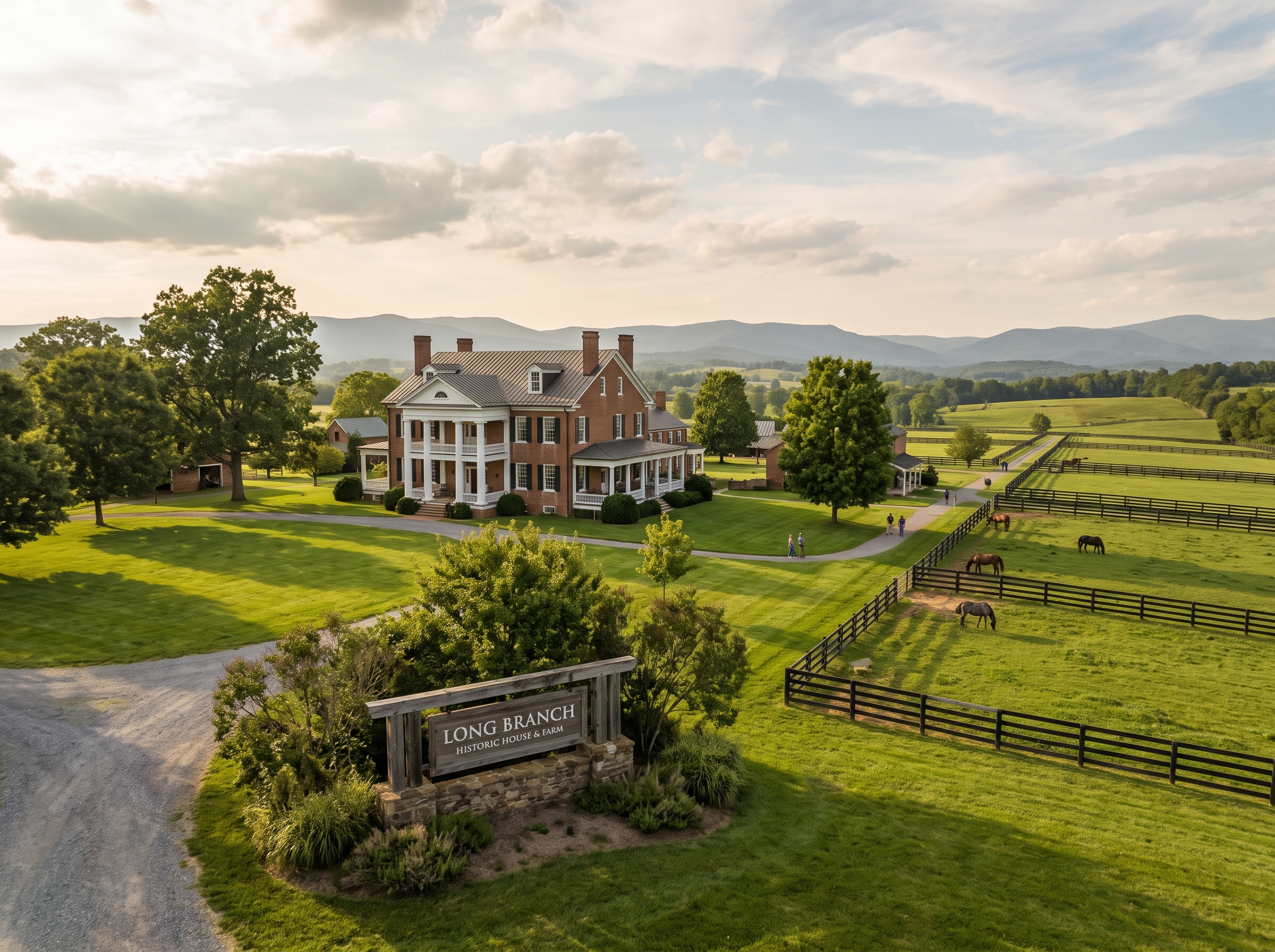
Executive Summary & Essential Community Takeaways
- Established Central Fairfax Residential Haven: Encompassing approximately 2.5 square miles of gently rolling piedmont terrain in central Fairfax County (ZIP code 22032), the Long Branch census-designated place (CDP) is a premier suburban residential community positioned immediately east of the independent City of Fairfax and bordered by Little River Turnpike (Route 236) to the north, Guinea Road to the east, and Braddock Road to the south.
- Signature Mid-1960s Subdivisions & Diverse Enclaves: Master-developed during the golden era of Northern Virginia post-war suburban growth, Long Branch encompasses highly sought-after neighborhoods such as Olde Creek (Old Creek Estates)—famed for solid brick Colonials, split-levels, and having no mandatory HOA fees—alongside the leafy, custom-scaled enclaves of Surrey Square, Rutherford, and Red Fox Forest.
- Natural Ecological Spine of Long Branch Stream Valley: The community is biophysically shaped by Long Branch, a major perennial tributary of Accotink Creek. Preserved by the Fairfax County Park Authority (FCPA), the Long Branch Stream Valley Park provides extensive forested walking trails, footbridges, and wildlife corridors that connect seamlessly to the 40-mile Gerry Connolly Cross County Trail (CCT).
- Premier FCPS W.T. Woodson High School Pyramid: Universally recognized as one of the most intellectually distinguished public school feeder networks in the Commonwealth of Virginia, anchored by the neighborhood Olde Creek Elementary School (located on Old Creek Drive), Robert Frost Middle School, and W.T. Woodson High School (celebrated for the AP Capstone Diploma, STEM academies, and elite collegiate matriculation).
- Vibrant Swim Clubs & Flagship County RECenters: Supported by cherished member-owned neighborhood recreation hubs including the Long Branch Swim and Racquet Club and the Rutherford Pool, while bordering the 290-acre Wakefield Park and the Audrey Moore RECenter, featuring a 50-meter indoor Olympic swimming pool, skate park, and comprehensive athletic facilities.
- Unrivaled Multimodal Commuter Convenience: Superbly positioned between Route 236 and Braddock Road, just 1.5 miles from George Mason University (GMU), four miles south of the Vienna/Fairfax-GMU Metrorail Station (Orange Line), three miles north of the Burke Centre VRE commuter rail station, and five minutes from the Capital Beltway (I-495 Exits 52 and 54).
1. Spatial Morphology, Geographic Boundaries & Environmental Setting
Long Branch is a designated census-designated place (CDP) encompassing approximately 2.5 square miles of mature residential terrain in central Fairfax County, Virginia. Positioned largely within the 22032 postal code under a Fairfax mailing designation, the community is entirely governed by the Fairfax County Board of Supervisors within the Providence and Braddock Magisterial Districts.
The spatial morphology of the Long Branch CDP is delineated by prominent regional arterial thoroughfares and municipal borders:
- Northern Boundary: Defined by Little River Turnpike (Virginia State Route 236), separating Long Branch from Mantua and the Pickett Road commercial corridor.
- Southern Boundary: Flanked by Braddock Road (State Route 620), bordering the established master-planned community of Kings Park West and the rolling wooded terrain of Royal Lake.
- Eastern Boundary: Bounded by Guinea Road (State Route 651), transitioning into the Wakefield, Truro, and Annandale submarkets along the main stem of Accotink Creek.
- Western Boundary: Bordered by Burke Station Road, Roberts Road, and the municipal corporate boundary of the independent City of Fairfax.
Geologically, Long Branch lies within the Piedmont Upland subprovince, characterized by deeply weathered metamorphic bedrock overlain by silty clay loam soils. The physical landscape is divided by the central stream valley of Long Branch, a major perennial watercourse that originates in the highlands near Fairfax City and flows southeastward to converge with Accotink Creek near Wakefield Park.
The topography features gentle crests and wooded ridges descending into protected alluvial ravines. The overarching forest canopy represents a mature, contiguous urban woodland dominated by native white oaks (Quercus alba), northern red oaks, American beech, tulip poplars, hickory, sweetgum, and flowering dogwoods. These towering trees frame curbed residential streets, creating a tranquil woodland ambiance that buffers homes from regional commuter arteries.
2. Historical Lineage: Agrarian Timberland to Mid-Century Suburban Master Plan
The historical record of Long Branch mirrors the transformation of Northern Virginia from colonial agrarian holdings into one of the nation's most prosperous suburban technology and governance corridors.
During the eighteenth and nineteenth centuries, the land comprised large agricultural tracts, small dairy farms, and hardwood timber preserves. The construction of the Little River Turnpike in the early 1800s—one of the earliest engineered private paved turnpikes in the United States—stimulated local commerce, allowing farmers to transport timber, corn, winter wheat, and livestock eastward to the deepwater port of Alexandria.
During the American Civil War, the crossroads surrounding Fairfax Court House and the turnpike corridors witnessed significant military maneuverings. Federal and Confederate cavalry units frequently skirmished along Braddock Road and Little River Turnpike, with troops utilizing the wooded valleys of Long Branch and Accotink Creek for reconnaissance and concealed troop movements.
The modern residential era commenced in the early 1960s. As the Washington metropolitan region expanded outward following the completion of the Capital Beltway (I-495) in 1964 and the founding of George Mason University just west along Braddock Road, forward-thinking suburban homebuilders recognized the exceptional potential of the rolling acreage between Route 236 and Braddock Road.
Subdivisions such as Old Creek Estates (platted between 1964 and 1967), Surrey Square, and Rutherford were meticulously surveyed. Developers preserved natural topography, integrated local community parks, and dedicated linear stream valley buffers to the Fairfax County Park Authority, ensuring that the Long Branch stream would remain permanently protected open space. Solid brick masonry construction was prioritized, establishing an enduring neighborhood character that has preserved its desirability across multiple generations of homeowners.
3. Residential Architecture & Distinct Micro-Enclaves
The Long Branch CDP features an attractive, cohesive architectural landscape defined by mid-century post-war craftsmanship, mature quarter-acre lots, and distinct micro-enclaves:
Olde Creek (Old Creek Estates): Mid-Century Solid Brick Craftsmanship (1964–1968)
Developed primarily between 1964 and 1968, Olde Creek (often referred to as Old Creek Estates) is the historical and civic anchor of the Long Branch community. Centered along Old Creek Drive, Olley Lane, and surrounding cul-de-sacs, the neighborhood is predominantly composed of detached single-family split-levels, split-foyers, all-brick ramblers, and traditional center-hall Colonials.
Homes typically offer 1,800 to 2,800 square feet of finished living space, constructed with solid masonry red-brick veneers, poured concrete foundation walls, oak hardwood strip flooring, and masonry brick fireplaces. Lots are generous, averaging 0.25 to 0.35 acres, framed by mature shade trees and deep front setbacks.
A distinctive and highly prized attribute of Olde Creek is that there is no mandatory Homeowners Association (HOA), providing property owners with exceptional freedom while community pride is passionately maintained through active civic involvement centered around the neighborhood Olde Creek Elementary School.
Surrey Square: Custom Variety & Parkside Woodland Settings
Situated between Braddock Road and Olley Lane, Surrey Square is renowned for its lush, mature landscape woven around Surrey Square Park, Old Forge Park, and the Long Branch stream corridor. Unlike uniform tract subdivisions, Surrey Square features a wider variety of architectural scale, era, and design.
Residences range from 1,800 to over 3,400 finished square feet, scaling from four to six bedrooms. The architectural mix includes multi-tier split-levels with ground-level family suites, expansive brick ramblers with walkout lower levels, and stately multi-level Colonials. Many properties back directly to stream valley parklands, offering private woodland views and immediate access to community nature trails.
Rutherford: Dignified Stately Colonials along Guinea Road
Positioned along the eastern boundary of the CDP near Guinea Road, Rutherford is an established enclave of dignified two-story center-hall Colonials and split-levels. These homes feature handsome brick facades, formal entry foyers, multi-pane double-hung windows with decorative shutters, formal living and dining rooms, rear wood-paneled family dens, and attached two-car garages. The community is anchored by the private Rutherford Pool and borders the recreational facilities of Rutherford Park.
Red Fox Forest & Peripheral Enclaves
Tucked along quiet, winding streets with names inspired by native fauna and forest flora, Red Fox Forest presents an idyllic, low-traffic woodland atmosphere. Properties here showcase classic 1960s architecture on gently sloping lots that take full advantage of daylight walkout basements, extensive rear patios, and private garden sanctuaries.
Executive Townhome Communities
In addition to single-family homes, selective townhome enclaves such as Olde Forge Townhomes, Briarwood, and Heritage Woods provide sophisticated low-maintenance living. These three-level brick-front residences feature private fenced brick courtyards, lower-level recreation suites, and assigned garage or off-street parking.
4. Comprehensive Architectural Typologies Comparison Table
The following analytical matrix summarizes the primary residential typologies represented throughout the Long Branch submarket, detailing structural footprints, construction materials, and micro-enclave distributions:
| Architectural Typology | Primary Eras Platted | Finished Living Area | Structural & Facade Materials | Lot Profiles & Primary Enclaves |
|---|---|---|---|---|
| Classic Brick Ramblers | 1962 – 1968 | 1,800 – 2,800 sq ft (with finished walkout) | Solid all-brick veneer, poured concrete footings, dual fireplaces, asphalt gables | 0.25 to 0.35-acre lots; Olde Creek, Surrey Square, Red Fox Forest |
| Multi-Level Split-Levels | 1964 – 1972 | 2,000 – 3,100 sq ft (tri-level & split-foyer) | Brick veneer and architectural siding, multi-tier rooflines, ground-level family dens | 0.22 to 0.32-acre terraced parcels; Old Creek Estates, Olley Ln corridor |
| Center-Hall Colonials | 1965 – 1978 | 2,400 – 3,600 sq ft (across 3 finished levels) | Full brick facades, double-hung windows, formal entry foyers, 2-car garages | 0.25 to 0.38-acre elevated parcels; Rutherford, Surrey Square ridge lots |
| Expanded Custom Colonials | 1970 – 1995 | 3,000 – 4,200 sq ft (multi-level additions) | Masonry facades, hardiplank additions, chef's kitchens, primary suite retreats | 0.30 to 0.45-acre mature lots; Surrey Square interior cul-de-sacs |
| Executive Infill Townhomes | 1975 – 1990 | 1,600 – 2,400 sq ft (3 finished levels) | Brick-front masonry, private fenced rear patios, lower-level walkouts | Zero-lot-line HOA communities; Olde Forge Townhomes, Briarwood |
5. The Long Branch Stream Valley Park & Watershed Ecology
The natural geographic center of the community is the Long Branch Stream Valley Park, an ecologically vital stream corridor managed by the Fairfax County Park Authority (FCPA). Flowing through the heart of the CDP, Long Branch serves as a major headwater tributary of Accotink Creek.
The stream valley park encompasses miles of protected woodlands traversed by scenic natural-surface and paved walking trails, wooden footbridges, and peaceful stream crossings. It functions as an indispensable biological corridor harboring diverse native wildlife, including white-tailed deer, red foxes, pileated woodpeckers, red-shouldered hawks, barred owls, and migratory songbirds.
Fairfax County Stream Restoration & Environmental Engineering
Recognizing the importance of urban watershed stewardship, the Fairfax County Department of Public Works and Environmental Services (DPWES) has executed multi-million-dollar stream restoration initiatives along Long Branch. Decades of suburban runoff had caused historical stream bank erosion and sediment deposition into Lake Accotink.
County environmental engineers applied advanced natural stream channel design principles:
- Stream Bank Stabilization: Regrading vertical eroded banks and installing native stone cross-vanes, root wads, and imbricated rip-rap to dissipate storm energy and prevent soil loss.
- Floodplain Reconnection: Lowering channel benches to allow high-volume floodwaters to safely spill onto natural floodplains, absorbing kinetic energy and filtering stormwater naturally.
- Riparian Buffer Restoration: Planting thousands of native trees, shrubs, and deep-rooting wetland vegetation—including river birch, black willow, and buttonbush—to filter runoff before it enters the stream, safeguarding water quality across the Chesapeake Bay watershed.
Direct Connectivity to the Gerry Connolly Cross County Trail (CCT)
The trails winding through Long Branch Stream Valley connect directly downstream into the 40-mile Gerry Connolly Cross County Trail (CCT) near Wakefield Park. This regional connection enables Long Branch residents to embark on uninterrupted hiking, trail running, or cross-country cycling northward to Great Falls Park on the Potomac River or southward to Occoquan Regional Park.
6. The Renowned Public Education Feeder Network: The W.T. Woodson High School Pyramid
The extraordinary academic reputation of Fairfax County Public Schools (FCPS) is a primary driver of real estate desirability in Long Branch. The vast majority of the community feeds directly into the renowned W.T. Woodson High School pyramid:
Olde Creek Elementary School (Located Within the Community)
Situated directly within the neighborhood on Old Creek Drive, Olde Creek Elementary School serves as the educational and social heart of the community for kindergarten through sixth grade:
- Advanced Academic Services (AAP): Offers comprehensive school-based Advanced Academic enrichment, Young Scholars programs, and dedicated instructional specialists fostering critical and conceptual thinking.
- STEAM Laboratories & Environmental Courtyards: Features modern hands-on science and engineering labs, outdoor courtyard classrooms, and sensory nature gardens that utilize the adjacent stream valley for environmental science instruction.
- Deep Community Engagement: Boasts an extraordinarily active Parent-Teacher Association (PTA) that sponsors annual traditions, including the Olde Creek 5K, International Heritage Night, and science and engineering fairs.
Robert Frost Middle School
For grades seven and eight, students transition to Robert Frost Middle School on Pickett Road. Frost Middle recently completed a multi-million-dollar comprehensive architectural modernization and expansion. The school delivers an exceptionally rigorous transitional curriculum, including Honors courses in English, history, and science, advanced mathematics pathways (Algebra I and Geometry for high school credit), World Languages (French, Spanish), competitive robotics, and distinguished instrumental and choral music programs.
W.T. Woodson High School
Secondary education culminates at W.T. Woodson High School, universally acclaimed across Virginia and the United States for academic, artistic, and athletic excellence:
- Advanced Placement (AP) Capstone Diploma: Woodson provides an extensive catalog of AP coursework across STEM, humanities, and arts, complemented by the rigorous AP Seminar and AP Research project requirements.
- Collegiate Matriculation: Woodson graduates consistently matriculate to leading national universities, including the University of Virginia, College of William & Mary, Virginia Tech, Johns Hopkins, Harvard, Princeton, and MIT.
- Championship Extracurriculars: Home to Virginia High School League (VHSL) state championship athletic teams, nationally ranked marching band and orchestra programs, and award-winning student publications.
7. Community Culture, Civic Life & Private Swim Clubs
The social fabric of Long Branch is defined by close-knit community engagement, active neighborhood clubs, and cherished outdoor traditions:
The Long Branch Swim and Racquet Club
The member-owned Long Branch Swim and Racquet Club serves as a beloved neighborhood recreation hub during the summer months. The facility features a 25-meter competition swimming pool, dedicated diving well, shallow toddler wading pool, lit tennis and pickleball courts, sand volleyball, and shaded picnic pavilions hosting Friday evening family socials, raft nights, and community barbecues.
Rutherford Pool & The Rutherford Water Rats
Serving the eastern sector of the community, the member-owned Rutherford Pool is home to the Rutherford Water Rats swim and dive team, competing passionately in the Northern Virginia Swimming League (NVSL). The pool facility provides swimming instruction, water aerobics, and vibrant youth athletic competition.
Civic Organizations & Neighborhood Traditions
The community is united by active voluntary civic organizations—including the Olde Creek Civic Association, Surrey Square Civic Association, and Rutherford Civic Association. These groups coordinate annual Fourth of July parades, Halloween costume walks, neighborhood-wide yard sales, and stream cleanup days along Long Branch.
8. Parks, Trails & Flagship Recreational Facilities
Long Branch residents enjoy immediate access to extensive neighborhood parklands and premier regional recreational facilities:
Neighborhood Parks within the CDP
- Surrey Square Park: A peaceful 10-acre wooded park featuring natural walking paths, open grass play fields, and direct connections to stream valley trails.
- Old Forge Park: Wooded neighborhood park offering quiet shaded benches and children's playground equipment.
- Rutherford Park: An active community park featuring regulation athletic fields, lit tennis courts, basketball courts, and playground amenities.
Wakefield Park & The Audrey Moore RECenter (Immediately Adjacent)
Located immediately across Guinea Road on the eastern perimeter of Long Branch, the 290-acre Wakefield Park operated by the FCPA is one of Fairfax County's flagship recreational destinations:
- Audrey Moore RECenter: A full-service recreation center housing a 50-meter indoor Olympic swimming pool, heated therapeutic spa, state-of-the-art fitness and cardiovascular center, dance studios, and indoor gymnasium.
- Outdoor Athletic Complex: Synthetic turf soccer, lacrosse, and baseball fields, lit tennis and pickleball courts, an outdoor skate park, and horseshoe pits.
- Trail Connections: Direct access to the Cross County Trail leading south into Lake Accotink Park.
9. Commuter Logistics & Strategic Transit Orientation
Long Branch enjoys an enviable, highly strategic commuter orientation in the geographic center of Fairfax County:
Major Highway Arterials
- Route 236 (Little River Turnpike): Direct east-west arterial leading west through the historic City of Fairfax and east through Annandale and Alexandria.
- Braddock Road (Route 620): Major commuter conduit leading east directly to the Capital Beltway and west toward George Mason University and Fairfax County Parkway.
- Interstate 495 (Capital Beltway): Exit 52 (Route 236) and Exit 54 (Braddock Road) are both accessible within five to seven minutes, enabling rapid transit north to Tysons Corner and south toward Maryland via the Woodrow Wilson Bridge.
- Interstate 66 (I-66): Located just four miles north via Route 123 or Nutley Street, providing express lane transit into Arlington and downtown Washington, D.C.
Metrorail & Commuter Rail Connectivity
- Vienna/Fairfax-GMU Metrorail Station (Orange Line): Located approximately four miles north, featuring large commuter parking garages and direct subway transit into Arlington (Ballston, Rosslyn) and downtown Washington, D.C.
- VRE Commuter Rail (Fredericksburg & Manassas Lines): The Burke Centre VRE Station and Rolling Road VRE Station are located just three miles south, providing stress-free rail commutes directly into Old Town Alexandria, Crystal City, and Washington Union Station.
- George Mason University (GMU): Situated just 1.5 miles west, offering convenient access to campus lectures, cultural events at the Center for the Arts, and Division I collegiate athletics at EagleBank Arena.
10. Commercial Corridors, Gourmet Dining & Retail Centers
Residents of Long Branch benefit from abundant neighborhood retail centers and premier regional shopping hubs:
University Mall & Turnpike Shopping Centers
Located just minutes west along Braddock Road, University Mall features a full-service Giant Food supermarket, the beloved independent Cinema Arts Theatre, specialty bookstores, banking, and a vibrant collection of international dining options. Directly north on Route 236, the Turnpike Shopping Center and adjacent commercial plazas provide daily services, specialty pharmacies, and local cafes.
Twinbrooke Shopping Center
Situated at the junction of Braddock Road and Twinbrook Run, Twinbrooke Shopping Center is anchored by a Safeway grocery store, international bakeries, veterinary clinics, dry cleaners, and casual family dining.
Historic Old Town Fairfax (Two Miles West)
In less than five minutes, residents can reach the historic brick-lined streets of Old Town Fairfax, featuring Old Town Square, the regional public library, independent coffee roasters, craft breweries, boutique shopping, and seasonal community festivals.
11. Structural Maintenance, Building Mechanics & Renovation Guidelines
Preserving and updating 1960s single-family homes in Long Branch involves key structural, mechanical, and site considerations:
Underground Sewer Lateral Video Camera Scoping
Homes constructed between 1964 and 1975 originally utilized cast iron or vitrified clay sewer laterals connecting to the Fairfax County public sanitary sewer system. Over several decades, mature oak root systems can infiltrate pipe joints and interior cast iron scaling can occur. A pre-purchase fiber-optic video camera sewer scope inspection is highly recommended to verify pipe slope and structural integrity.
Electrical Service Panel Modernization
Original post-war electrical services were typically sized for 60 to 100 amps with early split-bus circuit panels. Upgrading to a modern 200-amp main breaker panel equipped with modern Arc-Fault Circuit Interrupters (AFCI) and Ground-Fault (GFCI) protection is essential to safely accommodate modern lifestyle demands, including central air conditioning, dual-fuel heat pumps, induction cooktops, and Level 2 electric vehicle (EV) charging stations.
Foundation Drainage & Walkout Basement Moisture Control
Because many Long Branch residences feature finished daylight walkout basements built into natural hillsides, managing exterior surface stormwater is critical. Best homeowner practices include maintaining positive soil grading sloping downward away from foundation walls, installing seamless oversized gutters and downspout extensions that discharge stormwater at least ten feet away, and servicing basement sump pumps supported by secondary battery-powered backup systems.
12. Real Property Tax Equalization & Fairfax County DTA Assessment Framework
Real estate taxation in Long Branch operates strictly under the statutory framework of the Commonwealth of Virginia and the administrative authority of Fairfax County. Because Long Branch is an unincorporated census-designated place within Fairfax County, property owners are subject exclusively to Fairfax County real property levies, with zero municipal city or town taxes.
Virginia Code Title 58.1-3201: The 100% Fair Market Value Mandate
In accordance with Virginia Code § 58.1-3201, all real property throughout the Commonwealth must be assessed for tax purposes at one hundred percent (100%) of its true fair market value. The Fairfax County Department of Tax Administration (DTA) conducts comprehensive annual reassessments of every taxable parcel in Long Branch. Valuations are established via computerized mass appraisal market equalization based on verified arm's-length sales of comparable properties within identical neighborhood submarket codes, accounting for lot size, topography, structural improvements, and physical condition.
Annual Assessment Calendar & Payment Schedules
- January 1 (Statutory Effective Date): Property assessments are legally established as of January 1 of each calendar year, reflecting real estate market transactions occurring during the preceding twelve months.
- Late February (Assessment Notice Distribution): The DTA mails official Notice of Real Estate Assessment cards to all property owners, itemizing land value, structural improvement value, and total equalized taxable valuation.
- Semi-Annual Payment Deadlines: Real estate tax payments in Fairfax County are billed in two equal installments:
- First Installment: Statutorily due on or before July 28.
- Second Installment: Statutorily due on or before December 5.
- Countywide Dedicated Levies: Properties in Long Branch are subject to the Countywide Stormwater Management Service District Tax, dedicated to maintaining stream valley restoration, dam safety, and Accotink Creek watershed protection.
Statutory Assessment Appeals Mechanism
Property owners who believe their annual assessment exceeds fair market value, is non-uniform compared to contiguous properties, or contains clerical errors have the legal right to challenge the valuation through a formal two-tiered process:
- Administrative Review: An informal appeal submitted directly to the Department of Tax Administration, typically required by early April. An assigned county residential appraiser reviews structural data, square footage calculations, physical property condition, and relevant sales comps.
- Board of Equalization (BOE) Appeal: A formal evidentiary appeal submitted to the citizen-led Board of Equalization of Real Estate Assessments, typically requiring filing by June 1. If dissatisfied with the BOE ruling, property owners retain the statutory right to file a petition with the Circuit Court of Fairfax County under Virginia Code § 58.1-3984.
13. Frequently Asked Questions Regarding Long Branch, VA Real Estate
What are the geographic boundaries and administrative status of the Long Branch CDP?
Long Branch is an unincorporated census-designated place (CDP) encompassing approximately 2.5 square miles in central Fairfax County, Virginia, primarily within the 22032 postal code. It is roughly bounded by Little River Turnpike (Route 236) to the north, Guinea Road to the east, Braddock Road to the south, and Burke Station Road, Roberts Road, and the City of Fairfax municipal limits to the west and northwest. All local government services, police, emergency rescue, zoning, and public schooling are administered directly by Fairfax County.
What was the historical development and founding era of the Long Branch community?
Historically part of 18th- and 19th-century agricultural farmland and timber tracts along the Little River Turnpike, Long Branch was transformed during the mid-1960s into a master-planned suburban community. Driven by the rapid expansion of federal bureaus, military personnel, and George Mason University, developers platted established single-family subdivisions—such as Old Creek Estates, Surrey Square, and Rutherford—preserving natural topography and mature deciduous woodlands surrounding the Long Branch stream basin.
What distinct residential subdivisions and micro-enclaves comprise Long Branch?
Long Branch encompasses several highly desirable residential micro-enclaves: Olde Creek (Old Creek Estates), developed in the mid-1960s with split-levels and Colonials and known for having no mandatory HOA; Surrey Square, a scenic leafy neighborhood woven around Surrey Square Park and Old Forge Park; Rutherford, featuring stately Colonials and split-levels bordering Rutherford Park; and Red Fox Forest, known for tranquil wooded lanes connecting to stream valley trails.
What architectural styles characterize homes in the Long Branch community?
The architectural character of Long Branch is defined by classic mid-century craftsmanship: traditional two-story center-hall brick Colonials, single-story all-brick ramblers with finished daylight walkout basements, and multi-tier split-levels and split-foyers. Homes typically feature 1,800 to 3,200 finished square feet, solid masonry construction, oak hardwood strip flooring, natural wood-burning fireplaces, and mature quarter-acre to third-acre wooded parcels.
What is the environmental significance of the Long Branch Stream Valley Park?
The Long Branch stream is a major tributary of Accotink Creek. The Long Branch Stream Valley Park encompasses protected forested stream valleys, pedestrian footbridges, and natural-surface and paved trails maintained by the Fairfax County Park Authority (FCPA). Fairfax County has executed extensive multi-million-dollar stream restoration projects along Long Branch to stabilize banks, restore native riparian buffers, control stormwater runoff, and safeguard water quality entering Lake Accotink and the Chesapeake Bay.
Which public schools serve students residing in Long Branch?
Long Branch is served by the prestigious W.T. Woodson High School pyramid within Fairfax County Public Schools (FCPS). Students attend the neighborhood Olde Creek Elementary School (located on Old Creek Drive), Robert Frost Middle School (offering advanced academic honors, high school credit mathematics, and robotics), and W.T. Woodson High School (nationally acclaimed for the AP Capstone Diploma, STEM academies, and collegiate matriculation).
What community recreational facilities, pools, and parks are accessible in Long Branch?
Recreational amenities include the member-owned Long Branch Swim and Racquet Club, Rutherford Pool, Surrey Square Park, Old Forge Park, and direct trail access to the 40-mile Gerry Connolly Cross County Trail (CCT). Residents also enjoy close proximity to the 290-acre Wakefield Park and the Audrey Moore RECenter, featuring a 50-meter indoor Olympic competition pool, skate park, and athletic complexes.
How is commuter transit structured from Long Branch to major regional employment centers?
Long Branch offers central Northern Virginia transit convenience bordered by Route 236 (Little River Turnpike), Braddock Road, and Guinea Road. The Vienna/Fairfax-GMU Metrorail Station (Orange Line) is approximately four miles north, while the Burke Centre and Rolling Road VRE commuter rail stations are three miles south. Commuters have immediate access to I-495 (Capital Beltway Exits 52 and 54), Inova Fairfax Hospital, Tysons Corner, and George Mason University.
What structural maintenance considerations are important for 1960s homes in Long Branch?
Key homeowner considerations include conducting fiber-optic video camera sewer scope inspections of underground cast iron lateral sewer lines, upgrading original 60-amp or 100-amp split-bus electrical panels to modern 200-amp service with AFCI/GFCI protection, evaluating exterior masonry mortar joints, and maintaining positive exterior soil slopes away from foundation walls in daylight walkout basements.
How are real estate property assessments and taxes governed in Long Branch?
Under Virginia Code § 58.1-3201, all real property in Long Branch is assessed annually at 100 percent of fair market value by the Fairfax County Department of Tax Administration (DTA). Notices are mailed every February based on verified arm's-length market sales, with real estate taxes paid semi-annually on July 28 and December 5, and statutory appeal rights through the county Board of Equalization.
14. Academic References, Historic Archives & Statutory Legal Disclaimers
This architectural monograph, environmental assessment, and regional real estate reference treatise incorporates verified historical archives, public planning documents, and statutory legal frameworks:
- Fairfax County Comprehensive Plan: Area II, Braddock and Providence Magisterial Districts Plan & Accotink Creek Watershed Management Plan, Fairfax County Department of Planning and Development, Fairfax, Virginia.
- Fairfax County Park Authority (FCPA): Long Branch Stream Valley Park Resource Management Plan & Wakefield Park Master Plan, Herrity Building, Fairfax, Virginia.
- Fairfax County Department of Public Works and Environmental Services (DPWES): Long Branch Watershed Stream Restoration Engineering Studies and Water Quality Assessments, Fairfax, Virginia.
- Fairfax County Public Schools (FCPS): Office of Facilities Planning, W.T. Woodson High School Feeder Boundary Alignment Directory, Gatehouse Administration Center, Falls Church, Virginia.
- Code of Virginia (Statutory Authority): Title 58.1 (Taxation), § 58.1-3201 (Fair Market Value Mandates) and § 58.1-3370 (Board of Equalization Procedures), Commonwealth of Virginia, Richmond, Virginia.
- United States Geological Survey (USGS): Fairfax and Annandale 7.5-Minute Topographic Quadrangles, Accotink Creek and Long Branch Drainage Basin Surveys, Reston, Virginia.
Statutory Research & Regulatory Notice: This architectural monograph, environmental review, and submarket treatise is published strictly for informational, educational, and spatial orientation purposes. Real estate boundaries, school attendance zones, commuter bus schedules, and tax assessment schedules are subject to ongoing administrative modifications by the Fairfax County Board of Supervisors, the Fairfax County School Board, and regional transit agencies. This publication does not constitute formal appraisal valuations, structural architectural inspections, or legal counsel. Prospective purchasers and property owners must verify official parcel-specific records directly with the Fairfax County Department of Tax Administration (DTA) and Land Development Services (LDS).