
McLean VA Real Estate Market: The Definitive Guide to Trends, Neighborhoods, Schools & Outlook
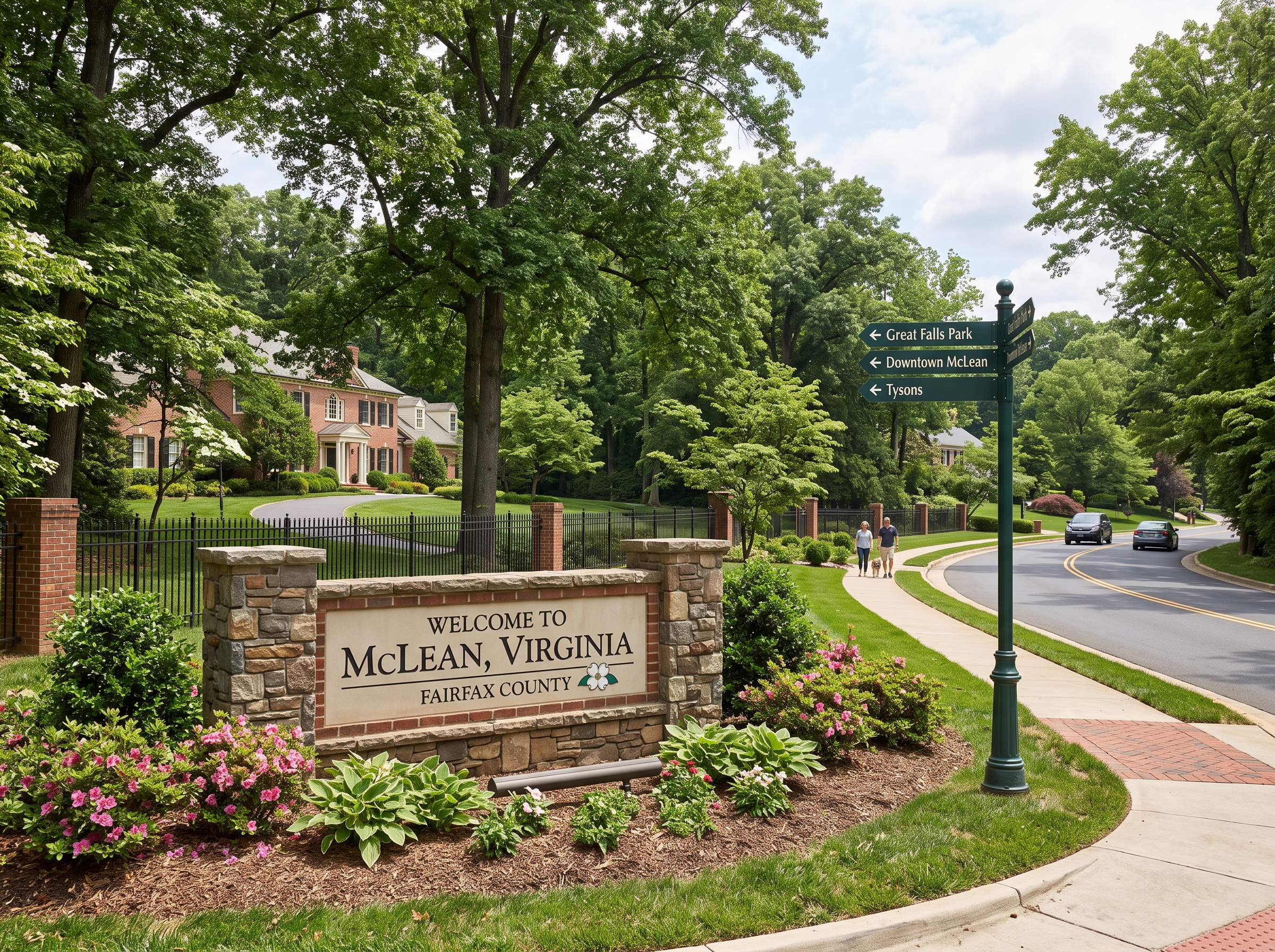
McLean, Virginia occupies a singular position in the National Capital Region. Situated on the rolling upland bluffs of the Piedmont physiographic province along the southern palisades of the Potomac River, McLean is an unincorporated community in northern Fairfax County that combines pastoral estate character with immediate metropolitan connectivity. Located just eight miles northwest of downtown Washington, D.C., McLean serves as one of the nation’s preeminent residential enclaves, home to cabinet secretaries, foreign diplomats, technology leaders, legal scholars, and multi-generational Virginia families.
Unlike standard suburban markets characterized by master-planned tract housing, McLean is defined by deep historical roots, rigorous Fairfax County environmental zoning, mature stream valley ecosystems, dual nationally ranked public high school pyramids, and architectural infill redevelopment. This comprehensive encyclopedic guide provides an exhaustive analysis of McLean’s market structure, neighborhood topography, educational pyramids, commuter corridors, zoning codes, and lifestyle amenities.
Foundational Market Principles of McLean, Virginia
- Irreplaceable Geographic Proximity. Positioned directly across the Potomac River from Washington, D.C. and Montgomery County, Maryland, McLean enjoys three direct river crossings: Chain Bridge (Route 123), the George Washington Memorial Parkway, and the American Legion Memorial Bridge (I-495).
- Strict Infill Redevelopment Dynamics. With virtually zero raw agricultural acreage remaining for conventional subdivision tract development, McLean’s residential market is driven by custom infill—post-war ramblers and split-levels are systematically replaced by modern transitional estates.
- Dual Nationally Ranked High School Pyramids. Anchored by Langley High School and McLean High School—both consistently ranked among the top high schools in the Commonwealth of Virginia—educational demand serves as the foundational stabilizing engine of real estate absorption.
- Zoning Protections & Environmental Corridors. Strict Fairfax County residential classifications (R-E, R-1, R-2) work alongside Chesapeake Bay Resource Protection Areas (RPAs) along Pimmit Run and Scotts Run to preserve spacious setbacks and mature forest canopies.
- The Two-Speed Absorption Pattern. Turnkey single-family homes and luxury brownstones in prime school zones experience rapid contract execution, while sprawling upper-bracket multi-acre compounds follow extended, highly discerning marketing horizons.
- Absence of Mandatory HOAs on Detached Acreage. Over 85% of McLean single-family homes operate with no mandatory homeowners associations, giving estate owners exceptional autonomy over landscaping and architectural customization.
Quick Navigation: Guide Contents
1. McLean at a Glance
| Structural Dimension | Regional Characteristic |
|---|---|
| Jurisdiction & Governance | Unincorporated Community & Census-Designated Place (CDP), Fairfax County, Virginia (Dranesville Magisterial District) |
| Planning District Designation | McLean Planning District (Fairfax County Comprehensive Plan) |
| Primary Postal ZIP Codes | 22101 (Historic Core, Langley, River Corridor) & 22102 (West McLean, Tysons Transit Edge, McLean Hamlet) |
| Geographic Area | Approximately 24.8 square miles across the Census-Designated Place and contiguous residential sectors |
| Physiographic Province | Piedmont Province rolling upland bluffs terminating at the Potomac River Palisades |
| Primary Waterways & Streams | Potomac River, Pimmit Run, Little Pimmit Run, Scotts Run, Dead Run, and Difficult Run |
| Primary Commuter Arterials | Route 123 (Chain Bridge Rd / Dolley Madison Blvd), Route 193 (Georgetown Pike), George Washington Memorial Parkway, I-495 Beltway, Route 267 (Dulles Toll Road) |
| Heavy Rail Transit Access | Washington Metro Silver Line: McLean Metrorail Station (Route 123 / Dulles Toll Road) and nearby Tysons stations |
| Public High School Pyramids | Langley High School Pyramid & McLean High School Pyramid (Fairfax County Public Schools) |
| Regional Governor’s Magnet School | Thomas Jefferson High School for Science and Technology (TJHSST), Fairfax County |
| Civic & Cultural Centers | McLean Community Center (MCC), The Alden Theatre, Dolley Madison Library, McLean Central Park, Clemyjontri Park |
| Institutional & Federal Anchors | George Bush Center for Intelligence (CIA Headquarters, Langley), Turner-Fairbank Highway Research Center (FHWA) |
2. Detailed Historical Evolution of McLean
McLean’s transformation from an agrarian crossroads into one of the nation’s wealthiest executive communities unfolded across seven distinct historical epochs:
| Historical Era | Dominant Character | Transformative Infrastructure & Events |
|---|---|---|
| Pre-1700s | Indigenous Algonquian Piedmont | Necostin (Anacostan) and Doeg settlements; seasonal fishing at Little Falls and Great Falls cataracts; ridgeline game paths established. |
| 1700s–1810s | Northern Neck Proprietary Plantations | Royal grants under Thomas Fairfax, 6th Lord Fairfax; transition from tobacco monoculture to wheat, barley, and apple orchards; early gristmills along Pimmit Run. |
| 1814 | War of 1812: Madison’s Command at Salona | British burn Washington (August 24, 1814); First Lady Dolley Madison saves Washington’s portrait; President James Madison establishes temporary wartime command at Salona. |
| 1813–1860 | Turnpikes & Iron Suspension Crossings | Georgetown Pike chartered (1813) as Virginia’s first paved macadam turnpike; Chain Bridge iron-suspension crossing links Fairfax County to Georgetown. |
| 1861–1865 | Civil War Defenses & Camp Griffin | Fairfax County contested borderland; Camp Griffin accommodates 30,000 Union troops; cavalry skirmishes around Lewinsville Presbyterian Church. |
| 1906–1939 | Electric Trolley & the Founding of McLean | John Roll McLean (publisher of The Washington Post) and U.S. Senator Stephen B. Elkins charter the Great Falls & Old Dominion Railroad; rail junction depot establishes the town name. |
| 1940–1964 | Federal Expansion, CIA & Beltway | CIA Headquarters opens in Langley (1961); Capital Beltway (I-495) completed; George Washington Memorial Parkway completed along the Potomac bluffs. |
| 1985–Present | Estate Infill & Silver Line Maturation | Teardown phenomenon replaces mid-century ramblers with custom estates; Silver Line Metrorail connects McLean to Tysons, D.C., and Dulles International Airport. |
Indigenous Roots, Colonial Grants, and Agricultural Foundations
Long before European settlement, the forested bluffs and stream valleys of McLean were inhabited by Algonquian-speaking peoples, predominantly the Necostin and Doeg groups. The dramatic cataracts of the Potomac River at Great Falls and Little Falls served as vital seasonal harvesting stations for migratory shad, herring, and sturgeon. Indigenous footpaths followed the dry natural contours of elevated ridgelines, establishing overland routes that would centuries later be paved into today’s Georgetown Pike and Chain Bridge Road.
Following the English Restoration, King Charles II granted the vast territory between the Rappahannock and Potomac rivers—known as the Northern Neck Proprietary—to loyal court nobles. By the mid-18th century, title consolidated under Thomas Fairfax, 6th Lord Fairfax of Cameron. Large agricultural patents were surveyed along the Potomac riverfront. Early colonial settlers cleared native oak, hickory, and chestnut forests to cultivate tobacco. However, as consecutive tobacco monocultures depleted the upland Piedmont clay soils, the agrarian economy transitioned toward wheat, barley, rye, apple orchards, and livestock grazing. Gristmills and sawmills sprang up along the energetic watercourses of Pimmit Run, Difficult Run, and Scotts Run.
The War of 1812: President Madison’s Flight to Salona
McLean holds a prominent chapter in early American constitutional history through the Salona estate. Situated south of Dolley Madison Boulevard, Salona was an expansive agricultural plantation centered around a handsome two-story brick federal manor house constructed around 1801 by the Reverend William Machell and later acquired by William Maffitt.
On August 24, 1814, British expeditionary forces routed American defenders at the Battle of Bladensburg and marched into Washington, setting fire to the White House, the Capitol, and the Navy Yard. First Lady Dolley Madison evacuated the Executive Mansion with Gilbert Stuart’s portrait of George Washington, crossing the Potomac into Virginia. President James Madison, fleeing the burning capital with members of his cabinet, rendezvoused with his military aides and sought sanctuary at Salona. The estate served as the temporary wartime headquarters for the President of the United States on the night of August 24–25, 1814. Today, Salona remains one of McLean’s most cherished historic landmarks, preserved under permanent conservation easements that maintain open meadows and historic vistas along Route 123.
Early 19th-Century Turnpikes: Georgetown Pike and Chain Bridge
Commercial integration between agricultural Northern Virginia and the seaport of Georgetown accelerated with two critical infrastructure engineering achievements in the early 1800s:
- Georgetown Pike (Virginia Route 193): Chartered by the Virginia General Assembly in 1813 as the Georgetown and Leesburg Turnpike, this road was engineered to provide a stone-surfaced, year-round conduit from the fertile Shenandoah Valley and Loudoun agricultural estates directly to the maritime docks of Georgetown. Constructed using pioneering macadamized crushed-stone techniques, Georgetown Pike holds the distinction of being designated Virginia’s first scenic byway in 1974.
- Chain Bridge (Virginia Route 123): First erected in 1797 as a wooden toll bridge and rebuilt in 1808 as a pioneering iron-chain suspension bridge (giving the structure its enduring name), Chain Bridge crossed the Potomac at the narrow gorge just below Little Falls, providing the primary overland gateway between Fairfax County and the District of Columbia.
The Civil War: Camp Griffin and Contested Outposts
During the American Civil War (1861–1865), Fairfax County became an intensely contested borderland between Union-fortified Washington and Confederate Virginia. Positioned immediately outside the Union’s ring of defensive earthwork fortifications (the Defenses of Washington), McLean witnessed constant troop deployments, cavalry picket duty, and partisan engagements.
During the winter of 1861–1862, the Union Army of the Potomac established Camp Griffin across the rolling fields of Langley and Lewinsville. Over 30,000 Union soldiers, including the Pennsylvania Reserve Volunteer Corps under Major General George A. McCall and General William F. "Baldy" Smith’s division, camped across McLean. Skirmishes erupted repeatedly around Lewinsville Presbyterian Church and along Chain Bridge Road as Confederate cavalry patrols under General J.E.B. Stuart probed Union perimeter defenses. Local farms suffered widespread defoliation as soldiers cleared hundreds of acres of timber for firewood, fortifications, and corduroy roads.
The Electric Railway Era: John Roll McLean and the 1906 Birth of a Town
At the turn of the 20th century, the area now known as McLean had no unified civic identity, consisting merely of scattered farming villages known as Langley, Lewinsville, and Smallwood. The catalytic event that established modern McLean occurred in 1902–1906 through the vision of two prominent capitalists:
- John Roll McLean (1848–1916): Influential financier, civic leader, and owner and publisher of The Washington Post and The Cincinnati Enquirer.
- Stephen Benton Elkins (1841–1911): United States Senator from West Virginia and former Secretary of War under President Benjamin Harrison.
In 1902, McLean and Elkins chartered the Great Falls and Old Dominion Railroad. They constructed an electric passenger trolley line running from 36th and M Streets in Georgetown across a newly strengthened Aqueduct Bridge, ascending through Rosslyn, and carving northwest across the Virginia countryside to Great Falls. Where the electric trolley line intersected the ancient turnpike of Chain Bridge Road, the railroad established a passenger station, depot, and electrical substation. In 1906, postal authorities and local residents officially named this thriving transit junction McLean in honor of John Roll McLean. The electric trolley enabled rapid daily commuting into Washington, transforming McLean into an accessible summer retreat and executive destination.
Post-War Transformation: The CIA at Langley and the Capital Beltway
The transition of McLean into a world-renowned executive residential community gained decisive momentum following World War II with three transformative developments:
- The CIA Headquarters at Langley (1961): In 1959, President Dwight D. Eisenhower laid the cornerstone for the new headquarters of the Central Intelligence Agency on a secluded 258-acre forested parcel in Langley. Completed in 1961 (and rededicated in 1999 as the George Bush Center for Intelligence), the presence of thousands of intelligence analysts, directors, and national security contractors cemented McLean as the home base for foreign policy leadership.
- The Capital Beltway (I-495, 1961–1964): The construction of Interstate 495 severed the western edge of McLean, creating high-speed circumferential highway connectivity across Northern Virginia and Maryland via the American Legion Memorial Bridge.
- The George Washington Memorial Parkway (1962): The completion of the Parkway extension along the south palisades of the Potomac River provided McLean residents with an uninterrupted, traffic-light-free scenic expressway into Rosslyn, the Pentagon, and downtown Washington.
3. Physical Geography, Topography, and Stream Valley Networks
The natural geography of McLean is among the most environmentally diverse in Fairfax County. Situated in the Piedmont upland, the terrain features rolling relief with elevations rising from approximately 40 feet above sea level at the Potomac riverbank to over 420 feet on the central ridges along Lewinsville Road and West McLean.
Four primary stream systems drain McLean’s forested watershed into the Potomac River:
- Pimmit Run Watershed: Originating in the uplands near Tysons, Pimmit Run flows easterly through Salona Village, Bryn Mawr, and Chesterbrook before plunging through a steep, boulder-strewn ravine into the Potomac immediately upstream of Chain Bridge. Pimmit Run Stream Valley Park protects hundreds of contiguous acres of deciduous forest, providing an essential wildlife migration corridor.
- Scotts Run Watershed: Flowing through northwest McLean, Scotts Run drains through mature oak-hickory forests and hemlock ravines within the 384-acre Scotts Run Nature Preserve, culminating in a dramatic 15-foot waterfall that drops over granite shelves directly into the Potomac River gorge.
- Dead Run Watershed: Flowing through Langley Forest and Churchill Road neighborhoods, Dead Run carves a deep valley flanked by towering tulip poplars, mountain laurels, and steep rocky banks before meeting the river.
- Difficult Run Watershed: Marking the western geographical perimeter between McLean and Great Falls, Difficult Run represents Fairfax County’s largest watershed basin, protected by extensive parklands and the Difficult Run Stream Valley Trail.
These stream systems are heavily protected under the Virginia Chesapeake Bay Preservation Act. Fairfax County designates 100-foot Resource Protection Area (RPA) vegetative buffer zones on either side of all perennial streams. These environmental regulations prevent construction, grading, and clearing within stream corridors, directly shaping the buildable envelopes of estate parcels and ensuring that McLean maintains its mature, wooded ambiance.
4. The Complete McLean Neighborhood Dossier
McLean is an assemblage of distinct, non-contiguous neighborhoods characterized by differing lot dimensions, building vintages, topographical elevation, and proximity to transportation corridors.
1. Langley (Langley Farms, Langley Forest, Langley Hill)
Positioned along the Georgetown Pike and Chain Bridge Road corridors near the Potomac River, Langley represents the historic zenith of McLean estate living:
- Langley Farms: Directly adjacent to the CIA campus and Clemyjontri Park, Langley Farms is celebrated for its historic gravitas and pastoral intimacy. Properties here include generational custom estates, private compounds behind wrought-iron security gates, and historic manors such as Hickory Hill, the storied 19th-century residence formerly owned by Robert F. and Ethel Kennedy. Parcels range from one to over six wooded acres, framed by private winding lanes without municipal curbs or sidewalks.
- Langley Forest: Characterized by dense, mature hardwood canopies, winding topography, and rolling half-acre to two-acre home sites. Original 1960s executive colonials have largely been superseded by substantial custom limestone, brick, and stone mansions exceeding 10,000 square feet.
- Langley Hill: Nestled between Georgetown Pike and Route 123, Langley Hill features elevated ridges offering panoramic winter vistas toward the Potomac River palisades, with custom contemporary and European manor architecture.
2. Salona Village
Encompassing approximately 200 parcels immediately south of Dolley Madison Boulevard (Route 123) and east of Chain Bridge Road, Salona Village is one of McLean’s most sought-after walking neighborhoods (Salona Village Association). Subdivided in the 1950s from the historic Salona plantation, the neighborhood is visually anchored by roughly 52 acres of permanently protected open conservation meadows facing Route 123. The community is defined by wide 0.4- to 1.0-acre lots. Over the past twenty years, Salona Village has experienced extensive infill transformation: original brick ramblers and split-levels have been replaced with elegant modern farmhouse, transitional, and colonial revival residences. Residents enjoy direct pedestrian walkability to downtown McLean’s restaurants, boutique grocery stores, and the Dolley Madison Library, combined with immediate access to Pimmit Run Stream Valley Park.
3. Chesterbrook and Chesterbrook Woods
Situated in eastern McLean along the Kirby Road and Linway Terrace corridors, Chesterbrook is revered for its established community atmosphere and prestigious educational alignment within the Chesterbrook Elementary attendance boundary:
- Chesterbrook Woods: A tranquil, heavily forested residential sanctuary bordered by Arlington County to the east. The neighborhood features gently winding roads, deep setbacks, and lots averaging 0.4 to 0.75 acres. Homes range from lovingly expanded mid-century colonials to newly constructed transitional estates.
- Chesterbrook Gardens & Kirby Corridor: A vibrant mix of post-war single-family homes and high-end infill custom construction on 0.25- to 0.55-acre parcels. Its proximity to Kirby Park, Chesterbrook Shopping Center, and direct arterial connections to North Arlington and Chain Bridge make it a premier choice for commuting professionals.
4. Franklin Park
Located on McLean’s eastern boundary adjacent to Arlington, Franklin Park is characterized by majestic old-growth oak trees, rolling hills, and deep historical charm. Settled in the late 19th and early 20th centuries along Franklin Avenue and Valley Drive, the neighborhood displays an eclectic architectural tapestry: historic stone farmhouses, classic center-hall brick colonials, Craftsman custom builds, and expansive transitional residences on 0.35- to 0.8-acre home sites. Franklin Park offers some of the shortest vehicular drive times to downtown Washington and Reagan National Airport of any single-family community in Fairfax County.
5. McLean Hamlet and The Glen
Situated in western McLean (ZIP code 22102) between Lewinsville Road and Route 7, McLean Hamlet is one of the area’s most cohesive and enduring planned single-family subdivisions. Constructed primarily between 1968 and 1974, McLean Hamlet features classic two-story colonial, garrison, and split-level floor plans on generous, level 0.25- to 0.40-acre suburban parcels. The neighborhood is anchored by the McLean Hamlet Swim & Tennis Club, which serves as a vibrant social center for youth swim leagues and neighborhood gatherings. In recent years, homes in McLean Hamlet have undergone comprehensive interior reconfigurations, second-story expansions, and energy-efficient retrofits. Its location provides exceptional commuter transit: less than five minutes to the Silver Line Metro, Dulles Toll Road, and Tysons corporate centers.
6. Lewinsville and Knolewood
The Lewinsville corridor along Route 193 and Lewinsville Road represents a historic crossroads that has successfully retained spacious, open estate dimensions. A significant modern milestone along this corridor is Knolewood, situated near Lewinsville Road and Lancia Drive. Created through the careful subdivision of a historic 25-acre private estate, Knolewood introduced 24 custom luxury homes on parcels ranging from 0.82 to 1.2 acres. Featuring approved architectural stewardship from renowned custom builders Artisan Builders, Galileo Signature Homes, and Winthrop Builders, Knolewood provided the largest contiguous supply of brand-new luxury estate acreage in McLean in over a decade (FFXnow).
7. Evans Farm
Built on the site of the historic 24-acre Evans Farm Inn off Route 123, Evans Farm is an award-winning gated luxury community that represents the pinnacle of high-end traditional neighborhood design in Northern Virginia. Developed in the early 2000s, Evans Farm seamlessly blends architectural preservation with modern luxury living. The community preserves the historic 18th-century mill house, round barn, and mature willow trees, organizing residences around landscaped pocket parks, brick pedestrian paths, and decorative iron gates. Housing typologies inside Evans Farm include substantial four-level brick brownstones with private elevators and attached two-car garages, alongside expansive custom-built single-family estate homes. Evans Farm offers low-maintenance, turnkey living within walking distance of downtown McLean.
8. Evermay, Kings Manor, and The Hunt Club
- Evermay: Situated off Georgetown Pike and Potomac School Road, adjacent to Salona Village and Lynwood. Known for its stately French provincial and traditional brick colonial residences constructed primarily between the late 1960s and 1980s on lush 0.35- to 0.55-acre landscaped lots with private cul-de-sacs and dense canopy.
- Kings Manor: Tucked off Chain Bridge Road and Old Dominion Drive near McLean Central Park. Established in the late 1960s to early 1970s, it offers 0.25- to 0.40-acre parcels featuring classic brick colonials and selective modern infill, with exceptional walkability to McLean Central Park and the Alden Theatre.
- The Hunt Club (Hunt Club Estates): Positioned along Old Dominion Drive and Swinks Mill Road bordering Scotts Run. Characterized by spacious custom colonials and rustic manor estates built in the 1970s through 1990s on 0.5- to 1.25-acre wooded parcels bordered by rolling topography and equestrian roots.
9. Gated Luxury Compounds: The Reserve & Ballantrae Farms
For buyers prioritizing privacy, architectural security, and expansive parcels, McLean features elite private enclaves:
- The Reserve: A prestigious gated community situated off Old Dominion Drive and Swinks Mill Road. Developed in the early 2000s, The Reserve features monumental custom-built estates on one- to two-acre home sites. Homes exceed 10,000 to 18,000 square feet, offering gated security checkpoints, private motor courts, resort-style pools, and elaborate limestone detailing.
- Ballantrae Farms: Situated off Chain Bridge Road in the historic heart of McLean, Ballantrae Farms is an enclave of custom estate properties on one- to three-acre lots. Framed by stone pillars, sweeping equestrian-style fences, and private lanes, Ballantrae Farms offers profound seclusion within three minutes of downtown McLean.
10. Tysons Border and Downtown McLean Condominium Enclaves
While single-family detached homes define McLean’s geographic core, multi-family and condominium residences play an indispensable role along its western transit edge (22102) and downtown business district (22101):
- The Colonies at McLean: A gated 29-acre garden condominium community situated on Old Meadow Road near the McLean Metro station. Features brick low-rise buildings surrounded by mature oak groves, a clubhouse, Olympic-sized swimming pool, tennis courts, and 24-hour gate security.
- The Regency at McLean: A premier 16-story luxury high-rise condominium tower situated adjacent to Tysons, offering 24-hour concierge services, valet parking, private reception rooms, indoor and outdoor pools, and enclosed skywalk connectivity.
- Gates of McLean & Fountains at McLean: Established garden-style condominium developments offering one- to three-bedroom residences, resort-style clubhouses, and walking access to the Silver Line rail stations.
- Downtown Luxury Condos (Bryn Mawr, The Signet): High-end boutique condominium residences in downtown McLean offering expansive single-level floor plans, direct elevator access, private terraces, and concierge services tailored to downsizing estate owners.
5. Architectural Typologies and the Infill Phenomenon
| Architectural Typology | Primary Era | Defining Structural Attributes | Prevalent Neighborhoods |
|---|---|---|---|
| Mid-Century Brick Ramblers | 1948–1962 | Single-level living, low-pitch gable roofs, brick veneer, crawl space or daylight basement, 1,500–2,400 sq ft. | Salona Village, Pimmit Hills border, Chesterbrook, West McLean |
| Executive Split-Levels & Bi-Levels | 1958–1972 | Multi-tiered living zones, integrated lower-level garages, brick and cedar siding, large rear patios. | McLean Hamlet, Franklin Park, Kirby Road |
| Center-Hall Colonial Revivals | 1968–1992 | Formal symmetrical facades, brick exteriors, central staircases, formal living/dining rooms, 3,200–5,000 sq ft. | Evermay, Kings Manor, Langley Forest, Woodside |
| European Chateau & French Provincial | 1985–2005 | Steep hip roofs, limestone quoins, grand two-story foyers, multi-car motor courts, 6,000–12,000 sq ft. | Langley Farms, Georgetown Pike corridor, Swinks Mill, The Reserve |
| Modern Farmhouse & Transitional Infill | 2012–Present | Clean vertical board-and-batten siding, black architectural windows, metal accent roofs, open-concept Great Rooms, main-level primary suites, 5,500–8,500 sq ft. | Salona Village, Chesterbrook, Franklin Park, Lewinsville |
| Luxury Brownstones & Townhomes | 1998–Present | Four finished levels, private in-unit elevators, brick facades, rooftop entertaining terraces, rear-load two-car garages. | Evans Farm, McLean Place, The Hamptons of McLean |
6. Zoning, Setbacks, and Infill Teardown Mechanics
In mature neighborhoods such as Salona Village, Chesterbrook, and Franklin Park, the underlying land value often represents 55% to 70% of an older property’s total assessed valuation. Consequently, custom builders acquire functionally obsolete mid-century ramblers specifically to clear the parcel and construct modern luxury residences.
Custom infill construction in McLean is regulated by strict Fairfax County development ordinances:
- Zoning Classifications: Predominantly R-E (Residential Estate, minimum 2-acre lot size), R-1 (one dwelling unit per acre, minimum 36,000 sq ft lot size), and R-2 (two dwelling units per acre, minimum 18,000 sq ft lot size).
- Mandatory Setback Envelopes: In R-1 zoning, structures must maintain minimum 40-foot front yard setbacks, 20-foot side yards, and 25-foot rear yards. In R-2 zoning, standard setbacks require 35-foot front yards and 15-foot side yards. Building heights are strictly capped at 35 feet from average finished grade.
- Fairfax County Tree Canopy Ordinance: Under the county’s Public Facilities Manual (PFM), developers must submit a certified tree preservation and planting plan guaranteeing that the site will maintain a 20-year projected tree canopy covering at least 20% to 25% of the total lot area.
- On-Site Stormwater Infiltration: Every new infill build must manage 100% of increased impervious roof and driveway runoff on site through underground concrete detention vaults, bio-retention rain gardens, permeable driveway pavers, or dry wells to prevent siltation in adjacent stream valleys.
- Chesapeake Bay RPAs: All perennial stream corridors feature 100-foot buffer zones where development, clearing, and impervious surfaces are strictly prohibited.
7. The Educational Ecosystem: Public School Pyramids and Elite Academies
McLean is served by Fairfax County Public Schools (FCPS), recognized as one of the premier public school systems in the United States. Academic rigor, Advanced Placement (AP) course participation, and college matriculation rates in McLean’s high school pyramids are primary drivers of enduring community demand.
| Pyramid | High School | Middle School Feeder | Elementary School Feeders | Statewide Distinctions & Academic Honors |
|---|---|---|---|---|
| Langley Pyramid | Langley High School (6520 Georgetown Pike) | Cooper Middle School (977 Balls Hill Rd) | Churchill Road Elementary, Spring Hill Elementary, Forestville Elementary, Great Falls Elementary | Consistently ranked among the Top 5 public high schools in Virginia (U.S. News & World Report); comprehensive AP Capstone diploma program; 82%+ AP participation; state-championship athletic and fine arts programs. |
| McLean Pyramid | McLean High School (1633 Davidson Rd) | Longfellow Middle School (2000 Westmoreland St) | Chesterbrook Elementary, Kent Gardens Elementary, Franklin Sherman Elementary, Haycock Elementary, Spring Hill (split) | Consistently ranked among the Top 6 public high schools in Virginia (U.S. News & World Report); nationally recognized journalism, orchestra, and robotics programs; 82%+ AP course participation; French dual-language immersion track at Kent Gardens. |
Advanced Academic Programs (AAP) & Magnet Programs
- Full-Time AAP Level IV Centers: Elementary schools such as Churchill Road, Haycock, and Spring Hill host full-time Level IV Advanced Academic centers, providing accelerated curricula in mathematics, science, literature, and social sciences for identified students.
- Middle School Honors Tracks: Cooper Middle and Longfellow Middle offer full-time Level IV honors tracks in all core subject areas, preparing students for high-school Advanced Placement (AP) coursework.
- Thomas Jefferson High School for Science and Technology (TJHSST): Located in Alexandria, TJHSST is Virginia’s regional Governor’s School for Science and Technology, frequently ranked as the No. 1 public high school in the United States by U.S. News & World Report. Qualified McLean students participate in a competitive regional admissions process to attend this world-class STEM academy.
Renowned Private Independent Academies
- The Potomac School (1301 Potomac School Rd): An elite co-educational K–12 independent college-preparatory day school situated on a tranquil 90-acre campus in McLean. Renowned for rigorous academic inquiry, fine arts, leadership development, and extensive athletic facilities.
- The Madeira School (8328 Georgetown Pike): A nationally prominent independent boarding and day school for girls in grades 9–12, perched on 376 scenic acres overlooking the Potomac River palisades. Noted for its signature Co-Curriculum internship program placing students in Capitol Hill congressional offices, scientific research labs, and cultural institutions.
- The Langley School (1411 Balls Hill Rd): A premier independent co-educational school serving preschool through grade 8, grounded in social-emotional development and academic inquiry across a park-like 9-acre campus.
- Saint Luke Catholic School (7005 Georgetown Pike): A National Blue Ribbon School of Excellence serving pre-kindergarten through grade 8, providing faith-based, rigorous classical education.
- Brooksfield School (1830 Kirby Rd): A distinguished Montessori preschool and elementary school situated on a wooded five-acre campus emphasizing outdoor environmental stewardship and creative arts.
8. Transportation Infrastructure and Commuter Logistics
McLean’s geographic location provides direct connectivity to the National Capital Region’s highway, bridge, and rail networks.
| Destination Hub | Mileage | Primary Route Corridors | Typical Off-Peak Drive | Typical Peak Commute Window | Mass Transit Rail Option |
|---|---|---|---|---|---|
| Downtown Washington, D.C. (K Street / White House) | 8–10 miles | GW Memorial Parkway or Chain Bridge Rd / Canal Rd | 14–18 minutes | 24–42 minutes | Silver Line from McLean Station (25–30 min to Metro Center) |
| Tysons Urban Center | 2–4 miles | Route 123 (Chain Bridge Rd) or Route 7 | 4–6 minutes | 8–14 minutes | Direct 1-stop Metrorail ride or Route 123 arterial |
| Rosslyn / Arlington Tech Corridor | 7–8 miles | GW Parkway or I-66 East | 12–16 minutes | 18–30 minutes | Silver Line (direct 16 min ride) or GW Parkway |
| The Pentagon / Crystal City (National Landing) | 10–12 miles | GW Parkway or Route 123 to I-395 | 16–20 minutes | 25–40 minutes | GW Parkway to I-395 or Metrorail via Rosslyn transfer |
| Bethesda / Suburban Maryland | 9–12 miles | I-495 Beltway via American Legion Bridge | 14–18 minutes | 25–45 minutes | I-495 Beltway crossing the Potomac River |
| Reagan National Airport (DCA) | 11–13 miles | George Washington Memorial Parkway | 18–22 minutes | 25–38 minutes | GW Parkway scenic route free of commercial truck traffic |
| Washington Dulles International Airport (IAD) | 14–16 miles | Route 267 (Dulles Toll Road / Airport Access Hwy) | 16–20 minutes | 22–32 minutes | Direct Silver Line train or Route 267 Airport Access Highway |
Localized Drive Times by Neighborhood
- From Salona Village / Downtown McLean: 12–15 minutes off-peak to Georgetown and Foggy Bottom via Chain Bridge; 22–35 minutes during peak morning rush hour.
- From Langley / Georgetown Pike: 15–18 minutes off-peak to downtown Washington via the GW Parkway; 25–40 minutes at peak; 6–8 minutes to Tysons Galleria.
- From McLean Hamlet / West McLean (22102): 4–6 minutes to Tysons Corner and the Silver Line; 18–22 minutes off-peak to Washington via Dulles Toll Road and I-66; 30–48 minutes during peak.
- From Franklin Park / Chesterbrook: 10–14 minutes off-peak to Key Bridge and Rosslyn; 18–28 minutes during morning rush hours; 18–22 minutes to Reagan National Airport (DCA).
The Washington Metro Silver Line
Mass transit in McLean centers around the McLean Metrorail Station, positioned at the junction of Route 123 (Dolley Madison Blvd) and the Dulles Toll Road. Opened in July 2014 as the eastern gateway of Phase 1 of the Silver Line, the McLean station provides direct, one-seat heavy-rail transit east through Rosslyn, Foggy Bottom, Metro Center, and Capitol South into Washington. With the completion of Silver Line Phase 2 in November 2022, McLean rail commuters enjoy direct, one-seat access westward to Reston Town Center, Washington Dulles International Airport, and Loudoun County. The station features a secure pedestrian skybridge, kiss-and-ride drop-off facilities, and connecting Fairfax Connector bus feeder routes that circulate throughout McLean neighborhoods.
9. Parks, Ecology, Culture, and Community Life
| Park or Facility | Acreage & Setting | Key Features & Community Amenities |
|---|---|---|
| Scotts Run Nature Preserve | 384 acres, Potomac River Gorge | Dense hemlock ravines, cascading waterfall dropping into the Potomac, rare wildflower sanctuaries, rugged hiking trails connecting to the Potomac Heritage National Scenic Trail. |
| Great Falls Park (NPS) | 800 acres, Potomac Palisades (nearby) | Spectacular Potomac River rapids plunging over 76 feet, historic 18th-century Patowmack Canal ruins surveyed by George Washington, scenic overlooks, rock climbing, and picnic grounds. |
| Clemyjontri Park | 18 acres, Georgetown Pike | Award-winning, nationally acclaimed all-abilities playground featuring custom ramps, adaptive swings, a trackless train, carousel, sensory gardens, and picnic pavilions. |
| McLean Central Park | 28 acres, Downtown McLean | Lit tennis and pickleball courts, playground facilities, walking paths, gazebo, stream valley nature trail, and open-air performing arts amphitheater. |
| McLean Community Center & Alden Theatre | Ingleside Avenue Campus | Supported by dedicated Small District 1 real estate tax; houses the 383-seat Alden Theatre, art exhibition galleries, pottery studios, community meeting halls, and youth program spaces. |
| Dolley Madison Library | Oak Ridge Avenue | Major branch of the Fairfax County Public Library; extensive collections, quiet study carrels, children’s reading garden, and conference rooms. |
| Lewinsville Park | 39 acres, Chain Bridge Road | Lighted soccer and baseball diamonds, tennis courts, basketball courts, historic Lewinsville House, and community garden plots. |
Civic Traditions and Community Anchors
- McLean Day: Held annually in May at Lewinsville Park, McLean Day has brought thousands of residents together since 1915 for carnival rides, community exhibitions, live music, and local food artisan booths.
- The Alden Theatre Performing Arts Season: Presents professional chamber music, theatrical productions, dance performances, and family entertainment throughout the year.
- McLean Farmers Market: Operates weekly from May through November at Lewinsville Park, featuring local Virginia produce, baked goods, dairy products, and flowers.
- The Old Firehouse Center (OFC): Located on Chain Bridge Road, this converted historic station provides supervised recreational and after-school enrichment programs for middle school students.
- Retail & Dining Proximity: McLean balances local independent cafes, gourmet bistros, and boutique grocers in its downtown core with immediate proximity to Tysons Galleria and The Boro, featuring international luxury fashion houses, Michelin-recognized restaurants, and a flagship Whole Foods Market.
10. Fiscal Architecture, Real Estate Taxation, and HOA Framework
Real estate ownership in McLean operates within the fiscal and taxation framework of Fairfax County, administered by the Fairfax County Department of Tax Administration (DTA).
Fairfax County Real Estate Assessment Structure
Under Virginia law, real estate is assessed annually at 100% of fair market value. The tax obligation is determined by applying the countywide base real estate tax rate—established each spring by the Fairfax County Board of Supervisors during the county budget adoption process—along with applicable special service district levies:
- Base County Real Estate Tax: The primary tax levied countywide to fund Fairfax County public schools, public safety, social services, and general county operations. The rate is set annually per $100 of assessed value.
- McLean Community Center (Small District 1) Tax: A dedicated special service district levy applied exclusively to properties within the designated McLean Community Center tax boundary. This special assessment directly funds the operations, physical facilities, and cultural arts programming of the McLean Community Center and the Alden Theatre.
- Stormwater Management Service District: A countywide service district tax dedicated to watershed protection, dam repairs, stream restoration along Pimmit Run and Scotts Run, and stormwater regulatory compliance.
- Integrated Pest Control District: A small countywide service district tax funding mosquito control, tick surveillance, and disease vector management.
- Tysons Transportation Service District: A specialized district levy applicable exclusively to designated commercial and high-density residential parcels situated inside the Tysons urban core to support regional transportation and grid improvements.
To verify current-year tax rates, equalization assessment notices, and official parcel records, property owners and buyers can consult the Fairfax County Department of Tax Administration online portal at fairfaxcounty.gov/taxes.
HOA vs. Non-HOA Landscape
Unlike master-planned suburban developments in western Fairfax or Loudoun counties, the overwhelming majority of single-family detached homes in McLean operate with no mandatory Homeowners Association (HOA).
- Voluntary Civic Associations: Established neighborhoods such as Salona Village, Chesterbrook Woods, Franklin Park, and McLean Hamlet maintain voluntary civic associations with modest annual dues ($35 to $125 per year). These funds support community directories, seasonal picnics, neighborhood entrance landscaping, and civic advocacy before county boards.
- Mandatory Luxury Enclave HOAs: Gated and private road enclaves (such as Evans Farm single-family, The Reserve, or Ballantrae Farms) maintain mandatory HOAs with monthly dues funding private electronic security gates, private road maintenance, and common landscape grounds.
- Condominium Associations: Multi-family condominium communities along the Tysons and downtown corridors maintain monthly association assessments covering building maintenance, professional management, reserves, amenities, and in certain communities (such as The Regency), master-metered heating, cooling, and electric utilities.
Census Demographic and Ownership Profile
Data compiled from the U.S. Census Bureau QuickFacts and American Community Survey highlights McLean CDP’s demographic stability:
- Population: McLean CDP grew from 38,929 residents in 2000 to 48,115 in 2010, reaching 50,773 in the 2020 decennial census.
- Owner-Occupied Housing Rate: 86.5% across McLean CDP, demonstrating an exceptionally high level of long-term community stewardship.
- Household Income: Median household income is documented at $250,000 or more (the Census Bureau’s highest statistical reporting tier), with per capita income exceeding $124,500.
- Tenure Differences: Fewer than 14% of housing units in McLean CDP are renter-occupied, whereas the adjacent 22102 ZIP code (which includes Tysons) exhibits approximately 52% renter-occupied multi-family units (ZIP-Codes.com; ACS 2024).
11. Buying a Home in McLean: Strategic Step-by-Step Playbook
- Obtain Jumbo-Ready Underwriting Pre-Approval: Because detached home valuations across McLean routinely exceed the FHFA conforming loan limit for Fairfax County, buyers must secure formal jumbo underwriting with verified liquidity reserves. Work with lenders experienced in portfolio jumbo products and asset-depletion structures.
- Segment Your Search by ZIP Code and Lifestyle Preference: Differentiate between 22101 (historic estate character, large-lot infill rebuilds, mature tree canopies, and quiet riverfront roads) and 22102 (master-planned suburban communities such as McLean Hamlet, rapid access to the Dulles Toll Road, and the high-density Tysons Silver Line transit rim).
- Evaluate Micro-Bracket Absorption Dynamics: Turnkey, updated single-family homes aligned with premier FCPS elementary schools frequently receive multiple offers within days of listing. Conversely, expansive custom compounds and older properties requiring modernization negotiate on longer horizons. Match your offer strategy to the specific property bracket.
- Structure Competitive Contract Terms: In competitive multi-offer situations, clean contract structures—including structured appraisal-gap commitments, flexible seller post-occupancy agreements, and substantial earnest money deposits (3% to 5%)—often prove decisive alongside price.
- Execute Thorough Physical Due Diligence: For older mid-century homes, conduct rigorous inspections of HVAC equipment, roof integrity, plumbing materials (copper vs. galvanized), and foundation drainage away from stream valleys. For newly built infill homes, review the developer’s certified grading plan, stormwater retention vault specifications, and structural warranties.
12. Selling a Home in McLean: Timing, Staging & Infill Land Valuation
- Price to Condition and Bracket Realities: Buyers in McLean are highly discerning. Homes that are fully modernized with open-concept layouts, designer kitchens, and main-level primary suites sell rapidly. Properties with deferred maintenance or dated layouts face longer absorption periods and price adjustments. Upfront precision pricing based on recent closed comps is critical.
- Capitalize on Prime Seasonal Momentum: Northern Virginia’s spring market represents the peak transaction volume window, characterized by high buyer competition and rapid contract signings. Early autumn offers a secondary active window before late-fall volume softens.
- Professional Staging and Architectural Presentation: High-net-worth buyers expect impeccable presentation. Professional staging, architectural dusk photography, floor plan schematics, and cinematic video tours showcase the spatial flow and lifestyle character of estate properties.
- Conduct Teardown Land Value vs. Remodel Analysis: For older ramblers or split-levels situated on level 0.4- to 1.5-acre parcels in neighborhoods like Salona Village, Chesterbrook, or Franklin Park, the underlying land value may exceed the value of the existing structure. Sellers should evaluate both an "as-is" land sale to custom builders and an "improved residential" retail sale to end-user buyers before establishing listing strategy.
13. Investing in McLean Real Estate
Real estate investment in McLean is supported by strong fundamental demand drivers: corporate headquarters in Tysons (Capital One Financial, Hilton Worldwide, Booz Allen Hamilton), defense and intelligence institutions in Langley, and the Washington diplomatic and international agency corps.
- Executive & Diplomatic Tenant Demand: Single-family detached homes in prime school districts attract corporate relocations, military attachés, and diplomatic families seeking multi-year leases during peak summer transition windows.
- Wealth Preservation & Equity Growth: McLean real estate functions primarily as an asset class oriented around long-term wealth preservation, land scarcity value, and equity growth rather than high immediate cap rates.
- Condominium Investments: Condominiums along the Silver Line corridor provide turnkey rental properties. When evaluating multi-family investments, review association reserve funds, rental cap restrictions, and master-utility metering structures.
14. McLean vs. Nearby Northern Virginia and Regional Submarkets
| Regional Submarket | Lot Dimensions & Setting | Commute to D.C. | Architectural Vibe | Key Trade-Offs vs. McLean |
|---|---|---|---|---|
| McLean, VA | 0.33 to 2+ acres; rolling wooded Piedmont topography | 8–10 miles; 15–30 min via GW Parkway or Chain Bridge | Grand custom estates, modern farmhouses, transitional manors | Premier balance of large estate lots, elite schools, and immediate D.C. and Tysons proximity. |
| Great Falls, VA | 0.8 to 5+ acres; semi-rural equestrian acreage | 14–18 miles; 25–50 min via Route 7 or Georgetown Pike | Sprawling country compounds, equestrian estates | Significantly larger lots and equestrian seclusion, but longer daily commute times and absence of direct Metrorail stations. |
| North Arlington, VA | 0.15 to 0.35 acres; dense urban-suburban grid | 3–6 miles; 10–20 min via I-66, Route 50, or Key Bridge | Craftsman infill, brick colonials, urban streetscapes | Shorter commute to downtown D.C. and walk-to-retail urban density, but substantially smaller lot sizes and narrower building setbacks. |
| Town of Vienna, VA | 0.20 to 0.40 acres; small-town grid | 14–16 miles; 25–45 min via I-66 or Route 123 | Modern craftsman infill, classic 1960s ramblers | Incorporated town services, community walkability along Church and Maple streets, but smaller average lot dimensions than McLean. |
| City of Falls Church, VA | 0.18 to 0.30 acres; compact independent city | 8–10 miles; 18–35 min via Route 7 or I-66 | Historic Victorians, craftsman infill, mid-century colonials | Highly rated independent city school district and walkability, but compact municipal footprint and smaller lot sizes. |
| Bethesda / Potomac, MD | 0.2 to 2+ acres; suburban Montgomery County | 8–14 miles; 20–45 min via River Rd or Wisconsin Ave | Classic brick colonials, French country estates | Comparable educational and economic profile; requires crossing the American Legion Bridge to access Virginia tech and defense corridors; differing state income tax frameworks. |
15. Frequently Asked Questions About McLean, VA Real Estate
Is McLean an incorporated city or town?
No. McLean is an unincorporated community and Census-Designated Place (CDP) within Fairfax County, Virginia. It does not have an independent municipal city hall, mayor, or town council. Municipal services—including police, fire and rescue, public schools, road maintenance, and zoning enforcement—are administered directly by Fairfax County under the Dranesville Magisterial District.
Where does the name "McLean" originate?
The community was named in 1906 in honor of John Roll McLean, former owner and publisher of The Washington Post. In 1902, John Roll McLean and U.S. Senator Stephen B. Elkins chartered the Great Falls and Old Dominion Railroad, an electric passenger trolley line connecting Georgetown to Great Falls. The railroad depot constructed at the intersection of Chain Bridge Road was named McLean, giving birth to the modern community’s name.
What public high schools serve McLean?
McLean is served by two public high schools in Fairfax County Public Schools: Langley High School (located on Georgetown Pike) and McLean High School (located on Davidson Road). Both institutions consistently rank among the top public high schools in Virginia, with over 80% Advanced Placement (AP) participation rates and 97%+ four-year college graduation rates.
Does McLean have access to the Metrorail system?
Yes. The McLean Metrorail Station is located on the Washington Metro Silver Line at the intersection of Route 123 (Dolley Madison Blvd) and the Dulles Toll Road. The station provides direct, one-seat rail transit eastward into downtown Washington (Rosslyn, Foggy Bottom, Metro Center) and westward to Reston Town Center, Washington Dulles International Airport, and Ashburn.
How are real estate taxes structured in McLean?
Real estate taxes in McLean are assessed annually at 100% of fair market value by the Fairfax County Department of Tax Administration. The tax bill consists of the county base real estate tax rate, the countywide Stormwater Management Service District tax, and a small pest control levy. Properties within the designated McLean Community Center district also pay the dedicated Small District 1 tax, which funds the operations of the community center and the Alden Theatre.
Is the CIA Headquarters located in McLean?
Yes. The George Bush Center for Intelligence, the global headquarters of the Central Intelligence Agency (CIA), is located in the Langley sector of McLean along Route 123 and the George Washington Memorial Parkway. The agency opened its headquarters on the 258-acre forested site in 1961.
Do homes in McLean have mandatory Homeowners Associations (HOAs)?
Most single-family detached homes in McLean do not have mandatory HOAs. Established neighborhoods such as Salona Village, Chesterbrook Woods, and Franklin Park have voluntary citizens’ associations with modest annual dues. Mandatory HOAs are primarily found in gated luxury enclaves (such as Evans Farm or The Reserve) and condominium communities.
Why are teardowns and infill building so common in McLean?
Because McLean has virtually no undeveloped farmland remaining, new residential construction relies on architectural infill. In established neighborhoods, underlying land value accounts for a significant portion of an older home’s total value, making it economically advantageous for builders to acquire 1950s ramblers on half-acre to two-acre lots and replace them with modern custom residences.
What are the best parks and recreational facilities in McLean?
Key parklands include the 384-acre Scotts Run Nature Preserve (featuring hiking trails and a waterfall on the Potomac River), Clemyjontri Park (an all-abilities playground), McLean Central Park (walking trails, lit tennis courts, and an open-air amphitheater), and nearby Great Falls Park (overlooks of the Potomac River gorge and historic canal ruins).
What is the historical significance of Salona?
Salona is a historic brick plantation manor house in McLean built around 1801. During the War of 1812, after British troops burned the White House in August 1814, President James Madison sought refuge and established his temporary wartime command post at Salona. Approximately 52 acres of the estate are preserved under permanent conservation easements facing Route 123.
Disclaimer: This architectural and community guide is published for informational and educational purposes only and does not constitute financial, legal, or tax advice. Real estate market conditions, interest rates, tax assessment levies, school boundaries, and zoning ordinances change continually and vary by parcel. Prospective purchasers and sellers should independently verify all figures and consult licensed professionals prior to executing binding agreements.
Equal Housing Opportunity: This publication strictly adheres to the principles of the Fair Housing Act and describes geographic locations, zoning frameworks, and physical property characteristics without regard to race, color, religion, sex, handicap, familial status, or national origin.