
Oakton VA Real Estate: The Definitive Guide to Wooded Acreage, Luxury Estates, Zoning & Schools
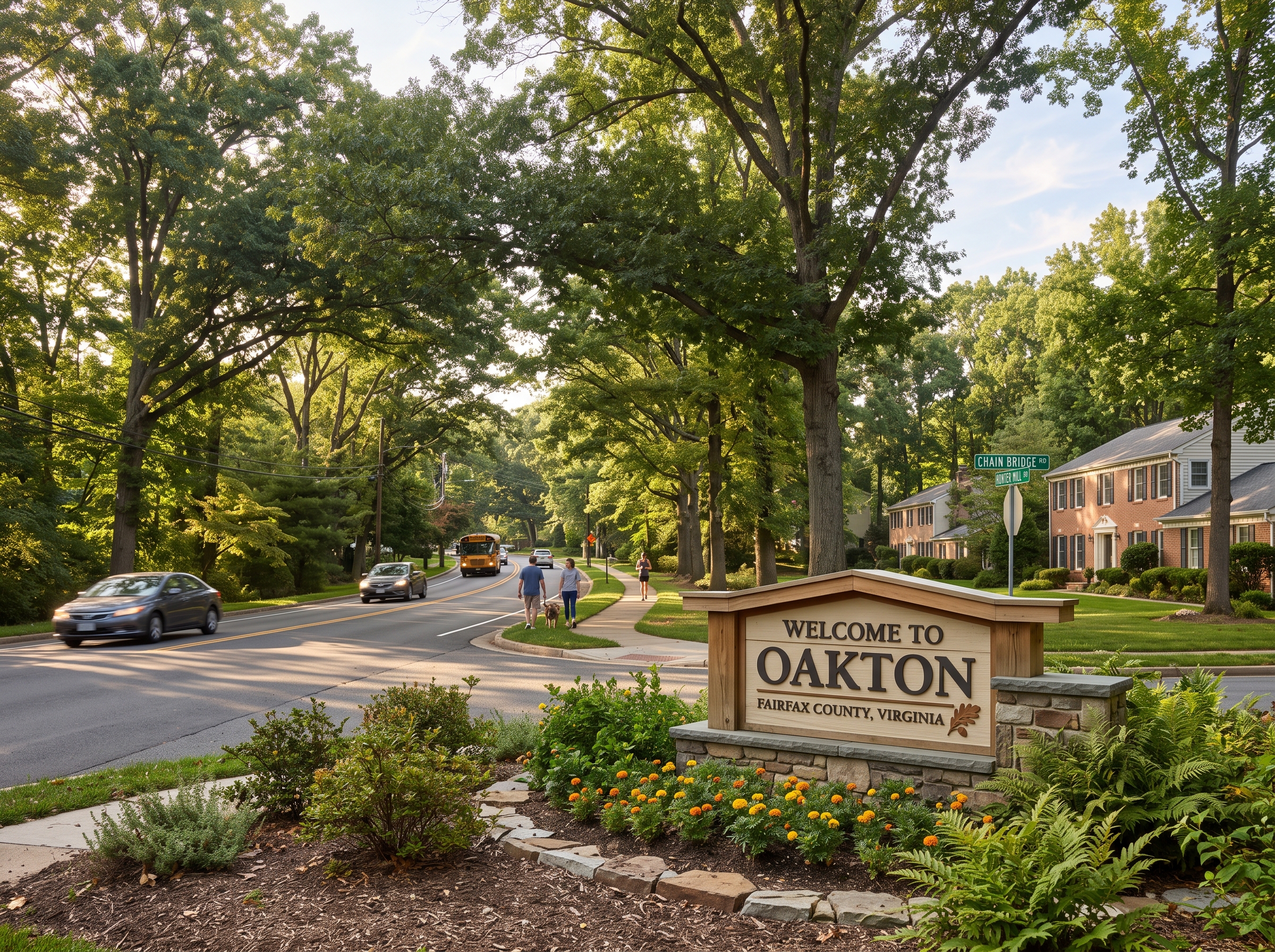
Oakton, Virginia occupies a prestigious enclave within Northern Virginia’s residential landscape. Situated fifteen miles west of Washington, D.C. in north-central Fairfax County, Oakton is an unincorporated community and Census-Designated Place (CDP) encompassing the 22124 ZIP code. Defined by rolling Piedmont topography, mature hardwood forest canopies, the expansive Difficult Run watershed, and generous multi-acre zoning classifications, Oakton provides an idyllic balance between pastoral seclusion and high-speed metropolitan access.
Bordered by Vienna to the east, Reston to the north, Fairfax City to the south, and Fair Oaks to the west, Oakton offers an environment distinctly different from higher-density suburban grid developments. Here, winding two-lane scenic corridors—including Hunter Mill Road, Vale Road, and Fox Mill Road—meander past custom-built stone manors, equestrian paddocks, private circular driveways, and expansive one- to five-acre parcels. This comprehensive encyclopedic guide provides an exhaustive analysis of Oakton’s historical foundations, physical geography, neighborhood enclaves, zoning codes, school pyramids, and fiscal framework.
Foundational Market Principles of Oakton, Virginia
- Low-Density Estate Zoning Architecture. Substantial portions of Oakton are governed by Fairfax County’s R-E (Residential Estate, two-acre minimum), R-C (Residential-Conservation), and R-1 (one-acre minimum) zoning, legally safeguarding large setbacks, private wooded buffers, and low structural density.
- The Upper Difficult Run Watershed Corridor. Oakton contains the headwaters of the Difficult Run watershed, Fairfax County’s largest river basin. Protected by the Chesapeake Bay Preservation Act, 100-foot Resource Protection Area (RPA) buffers guarantee contiguous green space and wildlife migration corridors.
- Top-Ranked Oakton High School Pyramid. Anchored by Oakton High School—consistently celebrated among Virginia’s top public high schools—and supported by Level IV Advanced Academic Program (AAP) centers at Waples Mill Elementary, educational quality serves as the primary stabilizing anchor of property demand.
- Independent County Governance (No Municipal Town Tax). Unlike neighboring Town of Vienna residents, Oakton property owners pay no municipal town real estate taxes, receiving comprehensive county municipal services and police protection directly through Fairfax County.
- Strategic Multi-Modal Commuter Positioning. Oakton residents enjoy immediate access to the Vienna / Fairfax-GMU Orange Line Metrorail station, Interstate 66, Route 123 (Chain Bridge Road), and the Dulles Technology Corridor via Route 267.
- Prevalence of Non-HOA Detached Acreage. Over 85% of Oakton single-family detached homes have no mandatory Homeowners Associations, granting property owners rare autonomy over architectural expression, swimming pools, detached carriage houses, and landscaping.
Quick Navigation: Oakton Guide Sections
1. Oakton at a Glance
| Structural Dimension | Regional Characteristic |
|---|---|
| Jurisdiction & Governance | Unincorporated Community & Census-Designated Place (CDP), Fairfax County, Virginia |
| Magisterial Districts | Providence Magisterial District (South/East) and Hunter Mill Magisterial District (North/West) |
| Postal ZIP Code | 22124 (Oakton Postal Delivery Area) |
| Physical Land Area | Approximately 9.8 square miles across the Census-Designated Place and contiguous estate corridors |
| Physiographic Setting | Rolling Piedmont upland province; natural drainage through the Upper Difficult Run stream basin |
| Dominant Zoning Classifications | R-E (Residential Estate, 2-acre minimum), R-C (Residential-Conservation), R-1 (1-acre minimum), and R-2 |
| Key Commuter Arterials | Route 123 (Chain Bridge Rd), Hunter Mill Rd, Vale Rd, Fox Mill Rd, Interstate 66, Route 50, Route 286 (Fairfax County Pkwy) |
| Heavy Rail Transit Access | Vienna / Fairfax-GMU Metrorail Station (Orange Line terminus, located directly on Oakton’s southern boundary) |
| Public High School Pyramid | Oakton High School Pyramid (Fairfax County Public Schools) |
| Private Educational Anchor | Flint Hill School (flagship co-educational PK–12 campus located on Chain Bridge Road) |
| Civic & Recreation Anchors | Oak Marr RECenter & Golf Course, Difficult Run Stream Valley Park, Vale Park, Borge Street Park |
2. Detailed Historical Evolution of Oakton
Oakton’s transition from an ancient flint crossroads into an executive residential sanctuary unfolded across seven distinct historical epochs:
| Historical Era | Dominant Character | Transformative Events & Infrastructure |
|---|---|---|
| Pre-1750s | Indigenous Algonquian Woodlands | Hunting trails following elevated ridgelines between Difficult Run and Accotink Creek; seasonal lithic quarries for flint toolmaking. |
| 1750s–1860s | Flint Hill Crossroads Settlement | Crossroads known as Flint Hill due to abundant white quartz and flint stones; construction of taverns, tollgates, and blacksmith shops. |
| 1861–1865 | Civil War Skirmishes & Picket Lines | Intense cavalry patrol activity along Chain Bridge Road; Confederate raids under Colonel John S. Mosby; Union pickets between Fairfax Court House and Vienna. |
| Circa 1875 | Naming of Oakton & The "Great Oak" | Community renamed Oakton after the legendary "Oakton Oak," an ancient white oak tree that stood at Chain Bridge Road and Hunter Mill Road for centuries. |
| 1880–1945 | Agrarian Dairy & Orchard Prosperity | Northern migrants establish progressive dairy farms and apple orchards; W&OD railroad in nearby Vienna ships milk to Washington. |
| 1950s–1985 | Low-Density Estate Zoning Protections | Fairfax County enacts R-E and R-C low-density zoning along Difficult Run, protecting large-lot character while surrounding suburbs densified. |
| 1986–Present | Metrorail Arrival & Estate Maturation | Orange Line Metrorail reaches Vienna/Oakton (1986); custom multi-million-dollar estates supersede mid-century farmhouses on multi-acre parcels. |
The Flint Hill Crossroads and Geological Foundations
Throughout the 18th and early 19th centuries, the settlement was universally known as Flint Hill. The name derived from the distinctive geology of the local Piedmont upland plateau, where dense outcroppings of hard white quartz and flint rock littered the red clay subsoil. Indigenous Algonquian peoples utilized these quartz veins for centuries to fashion arrowheads, spear points, and cutting tools.
During the colonial era, Flint Hill became an important crossroads where the turnpike from Georgetown to the Shenandoah Valley (Chain Bridge Road) intersected the north-south trade route of Hunter Mill Road. Small country taverns, wheelwrights, and blacksmith shops serviced stagecoaches and grain wagons hauling crops toward the deepwater seaport of Alexandria.
The Legend of the "Oakton Oak" and the Community’s Naming
Around 1875, postal authorities and local civic leaders sought to establish a dedicated post office and rename the crossroads to avoid postal confusion with other Virginia hamlets. The community adopted the name Oakton in homage to a revered natural landmark: the "Oakton Oak" (often referred to as the Great Oak).
Standing prominently near the intersection of Chain Bridge Road (Route 123) and Hunter Mill Road, this colossal white oak tree (Quercus alba) had flourished for centuries prior to European arrival, possessing an immense canopy and a trunk exceeding twenty feet in circumference. The Great Oak served as a geographic landmark for travelers and Civil War cavalry scouts. Although the historic tree succumbed to age in the early 20th century, its legacy endures as the namesake and civic symbol of the community.
The Civil War: Contested Pickets and Mosby’s Raids
During the Civil War, Oakton’s position between Union-fortified Washington and Confederate Virginia made it an intensely volatile corridor. Chain Bridge Road served as the primary overland artery connecting Union garrisons at Vienna and Fairfax Court House (City of Fairfax).
Cavalry outposts and picket guards were stationed along Hunter Mill Road and Vale Road. Confederate partisan ranger Colonel John S. Mosby and his 43rd Battalion Virginia Cavalry frequently probed Union pickets around Oakton, exploiting the dense oak forests and Difficult Run stream ravines to launch surprise raids on Union supply trains and dispatch riders before retreating into the upper Piedmont countryside.
Post-War Dairy Farming and 20th-Century Estate Preservation
Following Reconstruction, Northern farmers acquired rural acreage in Oakton, introducing modern dairy techniques, silage barns, and expansive apple and peach orchards. As post-World War II suburban tract housing swept eastward across Fairfax County, Oakton followed a deliberately distinct trajectory.
Recognizing the ecological sensitivity of the Difficult Run watershed and the community’s agricultural heritage, Fairfax County planners enacted low-density Residential Estate (R-E, two-acre minimum) and Residential-Conservation (R-C) zoning ordinances across northern and western Oakton. This decisive land-use policy prevented dense subdivision tract development, preserving Oakton’s winding two-lane scenic roads, sweeping estate setbacks, and mature woodland canopy for future generations.
3. Topography, the Difficult Run Watershed, and Environmental Protections
The natural geography of Oakton is defined by the rolling topography of the Piedmont upland province, with elevations rising from 350 feet in stream ravines to over 485 feet along prominent ridgelines near Hunter Mill Road and Vale Road.
Oakton is crowned by the Upper Difficult Run Watershed, the largest and most ecologically significant drainage basin in Fairfax County. Originating in the rolling hills of Oakton and Fair Oaks, Difficult Run flows north-northeast through dense forests, picking up tributaries including Piney Branch, Snakeden Branch, and Little Difficult Run before carving a dramatic gorge into the Potomac River near Great Falls.
Under the Virginia Chesapeake Bay Preservation Act, Fairfax County enforces strict 100-foot Resource Protection Area (RPA) buffer zones along all perennial streams in Oakton. Within these designated conservation corridors, grading, tree clearing, and the construction of impervious surfaces are strictly forbidden. These legal protections preserve contiguous wildlife corridors for red-tailed hawks, white-tailed deer, and red foxes, while ensuring that Oakton estate properties maintain their lush, forested character.
4. The Complete Oakton Neighborhood Dossier
Oakton is not a uniform subdivision; rather, it comprises distinct geographic enclaves defined by acreage size, topography, and architectural heritage:
1. Vale Road & Hunter Mill Road Estate Corridor
Traversing northern and western Oakton, the Hunter Mill Road and Vale Road corridors represent the pinnacle of Northern Virginia estate living. Properties in this sector feature sprawling 1- to 5-acre wooded parcels, private gated entries, winding cobblestone and asphalt driveways, and magnificent custom residences. Architectural styles include grand Georgian brick manors, stone-accented transitionals, French country estates, and custom equestrian properties equipped with private barns and riding rings.
2. Oakton Reserve & Oakton Crest
Among Oakton’s most prestigious modern enclave developments, Oakton Reserve and Oakton Crest feature custom-built luxury manors on private 0.8- to 1.5-acre wooded parcels. Homes exceed 7,000 to 12,000 finished square feet, offering three- and four-car motor courts, grand two-story marble foyers, custom mahogany libraries, elevator banks, resort-style heated pools, and outdoor stone loggias.
3. Fox Mill Woods & Fox Mill Corridor
Bordering Reston to the north, the Fox Mill corridor is characterized by rolling half-acre to one-acre home sites framed by mature oak and beech woods. Residences include classic center-hall brick colonials, expansive multi-level contemporary homes, and modern infill rebuilds. Residents enjoy direct connectivity to the Dulles Toll Road and Reston Town Center.
4. Waples Mill & Difficult Run Enclaves
Situated along Waples Mill Road south of Vale Road, this sector is renowned for its direct proximity to Waples Mill Elementary (Level IV AAP Center) and Difficult Run Stream Valley Park. Properties feature 0.5- to 1.25-acre lots with custom colonials and modern craftsman homes, offering private backyard trails connecting directly into county nature preserves.
5. Difficult Run Estates & Glencairn
Established luxury neighborhoods tucked off Hunter Mill Road, featuring stately all-brick executive colonials constructed primarily between the 1980s and early 2000s on generous 0.75- to 1.5-acre wooded home sites with quiet cul-de-sacs.
6. Miller Heights & Country Creek
Positioned in central and eastern Oakton near Route 123, Miller Heights and Country Creek offer established suburban single-family living on 0.35- to 0.75-acre parcels. Homes include renovated 1960s split-levels, traditional colonials, and selective custom infill residences within walking distance of Oakton Elementary and local community parks.
7. Four Oaks, Oakton Glen & Metro-Adjacent Condominiums
Along Oakton’s southern perimeter adjacent to Interstate 66 and Route 123, luxury townhome and garden condominium enclaves provide turnkey, low-maintenance living. Communities such as Four Oaks, The Oakton, and Oakton Glen feature attached townhomes with private garages and garden-style condominiums within walking or rapid shuttle distance of the Vienna / Fairfax-GMU Orange Line Metrorail station.
5. Architectural Typologies Across Oakton
| Architectural Typology | Primary Era | Defining Structural Attributes | Prevalent Enclaves |
|---|---|---|---|
| Historic Frame Farmhouses | 1880–1930 | Front-gabled or cross-gabled frame structures, metal roofs, heart-pine flooring, wrap-around porches, stone foundations. | Vale Road corridor, Hunter Mill Rd, historic farmsteads |
| Mid-Century Brick Ramblers & Split-Levels | 1955–1972 | Single-level living, integrated lower-level garages, multi-tiered floor plans, brick veneer, 1,600–2,800 sq ft. | Miller Heights, Country Creek, Blake Lane corridor |
| Executive Center-Hall Colonials | 1978–1998 | Symmetrical all-brick facades, grand two-story entry halls, formal living and dining salons, finished basements, 3,800–5,500 sq ft. | Difficult Run Estates, Glencairn, Fox Mill Woods |
| Contemporary Cedar & Deck Homes | 1975–1990 | Vertical cedar siding, soaring tongue-and-groove vaulted ceilings, passive solar glass walls, multi-level cantilevered decks. | Vale Road wooded parcels, Difficult Run stream slopes |
| Custom Transitional & European Stone Manors | 2000–Present | Natural stone and brick exteriors, slate-accented roofs, main-level primary suites, commercial chef kitchens, three-car motor courts, 6,500–12,000+ sq ft. | Oakton Reserve, Hunter Mill Road estates, Vale Road custom parcels |
6. Fairfax County Low-Density Zoning (R-E, R-C, R-1) & Estate Standards
A primary reason Oakton has maintained its scenic, wooded luxury character is Fairfax County’s strict zoning code. Unlike neighboring Vienna which enforces independent municipal town codes, Oakton is governed by Fairfax County’s rural-suburban estate classifications:
| Zoning Classification | Minimum Lot Dimension | Mandatory Building Setbacks | Dominant Sector in Oakton |
|---|---|---|---|
| R-E (Residential Estate) | 2.0 Acres (87,120 sq ft) | Front: 50 ft | Side: 20 ft | Rear: 25 ft | Max Height: 35 ft | Northern Oakton, Vale Road, Hunter Mill rural corridors |
| R-C (Residential-Conservation) | 5.0 Acres (special conservation) | Front: 50 ft | Side: 30 ft | Rear: 35 ft | Max Height: 35 ft | Difficult Run upper watershed protected headwaters |
| R-1 (Residential 1 Unit/Acre) | 36,000 sq ft (approx. 0.83–1.0 Acre) | Front: 40 ft | Side: 20 ft | Rear: 25 ft | Max Height: 35 ft | Difficult Run Estates, Glencairn, Waples Mill custom parcels |
| R-2 (Residential 2 Units/Acre) | 18,000 sq ft (approx. 0.41 Acre) | Front: 35 ft | Side: 15 ft | Rear: 25 ft | Max Height: 35 ft | Central Oakton, Miller Heights, Country Creek |
Tree Canopy and Stormwater Compliance: Under the Fairfax County Public Facilities Manual (PFM), any new custom build or significant expansion in Oakton must preserve or replant sufficient mature trees to maintain a 20-year projected canopy covering at least 20% to 25% of the parcel. Furthermore, new homes must manage 100% of increased impervious roof and driveway runoff on site using bio-retention swales, rain gardens, or underground infiltration detention vaults.
7. The Educational Ecosystem: Oakton High Pyramid and Flint Hill School
Educational excellence in Oakton is driven by Fairfax County Public Schools (FCPS), anchored by the nationally recognized Oakton High School pyramid:
| Pyramid Level | School Name & Location | Academic Distinctions & Advanced Programs |
|---|---|---|
| Public High School | Oakton High School (Cougars - 2900 Sutton Rd) | Consistently ranked among the top 10 public high schools in Virginia; comprehensive AP curriculum; state championship performing arts, band, and athletic programs; 80%+ AP participation. |
| Middle School Feeders | Rachel Carson Middle School & Thoreau Middle School | High-performing intermediate schools featuring full honors programs and accelerated STEM curricula preparing students for high school AP coursework. |
| Elementary School Feeders | Waples Mill Elementary, Oakton Elementary, Crossfield Elementary | Waples Mill Elementary hosts a full-time Level IV Advanced Academic Program (AAP) center; Oakton Elementary celebrated for strong STEM and arts integration. |
| Regional Governor's Magnet | Thomas Jefferson High School for Science & Technology (TJHSST) | Virginia’s Governor’s STEM School in Fairfax County, consistently ranked among the top public high schools in the nation. Qualified Oakton students participate in competitive regional admissions. |
Elite Independent Private Academy: Flint Hill School
Oakton is home to the flagship campus of Flint Hill School, one of the Mid-Atlantic’s most prestigious co-educational independent college-preparatory day schools (serving preschool through grade 12). Situated on Chain Bridge Road (Route 123) in the heart of Oakton, Flint Hill spans two state-of-the-art campuses featuring cutting-edge STEM innovation labs, collegiate athletic stadiums, an expansive fine arts center, and 100% college matriculation to top national universities.
8. Transportation Infrastructure and Commuter Logistics
| Destination Hub | Mileage | Primary Route Corridors | Typical Off-Peak Drive | Typical Peak Commute Window | Mass Transit Option |
|---|---|---|---|---|---|
| Downtown Washington, D.C. (K St / White House) | 15–17 miles | I-66 East or Route 123 to I-66 | 22–26 minutes | 35–55 minutes | Orange Line from Vienna Station (approx. 28 min to Metro Center) |
| Tysons Urban Center | 4–6 miles | Route 123 (Chain Bridge Rd) North | 8–12 minutes | 14–22 minutes | Direct arterial highway drive |
| Reston Town Center | 6–8 miles | Hunter Mill Rd or Fox Mill Rd North | 10–14 minutes | 16–25 minutes | Direct scenic north-south rural arterial |
| Fairfax City Courthouse Core | 3–4 miles | Route 123 (Chain Bridge Rd) South | 6–8 minutes | 10–15 minutes | Direct arterial link south of I-66 |
| Reagan National Airport (DCA) | 16–18 miles | I-66 East to Route 110 / GW Parkway | 24–28 minutes | 35–50 minutes | Orange Line to Rosslyn with transfer to Blue Line |
| Dulles International Airport (IAD) | 11–13 miles | Route 267 Dulles Toll Road or Route 50 | 14–18 minutes | 20–30 minutes | Route 267 Dulles Airport Access Highway |
Direct Adjacency to Vienna / Fairfax-GMU Orange Line Metrorail
While Oakton maintains the tranquil seclusion of wooded acreage, its southern boundary sits directly against the Vienna / Fairfax-GMU Metrorail Station on Interstate 66. Oakton residents enjoy under five-minute vehicular access to multi-level commuter parking garages, enabling a seamless one-seat heavy-rail commute into Rosslyn, Foggy Bottom, and Capitol Hill without fighting highway traffic.
9. Parks, Recreation, and Outdoor Lifestyle
| Facility or Park | Setting & Location | Key Features & Community Amenities |
|---|---|---|
| Oak Marr RECenter & Golf Course | 56 acres, Jermantown Road | Premier Fairfax County Park Authority facility: Olympic-sized indoor swimming pool, diving complex, fitness center, lighted driving range, and 9-hole executive par-3 golf course. |
| Difficult Run Stream Valley Park | Contiguous linear park corridor | Extensive multi-use nature trails for hiking, mountain biking, trail running, and equestrian riding connecting through Oakton to Great Falls. |
| Vale Park & Schoolhouse | Vale Road rural corridor | Community park featuring historic 1884 one-room schoolhouse, open meadow grounds, and civic meeting spaces. |
| Borge Street Park | Borge Street (central Oakton) | Neighborhood park with lit tennis courts, basketball court, youth playground, and shaded picnic pavilions. |
| Oakton Community Park & Shopping | Hunter Mill Road & Route 123 | Pedestrian shopping center featuring boutique coffee houses, local Italian trattorias, specialty markets, and wellness centers. |
10. Fiscal Architecture, Real Estate Taxation, and HOA Framework
Real estate ownership in Oakton operates under the unified fiscal structure of Fairfax County:
Fairfax County Real Estate Assessment and Tax Structure
- Annual County Assessment: Real estate in Oakton is assessed annually at 100% of fair market value by the Fairfax County Department of Tax Administration (DTA).
- Base County Real Estate Tax: Property owners pay the countywide base real estate tax rate established each spring by the Board of Supervisors, funding FCPS public schools, public safety, and infrastructure.
- Countywide Service District Levies: Properties contribute to the countywide Stormwater Management Service District levy (supporting watershed protection along Difficult Run) and a small integrated pest control levy.
- No Municipal Town Tax: Unlike properties situated inside the incorporated Town of Vienna, Oakton properties pay zero municipal town taxes, resulting in a lower overall tax density while receiving full county services.
- No McLean Small District Tax: Oakton properties do not pay the McLean Community Center Small District 1 tax, contributing instead directly to Fairfax County Park Authority facilities like Oak Marr RECenter.
To verify current-year tax rates and official parcel assessment records, property owners and buyers can consult the Fairfax County Department of Tax Administration portal at fairfaxcounty.gov/taxes.
HOA vs. Non-HOA Landscape Across Oakton
Over 85% of single-family detached homes on acreage in Oakton have no mandatory Homeowners Association (HOA). Buyers who value private acreage enjoy complete autonomy over property customization, landscaping, outdoor swimming pools, and detached garages, subject strictly to Fairfax County zoning setbacks. Gated enclaves (such as Oakton Reserve) maintain private associations for private road and gate maintenance, while townhome and condominium communities maintain standard monthly common element assessments.
U.S. Census Demographic and Ownership Profile
Data compiled from the U.S. Census Bureau QuickFacts documents Oakton CDP’s exceptional economic stability:
- High Owner-Occupancy: Over 82% of housing units across Oakton CDP are owner-occupied, demonstrating deep community stewardship.
- Median Household Income: Exceeds $200,000 across Oakton CDP, with high concentrations of corporate executives, legal partners, defense technologists, and medical professionals.
11. Buying a Home in Oakton: Strategic Step-by-Step Playbook
- Secure Jumbo Underwriting Approval Early: Because detached home valuations across Oakton routinely exceed FHFA conforming loan limits, work with lenders experienced in jumbo financing, asset depletion programs, and high-balance portfolio products.
- Differentiate Northern Acreage vs. Southern Metro Convenience: Decide whether your family prioritizes 1- to 5-acre wooded privacy along Vale Road and Hunter Mill Road (R-E / R-1 zoning) or moderate-lot convenience within walking distance of the Vienna Orange Line Metro station.
- Confirm School Pyramid Boundaries: Verify that the home feeds the Oakton High School pyramid (via Rachel Carson or Thoreau Middle) and evaluate elementary feeder alignment (including Waples Mill Level IV AAP center).
- Inspect Environmental & On-Site Systems: For properties with on-site septic or well systems (found on certain multi-acre parcels along Vale Road), conduct certified well flow tests and septic drainfield inspections. For custom estates, evaluate on-site stormwater retention vaults and driveway drainage.
- Review RPA and Setback Boundaries: Verify that proposed swimming pools, tennis courts, or outbuilding additions fall safely outside the 100-foot Chesapeake Bay Resource Protection Area (RPA) buffer zones along Difficult Run tributaries.
12. Selling a Home in Oakton: Pricing, Staging & Acreage Presentation
- Highlight Acreage and Forested Seclusion: Oakton buyers actively seek wooded privacy and expansive outdoor living. Emphasize private lot boundaries, mature tree canopies, outdoor kitchens, and resort-style pools in marketing materials.
- Cinematic Drone and Architectural Presentation: Sprawling multi-acre estates require 4K aerial drone videography to communicate the spatial scope of the parcel, circular motor courts, and relationship to Difficult Run parklands.
- Price to Condition and Layout Preferences: Modern luxury buyers prioritize main-level primary suites, open-concept chef kitchens, and high-ceiling finished walk-out basements. Precision comparative pricing based on recent closed comps is essential.
- Capitalize on Prime Spring Market Momentum: Spring remains Northern Virginia’s peak volume window, capturing executive relocation families and buyers timing settlement prior to the academic year.
13. Investing in Oakton Real Estate
Real estate in Oakton functions primarily as a long-term wealth preservation and land equity asset:
- Enduring Land Scarcity: Low-density R-E and R-1 zoning ensures that multi-acre parcels in Oakton cannot be subdivided into dense tract developments, preserving finite scarcity value.
- Corporate & Tech Tenant Demand: Proximity to Tysons, Reston, and the Dulles Tech Corridor attracts executive relocation tenants seeking private single-family rentals in top school pyramids.
- Metro-Adjacent Townhome Assets: Attached properties near the Vienna Orange Line Metro station provide accessible, high-occupancy rental investments for real estate portfolios.
14. Oakton vs. Nearby Northern Virginia Submarkets
| Regional Submarket | Lot Dimensions & Setting | Commute to D.C. | Zoning & Character | Key Trade-Offs vs. Oakton |
|---|---|---|---|---|
| Oakton, VA | 0.5 to 5+ acres; rolling wooded Difficult Run basin | 15–17 miles; 22–45 min via I-66 or Orange Line | Fairfax County R-E / R-1 low-density estate zoning | Premier blend of wooded acreage privacy, Oakton High pyramid, and direct Orange Line Metro access. |
| Town of Vienna, VA | 0.20 to 0.40 acres; small-town grid & trail | 14–16 miles; 20–40 min via I-66 or Orange Line | Independent municipal town government (RS-10/12.5) | Higher pedestrian walkability to historic Church Street and town services, but substantially smaller average lot sizes. |
| Great Falls, VA | 0.8 to 5+ acres; semi-rural equestrian acreage | 14–18 miles; 25–50 min via Route 7 or Georgetown Pike | Semi-rural estate zoning (R-E) | Comparable estate parcel acreage, but longer commute times and absence of direct Metrorail heavy rail stations. |
| McLean, VA | 0.33 to 2+ acres; rolling wooded Potomac bluffs | 8–10 miles; 15–30 min via GW Parkway or Chain Bridge | Executive riverfront & infill zoning (R-1 / R-2) | Closer proximity to downtown Washington, but significantly higher entry price points. |
| Fairfax Station, VA | 1.0 to 5+ acres; rolling wooded southern acreage | 20–25 miles; 30–55 min via Route 123 or VRE rail | R-C residential conservation estate zoning | Similar expansive wooded lots, but located further south from the Tysons and Reston employment corridors. |
15. Frequently Asked Questions About Oakton, VA Real Estate
Is Oakton an incorporated town or part of Fairfax County?
Oakton is an unincorporated community and Census-Designated Place (CDP) within Fairfax County, Virginia. Unlike the neighboring Town of Vienna, Oakton does not have an independent municipal town government, mayor, or town council. Municipal services, police protection, public schools, and zoning enforcement are administered directly by Fairfax County under the Providence and Hunter Mill Magisterial Districts.
Where does the name "Oakton" come from?
Originally known in the 18th and 19th centuries as Flint Hill (due to abundant surface quartz and flint stone deposits), the community was renamed Oakton around 1875 in honor of the "Oakton Oak" (or Great Oak). This massive white oak tree flourished for centuries at the crossroads of Chain Bridge Road (Route 123) and Hunter Mill Road, serving as a historic regional landmark.
What public high school pyramid serves Oakton?
Oakton is served by the prestigious Oakton High School pyramid in Fairfax County Public Schools (FCPS), fed by Rachel Carson Middle School and Thoreau Middle School. Feeder elementary schools include Waples Mill Elementary (hosting a full-time Level IV AAP center), Oakton Elementary, and Crossfield Elementary. Qualified students can also attend Thomas Jefferson High School for Science and Technology (TJHSST).
What are typical lot sizes in Oakton?
Due to Fairfax County’s low-density zoning, lot sizes in Oakton are among the largest in Northern Virginia. In northern and western Oakton along Hunter Mill Road and Vale Road, lots routinely range from 1 to 5+ acres under R-E (Residential Estate) and R-1 zoning. Central and southern Oakton feature established neighborhoods with 0.35- to 0.75-acre parcels, alongside townhome enclaves near Interstate 66.
Does Oakton have direct Metrorail access?
Yes. The Vienna / Fairfax-GMU Metrorail Station—the western terminus of the Washington Metro Orange Line—is situated directly on Oakton’s southern boundary along Interstate 66 at Route 123. Oakton residents enjoy under five-minute access to commuter parking garages, providing a direct, one-seat heavy-rail commute into downtown Washington.
How are real estate taxes structured in Oakton?
Real estate in Oakton is assessed annually at 100% of fair market value by the Fairfax County Department of Tax Administration. Property owners pay the countywide base real estate tax, the county stormwater management service district levy, and a small pest control fee. Oakton residents pay zero municipal town taxes (unlike Town of Vienna residents) and do not pay the McLean Community Center special district tax.
Do homes in Oakton have mandatory Homeowners Associations (HOAs)?
Over 85% of single-family detached homes on acreage in Oakton have no mandatory Homeowners Association (HOA). Property owners enjoy complete freedom over their parcels, subject strictly to Fairfax County zoning and building codes. Mandatory HOAs are primarily found in gated enclaves (such as Oakton Reserve) and condominium/townhome communities.
What is the Difficult Run watershed and how does it affect properties?
Difficult Run is Fairfax County’s largest watershed basin, with headwaters flowing through Oakton. Under the Virginia Chesapeake Bay Preservation Act, perennial stream corridors feature 100-foot Resource Protection Area (RPA) vegetative buffer zones where clearing and construction are prohibited. These regulations preserve mature forests and wildlife habitats while shaping buildable lot envelopes.
What is Oak Marr RECenter?
Oak Marr RECenter is a premier 56-acre facility operated by the Fairfax County Park Authority in Oakton. It features an Olympic-sized indoor swimming pool, diving complex, fitness center, lighted driving range, and a 9-hole executive par-3 golf course, serving as a recreational centerpiece for local families.
Is Flint Hill School located in Oakton?
Yes. Flint Hill School’s flagship campus is situated directly on Chain Bridge Road (Route 123) in Oakton. It is one of the Mid-Atlantic’s leading independent college-preparatory day schools, serving students from preschool through grade 12 with championship athletics, STEM labs, and fine arts facilities.
Disclaimer: This architectural and community guide is published for informational and educational purposes only and does not constitute financial, legal, or tax advice. Real estate market conditions, interest rates, tax assessment levies, school boundaries, and zoning ordinances change continually and vary by parcel. Prospective purchasers and sellers should independently verify all figures and consult licensed professionals prior to executing binding agreements.
Equal Housing Opportunity: This publication strictly adheres to the principles of the Fair Housing Act and describes geographic locations, zoning frameworks, and physical property characteristics without regard to race, color, religion, sex, handicap, familial status, or national origin.