
Oakton, VA Real Estate: The Definitive Guide to Wooded Acreage, Vienna Metrorail Proximity & the Oakton High School Pyramid
1. Executive Summary & Foundational Takeaways
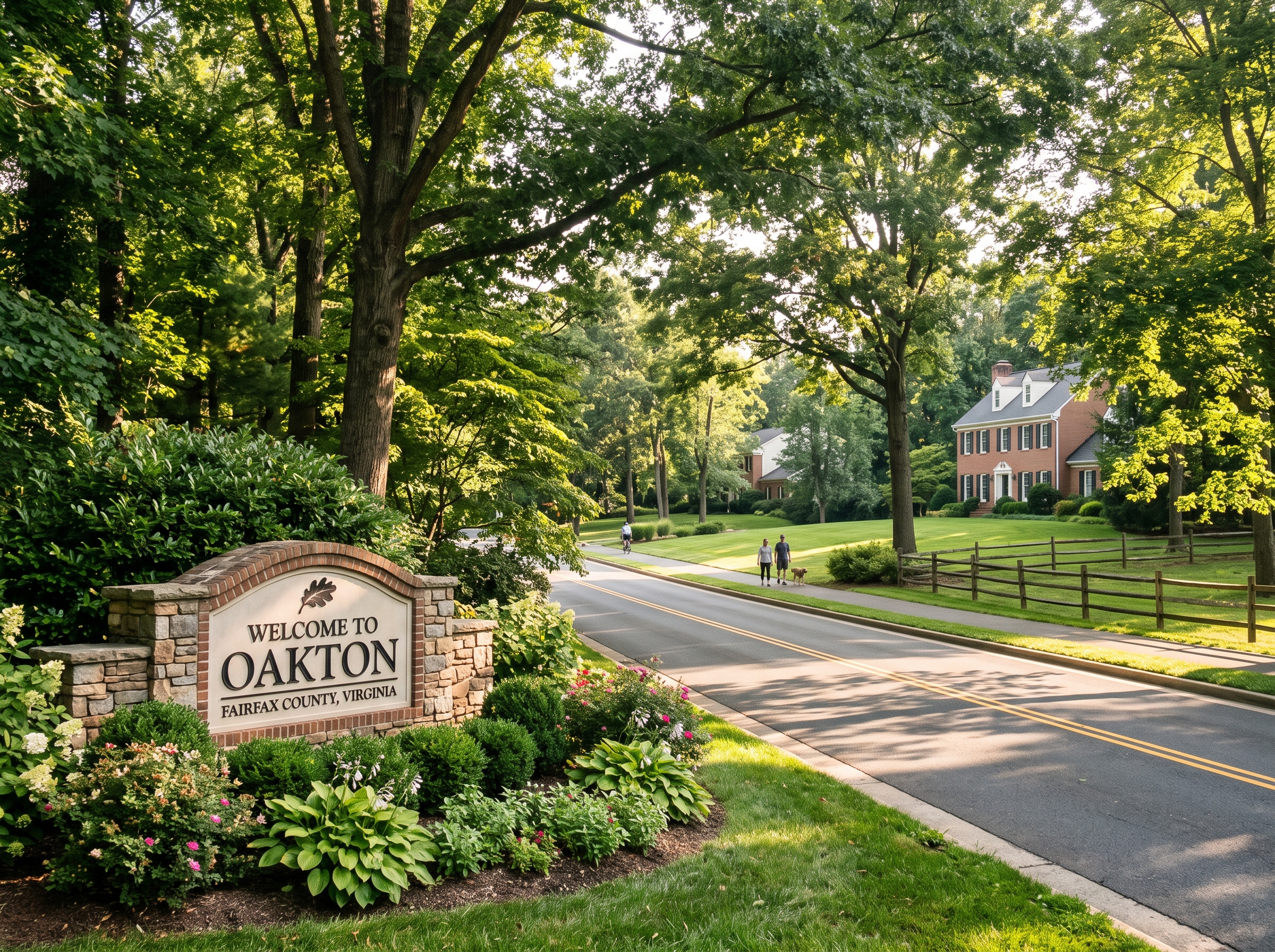
Oakton, Virginia, represents one of the most prestigious, topographically scenic, and geographically advantageous residential communities in Northern Virginia. Situated in north-central Fairfax County within postal ZIP code 22124—administered primarily under the Providence Magisterial District with borders touching Hunter Mill and Springfield—Oakton bridges the cosmopolitan commerce of Tysons and Vienna with the serene, wooded estate corridors of western Fairfax County.
Distinguished by its expansive half-acre to five-acre parcels, towering virgin hardwood canopies, and strict residential zoning under Fairfax County's R-1 (one dwelling unit per acre) and R-E (Residential Estate, two-acre minimum) classifications, Oakton offers an authentic retreat-like lifestyle that resists dense commercial development. Its housing inventory encompasses historic nineteenth-century homesteads, classic center-hall brick colonials in mature subdivisions like Oakton Estates, and multi-million-dollar custom luxury craftsman manors along the scenic corridors of Hunter Mill Road and Vale Road.
Despite its peaceful woodland seclusion, Oakton offers extraordinary commuter connectivity. The community directly borders the Vienna/Fairfax-GMU Metrorail Station (Orange Line terminus) and features direct access to Interstate 66 (with Express Lanes) and Route 123 (Chain Bridge Road). Academic excellence within the nationally acclaimed Oakton High School pyramid and exceptional recreational amenities at the Oak Marr Recreation Center and Difficult Run Stream Valley Park cement Oakton's status as a generational destination for executive and professional families.
The Six Structural Pillars of Oakton Real Estate
- Low-Density Wooded Acreage Zoning. Dominance of R-1 (one-acre) and R-E (two-acre) zoning that preserves sweeping tree canopies, deep setbacks, and maximum residential privacy.
- Doorstep Vienna Metrorail & I-66 Access. Immediate southern proximity to the Vienna/Fairfax-GMU Metrorail Station and I-66 Express Lanes, enabling rapid, one-seat rapid transit into Arlington and Washington, D.C.
- Oakton High School Academic Prestige. Consistently ranked among the top public high schools in Virginia, driving steady demand from families prioritizing rigorous STEM, humanities, and AP curricula.
- Hunter Mill Scenic Rural Byway. A historic Virginia scenic corridor lined with custom luxury estates, horse farms, and protected conservation buffers.
- Difficult Run & Oak Marr Parklands. Bounded by the pristine Difficult Run stream valley trail network and anchored by the county-operated Oak Marr Recreation Center (Olympic indoor pool, golf course, fitness center).
- Unmatched Tysons & Vienna Adjacency. Located five to ten minutes from the premier corporate towers, Michelin-caliber dining, and luxury retail of Tysons Galleria and historic downtown Vienna.
2. Geopolitical Identity & County Administration
Oakton is an unincorporated census-designated place (CDP) governed directly by the Fairfax County Board of Supervisors, represented primarily within the Providence Magisterial District. Because it is not an incorporated municipality, Oakton has no independent town charter, town council, or separate town tax authority.
Municipal operations, law enforcement, and emergency management are delivered directly through Fairfax County's unified agencies:
- Fairfax County Police Department (FCPD): Patrolled primarily by the McLean District Station (Station 2) and Fair Oaks District Station (Station 3), maintaining exceptional community safety and rural road monitoring.
- Fairfax County Fire and Rescue: Station 34 (Oakton) on Hunter Mill Road provides rapid emergency medical, heavy rescue, and structural fire protection to the community.
- Fairfax County Maintenance & Utilities: Comprehensive county oversight of public stormwater management, road maintenance through VDOT, and watershed environmental conservation.
Under Virginia Code Title 58.1-3201, all real property in Oakton is assessed annually at 100 percent of fair market value by the Fairfax County Department of Tax Administration (DTA). Homeowners pay solely the unified county real estate tax rate, avoiding duplicate town taxes while enjoying top-tier county public infrastructure.
3. Historical Evolution: From Flint Hill Crossroads to "The Oakton Oak"
The heritage of Oakton traces back to the late eighteenth and early nineteenth centuries when the area was an essential agrarian crossroads known as Flint Hill, named for the abundant white quartz flint stones found in the local soil. Positioned along the turnpike connecting the port of Alexandria with Leesburg (modern Route 123) and the rural mill road along Difficult Run (Hunter Mill Road), the settlement supported blacksmiths, wheelwrights, taverns, and post offices.
During the American Civil War, Hunter Mill Road and Chain Bridge Road were heavily utilized by both Union and Confederate forces as vital reconnaissance corridors. Confederate cavalry under Major General J.E.B. Stuart staged frequent movements through the area, while Union infantry established encampments and defensive piquets along the ridge tops overlooking Difficult Run.
In the 1870s, the community was formally renamed Oakton in homage to the legendary "Oakton Oak"—a massive, centuries-old white oak tree that stood proudly near the junction of Chain Bridge Road and Hunter Mill Road. The majestic oak became the enduring symbol of the community's pastoral strength, deep roots, and natural canopy. Following World War II, as suburban expansion transformed Northern Virginia, Oakton carefully balanced selective high-end residential subdivision with strict low-density zoning, successfully preserving its rural woodland heritage.
4. Housing Stock & Architectural Morphology
Because Oakton developed through distinct historical epochs rather than single-developer mass grading, its residential architecture exhibits exceptional individuality and craftsmanship:
- Established Mid-Century Colonials & Ramblers: Developed between 1960 and 1985 in subdivisions such as Oakton Estates, Oakton Glen, and Miller Heights. These classic residences feature traditional four-bedroom center-hall layouts, solid brick and cedar construction, finished lower levels, and attached two-car garages sited on peaceful, tree-canopied half-acre to one-acre parcels.
- Custom Contemporary & Luxury Craftsman Infill: Over the past two decades, strong market demand has stimulated high-end custom building throughout Oakton. These substantial residences feature stone foundations, James Hardie architectural siding, multi-story open-concept foyers, professional chef kitchens, primary bedroom suites with spa baths, and three- to four-car garages.
- Multi-Acre Secluded Estates & Equestrian Farms: Tucked along Vale Road, Stuart Mill Road, and Hunter Mill Road, these properties encompass two to five or more contiguous wooded acres. Many feature private gated entries, swimming pools, tennis courts, detached carriage houses, and horse barns with direct access to private riding trails.
- Established Condominium & Townhome Enclaves: Located primarily along the southern Route 123 corridor within walking distance of the Vienna Metrorail station (such as Treebrooke and The Oakton), offering low-maintenance single-level living and multi-story townhomes with community clubhouses, pools, and tennis facilities.
5. Prominent Neighborhoods & Residential Submarkets
Oakton is composed of several distinguished residential enclaves, each offering specific architectural profiles and topographical settings:
- Oakton Estates & Oakton Glen: Prestigious, leafy subdivisions developed in the late twentieth century featuring stately brick colonials on mature half-acre to one-acre landscaped parcels. Known for active community associations and tranquil, sidewalk-lined lanes.
- Hunter Mill Scenic Corridor: A designated Virginia scenic byway winding north toward Reston, lined with custom-built stone manors, equestrian properties, and multi-acre woodland estates sheltered by virgin deciduous forests.
- Vale Road & Fox Mill Enclave: Stretching westward toward Herndon and Fairfax, this peaceful rural corridor features rolling multi-acre parcels, horse pastures, and sprawling custom luxury estates.
- Difficult Run Stream Valley Enclaves: Exclusive residential pockets backing directly to Difficult Run parklands, providing homeowners with direct pedestrian and equestrian access to county trail networks.
- Blakelee & Oakton Village: Elegant subdivisions located close to central Oakton, featuring spacious colonial architecture, attached two-car garages, and direct access to local shopping and dining.
- Treebrooke & Route 123 Corridor: Highly desirable garden-style condominiums and brick townhomes situated immediately adjacent to the Vienna Metrorail station and I-66.
6. Neighborhood & Submarket Comparative Matrix
The following analytical matrix summarizes the architectural, spatial, and transit profiles across seven prominent residential submarkets in Oakton:
| Residential Submarket | Predominant Housing Typology | Era / Architectural Style | Commuter & Transit Access | Lot Sizes & Setbacks | Key Defining Characteristics |
|---|---|---|---|---|---|
| Oakton Estates & Glen | Center-Hall Brick Colonials | 1970s–1990s Traditional Suburban | 5 mins to Vienna Metro; Route 123 | 0.50 to 1.0 Acre; Mature tree canopy | Sidewalk-lined streets; stately brick facades; attached 2-car garages; low turnover |
| Hunter Mill Corridor | Custom Luxury Stone & Brick Manors | 1990s–Present Custom Luxury | Direct arterial north to Toll Road & Reston | 1.5 to 3.0+ Acres; Deep wooded setbacks | Virginia scenic byway; private gated entries; multi-acre privacy; equestrian compatibility |
| Vale Road & Stuart Mill | Equestrian Estates & Craftsman Manors | 1980s–Present Rural Custom | Vehicular; Scenic country lanes | 2.0 to 5.0+ Acres; Rolling topography | Horse paddocks; barn facilities; R-E zoning; maximum privacy and dark night skies |
| Difficult Run Enclaves | Contemporary & Transitional Colonials | 1980s–2000s Executive Custom | Quick access to Route 123 & Tysons | 0.75 to 2.0 Acres; Stream buffers | Direct trailhead access to Difficult Run parklands; nature sanctuary ambiance |
| Blakelee / Oakton Village | Executive Colonials & Infill Manors | 1980s–1990s Suburban Executive | Walkable to central Oakton shopping | 0.33 to 0.60 Acres; Manicured lawns | Convenience to Oakton Shopping Center; quiet cul-de-sacs; top school pyramids |
| Treebrooke / Oakton Condos | Garden Condominiums & Townhomes | 1970s–1980s Planned Multi-Family | Walking distance to Vienna Metro Station | Condominium footprints / Balconies | Doorstep Orange Line access; community swimming pool and clubhouse; commuter convenience |
| Miller Heights | Brick Ramblers & Split-Levels | 1960s–1970s Established Post-War | Quick access to I-66 & Route 50 | 0.50 to 0.75 Acres; Wooded yards | Spacious level parcels; active infill renovation potential; peaceful neighborhood fabric |
7. Public Education & The Oakton High School Pyramid
A primary driver of residential demand in Oakton is access to the nationally recognized Oakton High School pyramid within Fairfax County Public Schools (FCPS):
- Oakton High School (Home of the Cougars): Consistently recognized as one of the top public comprehensive secondary schools in the Commonwealth of Virginia. Oakton High offers extensive Advanced Placement (AP) coursework, award-winning performing arts ensembles, cutting-edge science and computer programming academies, and competitive athletics that foster high Ivy League and Tier-1 university matriculation.
- Feeder Middle Schools: The pyramid is supported primarily by Rachel Carson Middle School in Herndon (renowned for exemplary STEM performance) and Luther Jackson Middle School in Falls Church, both delivering rigorous honors curricula.
- Feeder Elementary Schools: Grounded in top-tier primary education delivered by Waples Mill Elementary, Oakton Elementary, and Flint Hill Elementary, which consistently report exemplary SOL standardized test scores and active parent-teacher associations.
High-achieving eighth-grade students residing in Oakton are also eligible to participate in the competitive regional admissions process for Thomas Jefferson High School for Science and Technology (TJHSST), the regional governor's school in Alexandria consistently ranked as the nation's premier public high school.
8. Regional Highway Connectivity & Vienna Metrorail Nexus
Oakton occupies one of the most advantageous commuter crossroads in the Washington Metropolitan Area:
- The Vienna/Fairfax-GMU Metrorail Station: Located immediately along the southern border of Oakton at Nutley Street and Virginia Center Boulevard, this major terminus on the Washington Metrorail Orange Line provides effortless, one-seat rapid rail transit through Arlington (Ballston, Clarendon, Rosslyn) and into downtown Washington, D.C. (Farragut West, Metro Center, Capitol Hill), completely bypassing highway congestion.
- Interstate 66 (I-66) Direct Interchanges: Dual direct interchanges at Route 123 (Chain Bridge Road) and Nutley Street grant instantaneous access to the Transform 66 Express Lanes, enabling rapid transit to Washington Dulles International Airport, the Capital Beltway (I-495), and the Pentagon.
- Route 123 (Chain Bridge Road): The central commercial and commuter spine connecting Oakton directly north to the Town of Vienna and Tysons, and south past the City of Fairfax directly to George Mason University.
- Hunter Mill Road: A picturesque Virginia scenic byway providing a signal-free, tranquil route north to Reston, the Dulles Toll Road (Route 267), and the Silver Line technology corridor.
9. Parks, Recreation & Difficult Run Stream Valley
Despite its proximity to major highway arteries, Oakton is enveloped by premier outdoor recreation centers and protected environmental buffers:
- Oak Marr Recreation Center: Operated by the Fairfax County Park Authority, this flagship recreational hub features a 50-meter Olympic indoor swimming pool, diving complex, state-of-the-art fitness center with personal training, multi-purpose fitness studios, lighted athletic fields, a par-3 9-hole golf course, and a lighted, heated driving range.
- Difficult Run Stream Valley Park: A protected environmental corridor weaving directly through northern and western Oakton. Miles of scenic natural-surface trails connect through deciduous woodlands and rocky stream beds, linking Oakton hikers, runners, and equestrians north toward Reston, Great Falls, and the Potomac River.
- Bready Park & Fred Packard Center: Community parks featuring lighted baseball diamonds, soccer fields, tennis courts, and children's playgrounds.
10. Retail, Dining & Commercial Conveniences
Oakton preserves an intimate, village-like commercial core that caters to daily residential necessities while insulating neighborhoods from sprawling strip developments:
The commercial anchor is the Oakton Shopping Center at Chain Bridge Road and Hunter Mill Road, featuring Giant Food, CVS Pharmacy, specialty banks, dry cleaners, and beloved local dining institutions including Luciano Italian Restaurant and Kob Kun Thai.
For world-class luxury shopping and fine dining, Oakton residents enjoy doorstep proximity to Tysons Corner Center and Tysons Galleria (five to seven minutes north via Route 123), offering high-fashion boutiques, luxury department stores, and celebrated culinary establishments.
11. Zoning Framework, R-1 / R-E Standards & Tree Canopy Protection
Land use and residential development across Oakton are governed under Fairfax County's updated zMOD Zoning Ordinance, prioritizing low-density estate conservation:
- R-1 (Residential Low Density): Mandates a minimum lot size of 36,000 to 40,000 square feet (one dwelling unit per acre), ensuring expansive front setbacks, private side buffers, and preserved backyards.
- R-E (Residential Estate): Mandates a minimum parcel size of two contiguous acres (87,120 square feet), establishing substantial building setbacks that preserve the rural wooded landscape along Hunter Mill and Vale Roads.
- Tree Canopy & Environmental Preservation: Fairfax County strictly regulates tree clearance, soil erosion, and stormwater runoff on all new custom infill construction sites, ensuring the preservation of legacy oak, beech, and tulip poplar canopies.
12. Environmental Infrastructure: Wells, Septic & Municipal Utilities
Infrastructural mechanics across Oakton vary significantly based on neighborhood geography:
- Public Water & Sewer Grid: Subdivisions located near Route 123, Oakton Village, and the Vienna Metrorail station are connected directly to Fairfax Water and county municipal sewer mains.
- Private Wells & Engineered Septic: Multi-acre parcels along Hunter Mill Road, Vale Road, and Stuart Mill Road operate on private deep-drilled drinking water wells and on-site sewage disposal systems (conventional drainfields or engineered alternative systems), regulated by the Fairfax County Health Department.
13. Real Estate Market Dynamics: Tenured Ownership & Structural Value Drivers
The residential real estate market in Oakton is defined by exceptional ownership tenure, high buyer liquidity, and structural value resilience:
- Multi-Decade Ownership Longevity: Homeowners in Oakton frequently maintain their properties for 20 to 30 years due to the community's combination of wooded acreage and transit convenience, resulting in consistently low inventory levels.
- Executive & Professional Buyer Pool: Oakton attracts senior corporate executives working in Tysons, technology founders from the Dulles Corridor, attorneys, and specialized physicians seeking land and top-tier public schools within 25 minutes of downtown Washington, D.C.
- Statutory Assessment Stability: In accordance with Virginia Code Title 58.1-3201, properties are assessed annually at 100 percent of fair market value by Fairfax County, ensuring transparent and predictable property tax obligations.
14. Strategic Advisory & Buyer/Seller Due Diligence Framework
Navigating property acquisitions in Oakton requires careful verification of parcel-specific utilities, school boundaries, and zoning overlays:
- Utility Verification (Public vs. Septic/Well): Buyers must confirm whether a prospective parcel connects to municipal water/sewer or relies on private well and septic infrastructure, ordering comprehensive well flow/water quality tests and septic drainfield certifications accordingly.
- School Boundary Locators: While most of Oakton feeds into Oakton High School, certain perimeter neighborhoods feed into Madison High School (Vienna) or South Lakes High School (Reston). Precise confirmation via the official FCPS Boundary Locator is essential.
- Infill & Addition Lot Coverage Review: Homeowners planning major additions or new construction must verify R-1 and R-E building setbacks, maximum lot coverage ratios, and tree canopy preservation covenants.
15. Frequently Asked Questions Regarding Oakton Real Estate
Is Oakton an incorporated town or an unincorporated community?
Oakton is an unincorporated census-designated place (CDP) situated in north-central Fairfax County, Virginia, primarily within the Providence Magisterial District. Governance, law enforcement, public education, and emergency services are administered directly by Fairfax County, meaning homeowners pay unified county property taxes without any separate municipal town levies.
What commuter rail transit options serve Oakton?
Oakton is uniquely positioned immediately adjacent to the Vienna/Fairfax-GMU Metrorail Station on the Washington Metrorail Orange Line, located at Nutley Street and I-66 on the southern border of the community. Residents enjoy direct, rapid heavy-rail transit into Arlington (Ballston, Rosslyn) and downtown Washington, D.C., as well as immediate access to the Interstate 66 Express Lanes.
Which public schools serve the Oakton community?
Oakton is anchored by the renowned Oakton High School pyramid within Fairfax County Public Schools (FCPS). Consistently ranked among the top high schools in the Commonwealth of Virginia, Oakton High (home of the Cougars) is fed by Rachel Carson Middle School, Luther Jackson Middle, Waples Mill Elementary, Oakton Elementary, and Flint Hill Elementary. High-achieving students are also eligible for admission to Thomas Jefferson High School for Science and Technology (TJHSST).
What architectural styles predominate throughout Oakton residential neighborhoods?
Oakton features an exceptional architectural spectrum ranging from established mid-century brick ramblers and center-hall colonial revivals in subdivisions like Oakton Estates and Oakton Glen to contemporary custom craftsman and French country manors situated on one-to-two-acre wooded parcels along Hunter Mill and Vale Roads.
What is the historical origin of the name Oakton?
Originally known in the early nineteenth century as "Flint Hill," the community was officially renamed Oakton in the 1870s in honor of the legendary "Oakton Oak"—a colossal, ancient white oak tree that stood near Chain Bridge Road and Hunter Mill Road, symbolizing the area's rich forest canopy and agrarian resilience.
What parklands and recreational facilities are situated within Oakton?
Oakton is home to the Oak Marr Recreation Center, a premier Fairfax County Park Authority complex featuring an Olympic-sized indoor swimming facility, state-of-the-art fitness center, lighted driving range, and a 9-hole par-3 golf course. The community is also traversed by the Difficult Run Stream Valley Park network, offering miles of scenic woodland walking and equestrian trails.
How are real estate property taxes assessed in Oakton?
In accordance with Virginia Code Title 58.1-3201, all real property in Oakton is assessed annually at 100 percent of fair market value by the Fairfax County Department of Tax Administration (DTA). County tax rates are determined annually by the Fairfax County Board of Supervisors to fund public schools, public safety, and infrastructure.
What zoning classifications govern residential development in Oakton?
Residential land use in Oakton is governed primarily by Fairfax County's R-1 (one dwelling unit per acre) and R-E (Residential Estate, two-acre minimum parcel size) zoning districts under the updated zMOD ordinance. This low-density regulatory framework protects expansive lot setbacks, privacy buffers, and mature hardwood canopies.
How close is Oakton to Tysons and the Town of Vienna?
Oakton directly borders the historic Town of Vienna to the east and is situated just 5 to 10 minutes from Tysons via Route 123 (Chain Bridge Road), providing residents with doorstep access to premier shopping (Tysons Corner Center, Tysons Galleria), Michelin-caliber dining, and major corporate employment centers.
Do homes in Oakton utilize public utilities or private wells and septic systems?
While many established subdivisions near Route 123 and the Vienna Metrorail station are connected to Fairfax Water and municipal sewer, numerous larger multi-acre estate parcels along Vale Road and Hunter Mill Road operate on private deep-drilled wells and engineered on-site septic absorption drainfields.
16. Municipal & Architectural Data Verification Checklist
Essential Public Records Checklist for Prospective Buyers
- Fairfax County Property Tax Assessment. Verify historical assessed values and legal property boundaries via the Fairfax County DTA database.
- Septic & Well Environmental Permits. For multi-acre acreage properties, obtain health department operating permits, well completion reports, and drainfield expansion reserve maps.
- Oakton High Pyramid Boundary Confirmation. Cross-reference parcel addresses with the official FCPS Boundary Locator tool.
- Vienna Metrorail Walking & Parking Proximity. Review walking paths or commuter parking availability at the Vienna/Fairfax-GMU Metrorail station.
- Zoning & Tree Canopy Covenants. Inspect R-1 and R-E setback lines, lot coverage allowances, and environmental stream buffer protections.
Informational & Research Monograph Notice: This research monograph is published exclusively for educational, historical, and community research purposes. All municipal boundaries, school attendance zones, architectural classifications, zoning codes, and transit routes are compiled from published public records of Fairfax County, Virginia, and Fairfax County Public Schools.
Equal Housing Opportunity: All real estate practices adhere strictly to the Federal Fair Housing Act, the Virginia Fair Housing Law, and local human rights ordinances. No representations are made regarding property valuations or mortgage underwriting terms. Prospective buyers and sellers are advised to consult licensed Virginia real estate attorneys, land use planners, and the Fairfax County Department of Planning and Development for property-specific zoning verifications.