
Wolf Trap, VA Real Estate: The Definitive Guide to Luxury Estate Living, Wolf Trap National Park, Difficult Run & Vienna Corridors
Executive Summary & Essential Community Takeaways
- Prestigious 9.8 Square-Mile Northern Virginia Enclave: Encompassing approximately 9.8 square miles in northern Fairfax County (ZIP code 22182), Wolf Trap is a luxury residential district positioned between Great Falls, McLean, Tysons, and the Town of Vienna, just 14 miles west of central Washington, D.C.
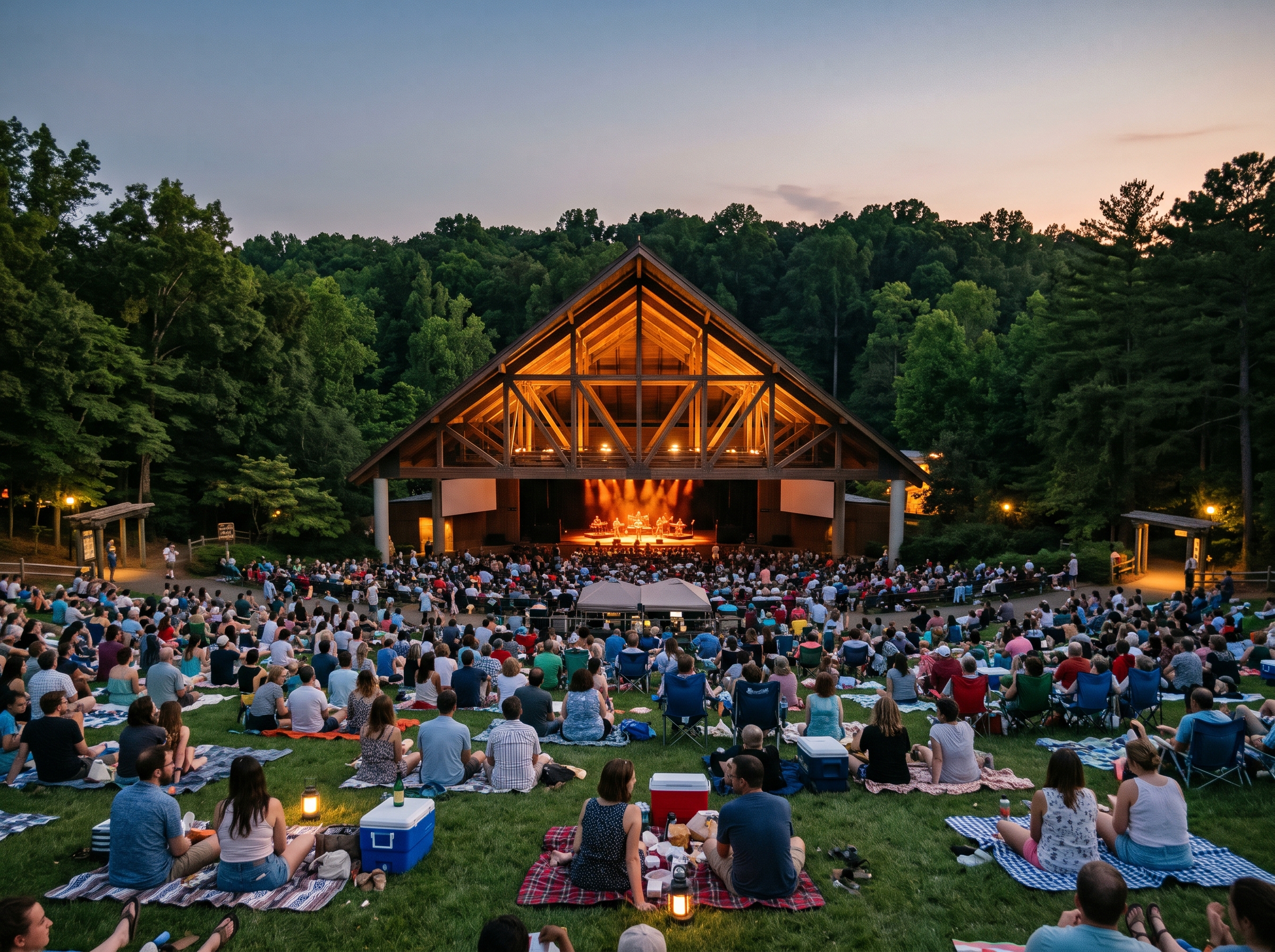
- America's Only National Park for the Performing Arts: Anchored by the 117-acre Wolf Trap National Park for the Performing Arts, gifted by philanthropist Catherine Filene Shouse, featuring the magnificent 7,000-seat open-air wooden Filene Center and The Barns at Wolf Trap.
- Expansive 1- to 2+ Acre Estates with Zero Mandatory HOA: Characterized by low-density zoning (R-E and R-1), featuring custom architectural masterworks, European stone châteaux, and grand colonials situated on private multi-acre wooded grounds with zero mandatory HOA dues or restrictive committees.
- Difficult Run & W&OD Regional Trail Sanctuaries: Traversed by the Difficult Run Stream Valley Park—Fairfax County's largest contiguous stream valley greenway—and directly bordering the 45-mile paved Washington & Old Dominion (W&OD) Railroad Regional Park.
- Elite Academic Achievement (Langley & Madison Pyramids): Served by nationally ranked Fairfax County Public Schools, including Colvin Run, Westbriar, and Wolftrap Elementary, feeding into James Madison High School in Vienna and Langley High School in McLean.
- Five-Minute Proximity to Tysons & Silver Line Metro: Bordering Tysons Corner directly to the east, residents enjoy instant access to premier corporate headquarters, high-end shopping at Tysons Galleria, the Dulles Toll Road (Route 267), and Metrorail Silver Line stations.
1. Spatial Morphology, Geographic Coordinates & Territorial Extents
Wolf Trap, Virginia, occupies one of the most prominent, affluent geographic locations in Northern Virginia. Cataloged by the United States Census Bureau as an official Census-Designated Place (CDP) under Federal Information Processing Standard (FIPS) code 51-87168 and Geographic Names Information System (GNIS) identifier 2390509, the Wolf Trap community spans an expansive land territory of approximately 9.8 square miles. Geographically centered at coordinates 38°56′0″ N latitude and 77°17′3″ W longitude, Wolf Trap sits at an average elevation of 300 to 450 feet above sea level, resting upon the rolling, elevated upland plateau of the Virginia Piedmont.
The community is bounded logically by both historic country thoroughfares and major regional arterial spines. To the north, Wolf Trap borders the pastoral luxury enclave of Great Falls along Leesburg Pike (Route 7) and Walker Road. To the east, the territorial boundary abuts Tysons and McLean along Spring Hill Road, Old Courthouse Road, and the Dulles Access & Toll Road corridor (Route 267). To the south, Wolf Trap merges seamlessly with the historic Town of Vienna along Courthouse Road, Beulah Road, and the Washington & Old Dominion (W&OD) Trail. To the west, the boundary is framed by Hunter Mill Road and Difficult Run, connecting with Oakton and Reston.
Administratively, Wolf Trap lies within the Hunter Mill and Dranesville Magisterial Districts of Fairfax County. Residential postal addresses across the community bear the Vienna postal designation under ZIP code 22182 (with select southern sections utilizing 22180). Unlike high-density suburban sectors elsewhere in the Washington metropolitan area, Wolf Trap was purposefully preserved under low-density conservation zoning (R-E and R-1), requiring generous lot frontages, deep natural forest buffers, and long private driveways that wind through mature deciduous canopies.
2. Cultural Provenance: Catherine Filene Shouse & America's Only National Park for the Performing Arts
The historic roots of Wolf Trap reach back to 18th-century colonial land grants. In 1739, colonial land records first documented "Wolf Trap Run," a descriptive title acknowledging that early settlers received colonial bounties for trapping wolves that roamed the densely forested stream valleys between Difficult Run and the Potomac River. For two centuries, the region remained a peaceful landscape of orchards, dairy pastures, and hardwood timber tracts.
The transformative cultural chapter of Wolf Trap began in 1930 when philanthropist, patron of the arts, and social activist Catherine Filene Shouse (daughter of Boston department store pioneer Lincoln Filene) acquired 168 acres of rolling farmland along Wolf Trap Run to establish a country retreat for her family. Named "Wolf Trap Farm," the estate hosted international statesmen, Supreme Court justices, and world leaders.
In 1966, Mrs. Shouse made an unprecedented philanthropic gift to the American people, donating approximately 100 acres of her beloved farm and substantial funding to the United States Government to create a national park dedicated exclusively to the performing arts. Recognizing the visionary nature of the gift, the United States Congress enacted Public Law 89-671, officially creating Wolf Trap Farm Park for the Performing Arts (renamed Wolf Trap National Park for the Performing Arts in 2002) as the first and only unit of the National Park Service dedicated to musical, theatrical, and dance performance.
3. The Filene Center & The Barns: Architectural Icons of World-Class Music
The physical embodiment of Wolf Trap's cultural heritage is the world-renowned Filene Center, a magnificent 7,000-seat amphitheater constructed of towering Douglas fir and southern yellow pine timbers. Rising more than ten stories above a natural sloping hillside, the Filene Center accommodates approximately 3,800 patrons beneath its open-air wooden canopy and another 3,200 spectators upon the gently sloped lawn under the stars.
Each summer from May through September, the Filene Center hosts an eclectic array of world-class performances, ranging from full-scale opera productions by the Wolf Trap Opera Company and classical concerts by the National Symphony Orchestra to international pop, rock, jazz, bluegrass, and Broadway touring productions. For Wolf Trap residents, enjoying gourmet picnic dinners with chilled Virginia wines on the lawn before an evening performance is a treasured way of life.
Providing intimate, year-round indoor entertainment just down the road is The Barns at Wolf Trap. Conceived by Mrs. Shouse, the complex consists of two authentic 18th-century German-style wooden barns built of hand-hewn hemlock and white pine, carefully dismantled in upstate New York, transported to Virginia, and reassembled on site. The 382-seat acoustic hall provides warm, reverberant acoustics for intimate acoustic music, chamber orchestras, jazz ensembles, and cabaret performances from October through April.
4. Architectural Typologies: Custom Luxury Mansions, European Stone Châteaux & Contemporary Masterpieces
The residential architecture of Wolf Trap represents the pinnacle of luxury estate design in Northern Virginia. Unrestricted by the uniform constraints of production subdivisions, properties in Wolf Trap are bespoke architectural statements constructed by the region's most celebrated luxury custom builders:
- European-Inspired Stone & Brick Châteaux: Featuring authentic four-sided stone masonry, hand-laid brick water-tables, slate or heavy cedar-shake roofs, copper gutters and downspouts, and wrought-iron balconies. These sprawling estates encompass 7,000 to over 14,000 square feet of finished living space across three levels, centered around dramatic two-story circular entry rotundas with floating curved staircases and crystal chandeliers.
- Classical Georgian & Colonial Revival Manors: Showcasing timeless Virginian architectural dignity with symmetrical five-bay elevations, stately Corinthian or Tuscan entry porticos, oversized double-hung windows, intricate multi-piece crown moldings, and cherry or walnut executive libraries with private wet bars and masonry fireplaces.
- Modern & Contemporary Architectural Masterworks: Designed to merge seamlessly with the natural topography, these homes feature clean geometric lines, cantilevered cedar and steel pavilions, commercial-grade floor-to-ceiling glass curtain walls that frame private woodland panoramas, open-concept gallery spaces, floating staircases, and polished concrete or wide-plank European white oak flooring.
- Tastefully Re-imagined Mid-Century Luxury Ramblers: Situated on older parcels, these single-level and split-level custom homes have undergone extensive architectural expansions, featuring vaulted timber-truss ceilings, chef's kitchens, luxury primary bedroom wings, and expansive floor-to-ceiling glass doors connecting to private courtyards and swimming pools.
5. Distinct Estate Enclaves: Towlston Road, Beulah Road, Clarks Crossing & Trap Road Corridors
The Wolf Trap CDP is structured around several prestigious country thoroughfares and exclusive luxury cul-de-sacs, each commanding exceptional architectural standing:
Towlston Road & Old Courthouse Corridor: Connecting Wolf Trap directly to McLean and Great Falls, Towlston Road is one of the premier estate corridors in Fairfax County. Winding through dense hardwood ridges and past equestrian paddocks, properties here feature gated electronic motor courts, multi-acre wooded parcels, and custom luxury homes exceeding 10,000 square feet.
Beulah Road & Trap Road: Bordering Wolf Trap National Park, these scenic roads offer direct pedestrian and vehicular access to the Filene Center and The Barns. Homes along these corridors enjoy extraordinary natural privacy, with deep forest setbacks and private gated entries.
Clarks Crossing & W&OD Greenway: Situated in the southern tier bordering the Town of Vienna, the Clarks Crossing corridor features custom luxury colonials and modern estates with direct private trail access onto the paved Washington & Old Dominion (W&OD) Trail, making it a favorite for avid cyclists, runners, and equestrian enthusiasts.
Shouse Village: A unique, highly sought-after planned enclave within the Wolf Trap district, Shouse Village features custom mid-century contemporary and colonial residences organized around private community amenities, including an Olympic swimming pool, tennis courts, a private pond, and direct trail connectors into Wolf Trap National Park.
6. Acreage & Property Sovereignty: One-to-Two-Plus Acre Wooded Parcels with Zero Mandatory HOA
A defining institutional advantage of the luxury real estate market in Wolf Trap is the prevalence of true fee-simple property sovereignty. The overwhelming majority of custom estate properties along Wolf Trap's primary estate roads operate with zero mandatory Homeowners Association (HOA) dues or restrictive architectural review boards.
Governed by Fairfax County's Residential Estate (R-E, two-acre minimum) and Residential-1 (R-1, one-acre minimum) zoning ordinances, homeowners possess unencumbered autonomy over their grounds. Owners have the legal flexibility to design custom landscape architecture, install private in-ground swimming pools, construct detached carriage houses or multi-car collector garages, erect security gates, and establish private tennis or pickleball courts without bureaucratic HOA interference.
This exceptional level of land control—combined with mature oak, beech, and pine forest buffers that shield homes from view—creates a private, retreat-like environment that is virtually impossible to find so close to major metropolitan employment centers.
7. Luxury Structural Standards: Multi-Car Motor Courts, Artisan Wine Cellars & Private Resort Pools
Custom residences in Wolf Trap incorporate the finest structural engineering, state-of-the-art residential technology, and resort-caliber lifestyle appointments:
- Grand Culinary Showplaces: Chef's kitchens equipped with oversized 12- to 14-foot marble or quartzite islands, handcrafted bespoke cabinetry, 48-inch or 60-inch commercial gas ranges (such as Wolf, La Cornue, or Thermador), dual integrated dishwashers, Sub-Zero commercial refrigeration, warming drawers, and full secondary catering prep kitchens (sculleries).
- Primary Suite Sanctuaries: Expansive bedroom suites featuring private sitting rooms with fireplaces, breakfast morning bars with espresso stations, dual bespoke dressing room closets with custom built-in cabinetry, and spa-inspired bathrooms equipped with steam showers, freestanding soaking tubs, and radiant heated marble floors.
- Entertaining & Wellness Complexes: Full walkout lower levels featuring climate-controlled 1,000+ bottle glass-enclosed wine tasting cellars, private acoustic-treated cinema rooms with 4K laser projection, commercial fitness facilities with adjoining dry saunas, and indoor golf simulator suites.
- Resort-Caliber Outdoor Living: Heated saltwater in-ground swimming pools with integrated spas, gas-fired fire bowls, natural stone travertine pool decks, covered outdoor living loggias with ceiling heaters, outdoor stone fireplaces, and complete summer kitchens with built-in gas rotisseries and pizza ovens.
- Automotive Collector Facilities: Side-loading and detached carriage-house garages accommodating three to six vehicles, equipped with high-clearance ceilings suitable for hydraulic car lifts and dedicated 240V Level-2 EV charging circuits.
8. Parks, Trails & Outdoor Recreation: Difficult Run Stream Valley & W&OD Trail Nexus
Outdoor recreation throughout Wolf Trap is defined by an extraordinary network of preserved federal and regional parklands:
- Wolf Trap National Park Trails: Within the 117-acre national park grounds, residents enjoy two scenic nature paths: the 2.5-mile Wolf Trap Trail, which winds through dense pine forests and crosses Wolf Trap Run over wooden footbridges, and the family-friendly TRACK Trail.
- Difficult Run Stream Valley Park: Fairfax County's largest contiguous stream valley greenway, Difficult Run borders the western perimeter of Wolf Trap. It offers miles of continuous natural surface trails traversing rocky gorges and riparian wetlands, connecting north through Great Falls Park directly to the Potomac River.
- Washington & Old Dominion (W&OD) Trail: Located along the southern boundary of the community, this 45-mile paved rails-to-trails park connects Wolf Trap residents directly to the Town of Vienna, Reston Town Center, Herndon, Leesburg, and Purceville to the west, and Arlington and Alexandria to the east.
- Clarks Crossing Park: A tranquil 45-acre neighborhood park featuring walking trails, open meadows, and parking facilities providing direct access onto the W&OD Trail.
9. Environmental Hydrology: Difficult Run Basin, Northern Piedmont Uplands & Forest Canopy
The environmental hydrology of Wolf Trap is governed by the Difficult Run and Wolf Trap Run watersheds. Difficult Run is the largest sub-basin draining into the Potomac River within Fairfax County, draining more than 58 square miles of northern Virginian terrain.
Fairfax County rigorously protects these pristine stream valleys through Environmental Quality Corridors (EQCs) and Resource Protection Areas (RPAs). Broad riparian forest buffers filter stormwater runoff, stabilize steep ravine topography, and protect water quality flowing toward Great Falls and the Chesapeake Bay.
The dense tree canopy of Wolf Trap—dominated by towering white oaks, red oaks, tulip poplars, and American beeches—serves as a vital ecological corridor for wildlife. Residents frequently observe white-tailed deer, red foxes, barred owls, pileated woodpeckers, and migrating songbirds roaming freely across the community's wooded acreage.
10. Fairfax County Public Schools (FCPS): Colvin Run, Westbriar, Langley & James Madison Pyramids
The academic excellence of Fairfax County Public Schools (FCPS)—consistently recognized among the premier public school systems in the United States—is a foundational pillar of Wolf Trap's enduring prestige and property values. Students in Wolf Trap are assigned to two of the most distinguished high school pyramids in Virginia:
- Exemplary Elementary Schools: Depending upon street address, younger students attend Colvin Run Elementary School (nationally recognized for its Advanced Academic Programs and STEM excellence), Westbriar Elementary School, or Wolftrap Elementary School (consistently ranking among the top elementary schools in Fairfax County).
- Distinguished Middle Schools: Students advance to Kilmer Middle School in Vienna or Longfellow Middle School in McLean, both celebrated for pre-AP academic tracks, world language offerings, and award-winning musical and STEM ensembles.
- James Madison High School (Vienna): Home of the Warhawks, Madison is consistently ranked among the top high schools in Virginia by U.S. News & World Report. The school offers extensive Advanced Placement (AP) courses, the prestigious Madison Mentoring program, championship athletic teams, and award-winning band and choral departments.
- Langley High School (McLean): Serving northern sections of the Wolf Trap CDP, Langley High School (home of the Saxons) is celebrated as one of the finest public high schools in the nation. Langley boasts extraordinary AP exam pass rates, high Ivy League and top-tier university matriculation rates, and state championship athletic and performing arts programs.
11. Strategic Corporate & Metropolitan Proximity: Tysons Corner Tech Hub & Capital One Nexus
Wolf Trap offers an extraordinary balance: complete pastoral privacy at home, positioned mere minutes from the economic epicenter of Virginia. Bordering the commercial powerhouse of Tysons directly to the east, residents enjoy an effortless five- to seven-minute commute to major regional employment centers:
- Tysons Commercial Core: Home to the headquarters of Fortune 500 corporations, including Capital One, Freddie Mac, Hilton Worldwide, Booz Allen Hamilton, and leading aerospace defense contractors.
- World-Class Retail & Dining: Home to Tysons Galleria and Tysons Corner Center, offering luxury designer fashion (Chanel, Gucci, Louis Vuitton, Prada), Michelin-starred dining concepts, and upscale international cuisine.
- Town of Vienna Charm: Just three minutes south, the historic Town of Vienna provides an intimate, small-town atmosphere featuring boutique shops, family-owned bakeries, artisanal coffee roasters, weekly farmers markets, and beloved local dining along Maple Avenue and Church Street.
12. Multimodal Commuter Infrastructure: Dulles Toll Road (Route 267), Route 7 & Silver Line Metrorail
Commuting from Wolf Trap is exceptionally efficient, supported by Northern Virginia's premier transportation corridors:
- Dulles Access & Toll Road (Route 267): Bisecting the northern tier of Wolf Trap, the Toll Road provides rapid high-speed transit directly west to Washington Dulles International Airport (IAD) in 15 minutes, and east into Tysons, the Capital Beltway (I-495), and central Washington, D.C.
- Route 7 (Leesburg Pike) & Route 123 (Chain Bridge Road): Providing high-capacity arterial routes connecting Wolf Trap to Great Falls, Reston, McLean, and the City of Fairfax.
- Metrorail Silver Line Stations: Located just five to seven minutes away at Spring Hill, Greensboro, and Tysons, providing comfortable passenger rail travel into downtown Washington, D.C., Arlington, and direct rail access to Dulles International Airport.
- Vienna/Fairfax-GMU Metrorail Station: Located less than ten minutes south, offering Orange Line train service into Arlington and central D.C.
13. Virginia Statutory Assessment Framework Under Code § 58.1-3201 & Fairfax County Mass Appraisal Equalization
Real property taxation across Wolf Trap is governed strictly by the statutory mandates of the Code of Virginia § 58.1-3201, which requires that all real estate subject to taxation must be assessed at one hundred percent (100%) of its true fair market value. The Commonwealth of Virginia enforces this uniform standard across all jurisdictions, ensuring equitable tax distribution without arbitrary fractional adjustments or speculative assessments.
To establish fair market value, the Fairfax County Department of Tax Administration (DTA) conducts an annual computerized mass appraisal equalization. Certified appraisal specialists evaluate closed arm's-length sales of comparable luxury estates and custom homes within Wolf Trap over the prior calendar year, adjusting for specific physical and location variables:
- Gross Above-Grade Living Square Footage: Accurate measurement of conditioned above-grade living area, accounting for dramatic ceiling heights, architectural volume, and two-story grand foyers.
- Lower-Level Finish & Walkout Capabilities: Differentiated valuation of fully finished daylight walkout basements, home cinemas, wine cellars, fitness gyms, and au pair suites.
- Parcel Acreage & Topography: Significant valuation premiums reflecting one-acre, two-acre, and multi-acre parcel dimensions, private cul-de-sac positioning, and rear borders backing onto Difficult Run conservation parkland.
- Documented Capital Improvements: Verified luxury property enhancements recorded through Fairfax County building permits, including custom swimming pools, carriage houses, tennis courts, expanded chef's kitchens, and outdoor living loggias.
Fairfax County mails annual assessment notices to property owners in late February. Homeowners retain the statutory right to request an administrative review with the Department of Tax Administration, with subsequent appeal avenues available through the independent Fairfax County Board of Equalization (BOE) and the Circuit Court.
14. Comparative Analysis Matrix: Wolf Trap vs. Surrounding Luxury Communities
Prospective luxury homebuyers exploring northern Fairfax County frequently compare Wolf Trap with neighboring premier communities. The comparative matrix below details key structural, governance, and lifestyle distinctions:
| Community | Primary Eras | Dominant Architecture | HOA Governance | Signature Parks & Amenities | High School Pyramids |
|---|---|---|---|---|---|
| Wolf Trap | 1970s–Present & Custom | Custom Mansions, Châteaux & Modern Estates | None (Vast Majority Detached) | Wolf Trap National Park & Difficult Run | James Madison & Langley |
| Great Falls | 1975–Present & Custom | 2-Acre Custom Mansions & Equestrian Estates | None (Vast Majority Detached) | Great Falls National Park & River Bend | Langley High School |
| McLean | 1950s–Present & Custom | Palatial Luxury Infill & Historic Estates | None (Vast Majority Detached) | Potomac River Bluffs & Clemyjontri | Langley & McLean High |
| Town of Vienna | 1950–1980 & Modern Infill | Custom Craftsman Infill & Brick Colonials | None (Incorporated Town Municipal) | Vienna Community Center & W&OD Trail | James Madison High School |
| Oakton | 1970–2005 & Custom | Executive Colonials & Acreage Estates | Varies (Voluntary / HOA Enclaves) | Difficult Run Park & Oak Marr RECenter | Oakton & Madison High |
| Reston | 1964–Present | Master-Planned Contemporary & Townhomes | Reston Association (Master HOA) | 55 Miles Trails, 4 Lakes & Metro | South Lakes High School |
15. Frequently Asked Questions Regarding Wolf Trap, VA Real Estate
What are the precise geographic boundaries and spatial dimensions of Wolf Trap, Virginia?
The Wolf Trap Census-Designated Place (CDP) spans approximately 9.8 square miles in northern Fairfax County (ZIP codes 22182 and 22180, Hunter Mill and Dranesville Districts). It is bounded by Great Falls to the north, Tysons and McLean to the east, the Town of Vienna to the south, and Reston and Oakton to the west, framed by the Dulles Toll Road (Route 267), Leesburg Pike (Route 7), Beulah Road, and Towlston Road.
What is the cultural significance of Wolf Trap National Park for the Performing Arts?
Wolf Trap National Park for the Performing Arts is the only National Park in the United States dedicated exclusively to the performing arts. Founded through the gift of Catherine Filene Shouse in 1966, the 117-acre park features the iconic 7,000-seat Filene Center amphitheater for summer orchestral and contemporary concerts, and The Barns at Wolf Trap—two historic 18th-century German timber barns hosting intimate year-round indoor performances.
What architectural styles predominate throughout Wolf Trap estates?
Wolf Trap is renowned for luxury custom residential architecture situated on expansive one-acre, two-acre, and multi-acre wooded parcels. Dominant typologies include stately European brick and stone châteaux with slate roofs, classical Georgian and colonial revival manors, and striking contemporary architectural masterpieces featuring walls of glass, soaring ceilings, and integrated private swimming pools.
Does Wolf Trap have mandatory Homeowners Associations (HOAs)?
The vast majority of custom acreage residences throughout Wolf Trap operate with zero mandatory HOA dues or restrictive architectural committees, providing property owners with unencumbered fee-simple sovereignty. Select private luxury cul-de-sacs maintain localized associations strictly for private shared road maintenance.
Which Fairfax County Public Schools serve the Wolf Trap community?
Wolf Trap is served by top-ranked FCPS schools: elementary students attend Colvin Run, Westbriar, or Wolftrap Elementary. Middle school students attend Kilmer or Longfellow Middle, and high school students graduate from either James Madison High School in Vienna or Langley High School in McLean, both nationally recognized among the premier public high schools in the United States.
What parks, trails, and outdoor recreation exist within Wolf Trap?
Residents enjoy access to the 117 acres of trails within Wolf Trap National Park, the pristine Difficult Run Stream Valley Park (Fairfax County's largest stream greenway offering continuous trails to Great Falls and the Potomac River), Clarks Crossing Park, and direct connections to the 45-mile paved Washington & Old Dominion (W&OD) Railroad Regional Park.
What is Wolf Trap's proximity to Tysons Corner and major employment centers?
Wolf Trap borders Tysons directly to the east, providing five- to seven-minute access to Virginia's premier economic core, including Tysons Galleria, corporate headquarters for Fortune 500 defense and financial leaders, fine dining, and upscale shopping.
What commuter transit and highway corridors serve Wolf Trap?
Wolf Trap offers exceptional highway connectivity via the Dulles Toll Road (Route 267), Route 7 (Leesburg Pike), and Route 123. Commuters utilize the Silver Line Metrorail stations at Spring Hill, Greensboro, and Tysons, or the Orange Line at Vienna/Fairfax-GMU, reaching Washington Dulles International Airport in 15 minutes and central Washington, D.C., in 20 minutes.
What makes Wolf Trap's lot sizes unique in Northern Virginia?
Unlike dense inner-suburban tracts, large portions of Wolf Trap fall under Fairfax County's low-density conservation zoning (R-E and R-1), requiring one- to two-acre minimum lot sizes. This preserves sprawling forest canopies, private motor courts, equestrian potential, and extraordinary residential privacy minutes from urban centers.
How does Fairfax County assess real property values across Wolf Trap?
Under Code of Virginia § 58.1-3201, all real property is assessed annually at 100 percent of true fair market value. The Fairfax County Department of Tax Administration (DTA) conducts computerized mass appraisal equalizations annually based on verified arm's-length sales of comparable luxury estates within specific neighborhood submarket codes.
Navigating Luxury Real Estate in Wolf Trap & Northern Fairfax County
Whether you are preparing to list a custom architectural estate on multi-acre grounds along Towlston Road, seeking a private residence near Wolf Trap National Park and the Langley High School pyramid, or evaluating luxury properties minutes from Tysons Galleria, partner with trusted Northern Virginia luxury real estate authority Elena Gorbounova for discreet, data-driven representation.