
Woodlawn, VA Real Estate: The Definitive Guide to Spatial Morphology, Historic Woodlawn Plantation, Frank Lloyd Wright Architecture, Fort Belvoir Borders & Residential Enclaves
Executive Summary & Essential Community Takeaways
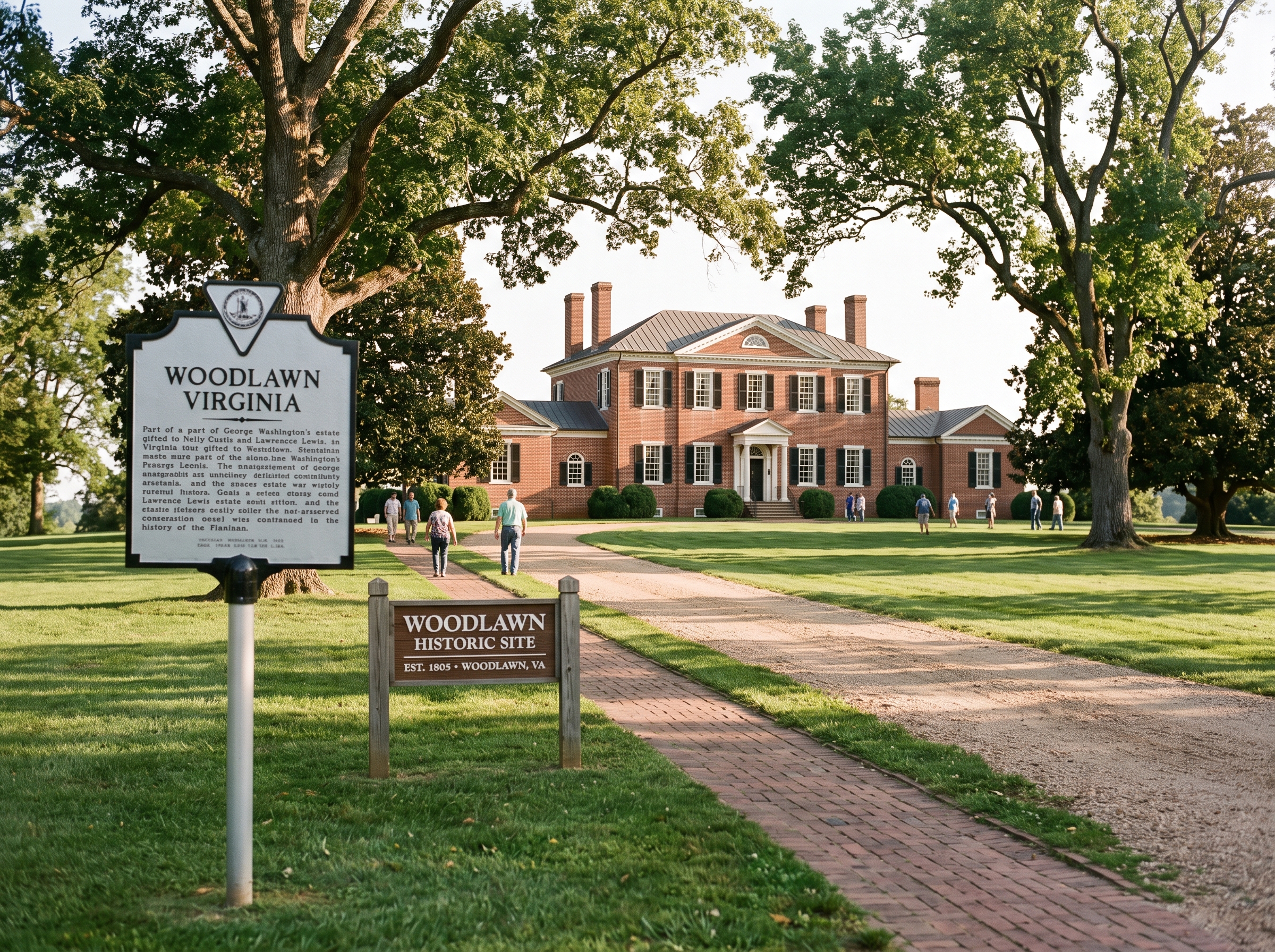
- Foundational American Heritage: Originally surveyed as part of George Washington's Mount Vernon estate (Dogue Run Farm), Woodlawn was carved from 2,000 acres gifted in 1799 by Washington to his step-granddaughter Eleanor "Nelly" Custis and nephew Major Lawrence Lewis. The Georgian/Federal brick manor was designed by Dr. William Thornton, the first Architect of the United States Capitol, and in 1951 became the first historic site acquired by the National Trust for Historic Preservation.
- Frank Lloyd Wright Usonian Masterpiece: Home to the internationally celebrated Pope-Leighey House, designed in 1940 by master architect Frank Lloyd Wright. Meticulously rescued from the path of Interstate 66 in 1964 and relocated to the Woodlawn estate grounds, the residence stands as an iconic national exemplar of Wright's organic architecture and radiant heating principles.
- Immediate Fort Belvoir Defense Corridor Adjacency: Directly borders the Fort Belvoir Military Reservation, providing unparalleled convenience for defense leadership, military officers, civil servants, and medical staff commuting to Fort Belvoir headquarters, the Defense Logistics Agency (DLA), the National Museum of the U.S. Army, and Fort Belvoir Community Hospital.
- Embark Richmond Highway BRT Catalyst: Positioned as a major beneficiary of the multi-million-dollar Embark Richmond Highway Bus Rapid Transit initiative, creating dedicated median transit lanes connecting Woodlawn and Fort Belvoir directly north to the Huntington Metrorail Station (Yellow Line).
- Diverse Housing Spectrum & Coastal Topography: Features established post-war and 1960s all-brick ramblers and split-levels in Woodlawn Manor and Mount Zephyr on generous quarter-acre to half-acre wooded lots, contemporary luxury waterfront and water-view custom homes along Dogue Creek, and executive brick-front townhome communities like Woodlawn Mews.
- Premier FCPS Mount Vernon High School Pyramid: Serviced by Fairfax County Public Schools through the neighborhood Woodlawn Elementary School and Washington Mill Elementary, Carl Sandburg Middle School (Full-Time Advanced Academic Programs AAP Level IV Center), and Mount Vernon High School (authorized International Baccalaureate IB World School).
1. Spatial Morphology, Coastal Plain Estuary & Geographic Setting
Woodlawn occupies a historic and ecologically rich position in southeastern Fairfax County, Virginia, situated within the Mount Vernon Magisterial District and carrying the Alexandria postal routing (ZIP code 22309). Encompassing approximately three square miles of coastal plain bluffs, tidal freshwater marshes, and rolling deciduous forests, the enclave is defined by its deep relationship with the Potomac River riverine estuary.
The community is bounded by distinctive geographical and military landmarks:
- Southern Boundary: The tidal estuary of Dogue Creek and Accotink Bay, flowing directly into the main stem of the Potomac River, alongside the historic grounds of George Washington's Mount Vernon estate.
- Western Boundary: Directly abuts the Fort Belvoir Military Reservation (the historic Belvoir peninsula), with immediate access through the Pence and Tulley Gates.
- Northern Boundary: Bordered by the South County residential sectors of Hybla Valley and the southern reaches of the 1,500-acre Huntley Meadows Park wetland sanctuary.
- Eastern Boundary: Bounded by Mount Vernon Memorial Highway (State Route 235) and the historic George Washington Memorial Parkway corridor.
The topography of Woodlawn rises from the freshwater tidal wetlands and salt-meadow marshes of Dogue Creek upward to an elevated coastal plateau cresting along Old Mill Road and Richmond Highway. This elevated ridge provided the commanding topographic promontory selected by George Washington and Dr. William Thornton for the construction of the Woodlawn manor house, offering sweeping panoramic vistas toward Mount Vernon and the Potomac River basin.
2. Historical Lineage: George Washington's Wedding Gift to the National Trust
Woodlawn occupies an extraordinary chapter in the founding chronicle of the United States. During the eighteenth century, the lands formed part of George Washington's 8,000-acre Mount Vernon agricultural estate, specifically designated as Dogue Run Farm.
In 1799, George Washington drafted his Last Will and Testament, reserving a prime 2,000-acre parcel on the estate's western ridge as a wedding gift for his beloved step-granddaughter, Eleanor "Nelly" Parke Custis (granddaughter of Martha Washington), and his favorite nephew, Major Lawrence Lewis. Washington envisioned a stately country seat that would keep his cherished family members in close proximity to Mount Vernon.
To design the mansion, Washington engaged Dr. William Thornton, the brilliant polymath and architect who won the national design competition for the United States Capitol and designed the Octagon House and Tudor Place in Georgetown. Completed between 1800 and 1805, the grand Georgian and Federal brick manor was christened "Woodlawn." Constructed using Aquia Creek sandstone lintels, hand-molded Flemish bond red brick, and classical Adam-style interior woodwork, Woodlawn became a center of early American society, hosting the Marquis de Lafayette, Chief Justice John Marshall, and President Andrew Jackson.
In 1846, the estate took on another profound historical role when a group of northern Quaker abolitionists led by Chalkley Gillingham and Jacob Troth purchased the property. Committed to demonstrating that agriculture could thrive profitably without enslaved labor, the Quakers subdivided the plantation into smaller family farms operated exclusively with free labor, establishing an integrated Quaker meeting house, school, and cooperative community that stood as a moral lighthouse in antebellum Virginia.
In 1951, recognizing Woodlawn's singular architectural and historical significance, the National Trust for Historic Preservation acquired the property, making Woodlawn the very first historic site in the organization's national portfolio. Today, the estate is preserved as a public historic museum, host to the annual National Needlework Exhibition, educational symposia, and agricultural conservation initiatives.
3. Architectural Significance: Federal Grandeur to Frank Lloyd Wright's Usonian Masterwork
Woodlawn possesses a concentration of nationally registered architectural landmarks spanning two centuries of master builders:
The Woodlawn Manor House (Dr. William Thornton, 1800–1805)
The centerpiece of the historic district is the Woodlawn manor house, an architectural triumph of late Georgian and early Federal design. Thornton utilized a tripartite five-part Palladian composition: a central two-story rectangular block crowned by a low-pitched hip roof, flanked by symmetrical one-story hyphens connecting to outer flanking service pavilions.
The mansion features a monumental semicircular portico on the riverfront facade supported by four slender Doric columns, fine Flemish-bond brickwork with Aquia sandstone belt courses, and exquisite interior plaster ceiling medallions. The elevated siting captures prevailing breezes off the Potomac River, reflecting early climate-responsive architectural planning.
Frank Lloyd Wright's Pope-Leighey House (Built 1940, Relocated 1964)
Situated on the wooded grounds of Woodlawn is the world-renowned Pope-Leighey House, designed in 1940 by master architect Frank Lloyd Wright. Originally commissioned by journalist Loren Pope in Falls Church, Virginia, the home represents Wright's visionary "Usonian" design—an organic, modest architectural form created to deliver high aesthetic quality, natural materials, and functional efficiency to middle-class American families.
When the construction of Interstate 66 threatened the home with demolition in 1964, homeowner Marjorie Leighey partnered with the National Trust and the Commonwealth of Virginia to meticulously dismantle and relocate the residence to the Woodlawn estate. Notable architectural features include:
- Organic Wood Construction: Built entirely of natural tidewater red cypress board-and-batten walls fastened with piano hinges, native brick masonry hearths, and glass fenestration.
- Radiant In-Slab Heating: One of America's earliest applications of gravity radiant floor heating, featuring hot water pipes embedded within scored concrete floor slabs.
- Cantilevered Flat Rooflines & Clerestories: Floating cantilevered overhangs and intricately patterned perforated wooden clerestory window grilles that cast shifting geometric shadow patterns throughout the living pavilion as the sun moves across the sky.
George Washington's Gristmill Historical State Park (Est. 1771)
Located on Mount Vernon Memorial Highway at Dogue Creek, Washington's Gristmill is a reconstructed four-story stone merchant gristmill and whiskey distillery. Operating commercially in the 1770s, Washington utilized revolutionary automated milling technology patented by inventor Oliver Evans, producing superfine flour exported across Europe and the West Indies, alongside one of eighteenth-century America's largest rye and corn whiskey distilleries.
4. Residential Architecture & Distinct Micro-Enclaves
Beyond its national landmarks, Woodlawn encompasses an appealing and varied residential landscape ranging from post-war brick subdivisions to secluded waterfront enclaves:
Woodlawn Manor & Woodlawn Terrace (1955–1968)
Platted during the mid-century suburban expansion, neighborhoods like Woodlawn Manor and Woodlawn Terrace feature solid red brick ramblers and split-levels nestled along mature tree-lined avenues. These residences offer finished living areas spanning 1,800 to 2,800 square feet, set on spacious quarter-acre to third-acre lots.
Key architectural features include solid masonry facades, oak hardwood strip flooring, formal living rooms with natural wood-burning brick fireplaces, and full finished subterranean walkout basements opening to private fenced rear lawns. Many properties have been expanded with contemporary kitchen updates, screened rear outdoor porches, and multi-car garages.
Mount Zephyr & Dogue Creek Waterfront Enclaves
Bordering Mount Vernon Memorial Highway and Dogue Creek, the Mount Zephyr enclave and adjacent lanes present an idyllic blend of mid-century single-family homes and bespoke custom waterfront residences. Properties situated along Dogue Creek enjoy private docks, riparian water access for kayaking and canoeing, and sweeping views across tidal marshes and mature forest preserves.
Custom residences built over the past two decades feature 3,800 to 6,500 finished square feet, three-car garages, architectural stone water tables, multi-story open-concept living halls, and primary bedroom suites with private water-facing balconies.
Executive Townhome Communities (Woodlawn Mews & Potomac Valley)
For buyers seeking maintenance-free residential living with close proximity to Fort Belvoir, communities like Woodlawn Mews deliver attractive multi-level brick-front townhomes. These residences span 1,600 to 2,400 finished square feet, featuring three finished levels, lower-level family recreation suites with walkouts to private fenced brick patios, eat-in country kitchens, and reserved parking.
5. Comprehensive Architectural Typologies Comparison Table
The following analytical matrix summarizes the primary residential typologies represented throughout the Woodlawn submarket, detailing structural footprints, construction materials, and micro-enclave distributions:
| Architectural Typology | Primary Eras Platted | Finished Living Area | Structural & Facade Materials | Lot Profiles & Primary Enclaves |
|---|---|---|---|---|
| Mid-Century Brick Ramblers | 1955 – 1968 | 1,800 – 2,800 sq ft (with finished basement) | Solid all-brick masonry, concrete footings, slate/asphalt gables | 0.25 to 0.40-acre wooded lots; Woodlawn Manor, Woodlawn Ter |
| Split-Level & Split-Foyer Homes | 1960 – 1975 | 2,000 – 2,750 sq ft (tri-level & split-foyer) | Brick veneer and architectural siding, multi-tier rooflines, lower-level walkouts | 0.22 to 0.35-acre terraced parcels; Mount Zephyr, Old Mill Rd border |
| Traditional Center-Hall Colonials | 1968 – 1985 | 2,500 – 3,600 sq ft (across 3 finished levels) | Full brick facades, double-hung windows, decorative shutters, attached garages | 0.25 to 0.45-acre lots; Pole Road enclaves, Woodlawn park borders |
| Bespoke Waterfront Custom Estates | 1995 – Present | 3,800 – 6,500+ sq ft (3 finished levels) | Natural stone, hardiplank, multi-story glass curtain walls, private docks | 0.50 to 1.25-acre riparian lots; Dogue Creek waterfront, Mount Vernon Memorial Hwy |
| Executive Infill Townhomes | 1980 – 2010 | 1,600 – 2,400 sq ft (3 levels) | Brick-front masonry, timber-truss roofs, fenced garden patios | Zero-lot-line HOA parcels; Woodlawn Mews, Mount Zephyr Townhomes |
6. Defense Community Proximity & The Fort Belvoir Gateway
A primary geographic advantage of Woodlawn is its direct adjacency to the Fort Belvoir Military Reservation. Fort Belvoir serves as the largest military employer in Northern Virginia, housing over 140 tenant organizations spanning all branches of the Armed Forces:
- Immediate Gate Access: Woodlawn residents enjoy direct proximity to Fort Belvoir's Pence Gate (along Route 1) and Tulley Gate, reducing daily vehicular commutes to less than five minutes for defense personnel.
- Major Defense Agencies: Headquarters for the Defense Logistics Agency (DLA), the Defense Contract Audit Agency (DCAA), the Army Cyber Command, and key intelligence directorates.
- World-Class Healthcare: Home to the Fort Belvoir Community Hospital, a premier flagship military medical treatment facility delivering comprehensive trauma, surgical, and pediatric care to service members, veterans, and military families.
- National Museum of the United States Army: Located on the post grounds adjacent to Woodlawn, this acclaimed national museum showcases over 245 years of Army history, technological artifacts, and interactive educational pavilions.
7. Public Education & The Mount Vernon High School Academic Pyramid
Public education in Woodlawn is administered by the acclaimed Fairfax County Public Schools (FCPS) division, primarily aligned with the comprehensive Mount Vernon High School pyramid:
Woodlawn Elementary School & Washington Mill Elementary
Located directly within the neighborhood on Woodlawn Road, Woodlawn Elementary School provides Pre-K through sixth-grade foundational instruction. The school is celebrated for innovative literacy programs, hands-on STEAM laboratories, dedicated English for Speakers of Other Languages (ESOL) support, and community engagement.
Portions of the community are also served by Washington Mill Elementary School, situated just east along Mount Vernon Memorial Highway, recognized for advanced academic enrichment and environmental science projects utilizing surrounding wetlands.
Carl Sandburg Middle School
For grades seven and eight, Woodlawn students attend Carl Sandburg Middle School, located on Fort Hunt Road. Sandburg Middle School is a regional educational powerhouse housing a dedicated Full-Time Advanced Academic Programs (AAP) Level IV Center. Offerings include accelerated mathematics (Algebra I and Geometry), honors science and humanities, world language immersion, an award-winning band and orchestra department, and competitive robotics.
Mount Vernon High School
Secondary education culminates at Mount Vernon High School, an authorized International Baccalaureate (IB) World School. Mount Vernon High delivers the rigorous IB Diploma Programme, recognized worldwide for its academic depth and analytical rigor. The school also features specialized academies in healthcare, computer science, and engineering, complemented by championship athletic teams and fine arts.
8. Commuter Logistics & Multimodal Connectivity
Woodlawn enjoys robust multimodal commuter transit options connecting to regional employment hubs:
Embark Richmond Highway Bus Rapid Transit (BRT)
Woodlawn is positioned at the southern terminus of the transformative Embark Richmond Highway BRT initiative sponsored by Fairfax County and VDOT. The project introduces dedicated median-running transit lanes along Route 1, providing rapid, rail-like bus rapid transit connecting Fort Belvoir and Woodlawn directly north to the Huntington Metrorail Station (Yellow Line) in under twenty minutes.
Metrorail & Commuter Rail Stations
- Huntington Metrorail Station (Yellow Line Terminus): Located approximately six miles north, providing a direct one-seat subway ride to Old Town Alexandria, Reagan National Airport (DCA), Amazon HQ2 at National Landing, the Pentagon, and downtown Washington, D.C.
- Franconia-Springfield Metrorail & VRE Station: Located six miles northwest, offering Blue Line Metrorail services alongside the Virginia Railway Express (VRE) Fredericksburg Line for commuter rail travel to Union Station.
Highway & Scenic Arterial Networks
- U.S. Route 1 (Richmond Highway): Primary north-south arterial running through the center of Woodlawn, leading directly north to Alexandria and south into Woodbridge and Prince William County.
- Mount Vernon Memorial Highway (Route 235): A scenic state highway offering a park-like commuter route through Mount Vernon to the George Washington Memorial Parkway.
- Interstate 95 / Capital Beltway (I-495): Accessible in approximately ten minutes via Route 1 or the Fairfax County Parkway (Route 286).
9. Parks, Recreation & Environmental Sanctuaries
Woodlawn is surrounded by extraordinary natural sanctuaries and recreational infrastructure:
Woodlawn Estate & Pope-Leighey Grounds
Residents have year-round access to the historic grounds of Woodlawn and the Pope-Leighey House, featuring walking trails, community gardens, historic pastures, and cultural festivals hosted by the National Trust for Historic Preservation.
The Mount Vernon Trail & George Washington Gristmill State Park
- The Mount Vernon Trail: The southern trailhead of the celebrated 18-mile paved Mount Vernon Trail originates less than two miles east at Mount Vernon, winding north along the Potomac River shoreline through Old Town Alexandria, past DCA Airport, and across the Potomac into Washington, D.C.
- George Washington's Gristmill Historical State Park: Located on Route 235, this Virginia state park features historic walking paths, interpretive mill tours, and scenic vistas along Dogue Creek.
- Huntley Meadows Park: Bordering to the north, offering 1,500 acres of preserved freshwater wetlands, boardwalk trails, and wildlife observation towers.
- Mount Vernon RECenter: Located just five minutes north on Route 1, providing a 50-meter indoor Olympic swimming pool, an indoor ice skating rink, fitness equipment, and children's sports programs.
10. Commercial Corridors, Gourmet Dining & Retail Centers
Woodlawn residents enjoy immediate access to neighborhood daily conveniences and premier regional commercial hubs:
Local Daily Conveniences & Mount Vernon Plaza
Along the Route 1 corridor through Woodlawn, commercial centers provide full-service grocery stores, international food markets, specialty bakeries, pharmacies, veterinary clinics, banking institutions, and automotive services. Located just north along Route 1, Mount Vernon Plaza hosts major national retail anchors, home goods stores, and diverse dining establishments.
Hilltop Village Center (Wegmans) & Old Town Alexandria
Just ten minutes west via Telegraph Road, the Hilltop Village Center is anchored by a flagship Wegmans supermarket, alongside artisan coffee shops, specialty medical clinics, and upscale casual restaurants.
For world-class fine dining, historic brick-lined King Street in Old Town Alexandria is located just fifteen minutes north, offering James Beard-recognized chef-driven restaurants, historic waterfront dining, and boutique retail shopping.
11. Structural Maintenance, Building Mechanics & Estuary Stewardship
Homeownership within a coastal riverine environment like Woodlawn involves distinct structural and mechanical considerations:
Crawlspace Vapor Barriers & Moisture Control
Because Woodlawn sits near coastal plain drainage basins and tidal creeks, homes featuring crawlspace foundations or subterranean basements must manage subsurface humidity. Best homeowner practices include installing continuous heavy-duty (12-mil to 20-mil) reinforced polyethylene vapor barriers across crawlspace earth, encapsulating crawlspaces with dedicated commercial dehumidifiers, and maintaining positive soil grading sloping downward away from foundation walls.
Underground Sewer Lateral Video Scoping
For mid-century single-family homes constructed in the 1950s and 1960s, sanitary plumbing originally utilized cast iron or vitrified clay sewer laterals connecting to the Fairfax County public municipal sewer main. Pre-purchase home inspections should include a fiber-optic video camera sewer scope inspection to identify potential root intrusion from mature oak trees and assess structural pipe integrity.
Electrical Service Panel Modernization
Older post-war homes with original 60-amp or 100-amp electrical services should be modernized to 200-amp breaker panels equipped with modern Arc-Fault Circuit Interrupters (AFCI) and Ground-Fault (GFCI) circuit protection to safely accommodate modern central air conditioning, dual-fuel heat pumps, and electric vehicle (EV) charging stations.
12. Real Property Tax Equalization & Fairfax County DTA Assessment Framework
Real estate taxation in Woodlawn is governed strictly under the statutory framework of the Commonwealth of Virginia and the governing authority of Fairfax County. Because Woodlawn is an unincorporated census-designated place within Fairfax County, property owners are subject exclusively to Fairfax County real property levies, with zero municipal city or town taxes.
Virginia Code Title 58.1-3201: The 100% Fair Market Value Mandate
Under Virginia Code § 58.1-3201, all real property in Virginia must be assessed for tax purposes at one hundred percent (100%) of its true fair market value. The Fairfax County Department of Tax Administration (DTA) conducts comprehensive annual reassessments of every taxable parcel in Woodlawn. Valuations are established through computerized mass appraisal market equalization based on verified arm's-length sales of comparable properties within identical neighborhood submarket codes, accounting for lot size, topography, water proximity, structural improvements, and physical condition.
Annual Assessment Calendar & Payment Schedules
- January 1 (Statutory Effective Date): Property assessments are legally established as of January 1 of each calendar year, reflecting real estate market transactions occurring during the preceding twelve months.
- Late February (Assessment Notice Distribution): The DTA mails official Notice of Real Estate Assessment cards to all property owners, itemizing land value, structural improvement value, and total equalized taxable valuation.
- Semi-Annual Payment Deadlines: Real estate tax payments in Fairfax County are billed in two equal installments:
- First Installment: Statutorily due on or before July 28.
- Second Installment: Statutorily due on or before December 5.
- Countywide Dedicated Levies: Properties in Woodlawn are subject to the Countywide Stormwater Management Service District Tax, dedicated to maintaining stream valley restoration, dam safety, and Dogue Creek watershed protection.
Statutory Assessment Appeals Mechanism
Property owners who believe their annual assessment exceeds fair market value, is non-uniform compared to contiguous properties, or contains clerical errors have the legal right to challenge the valuation through a formal two-tiered process:
- Administrative Review: An informal appeal submitted directly to the Department of Tax Administration, typically required by early April. An assigned county residential appraiser reviews structural data, square footage calculations, physical property condition, and relevant sales comps.
- Board of Equalization (BOE) Appeal: A formal evidentiary appeal submitted to the citizen-led Board of Equalization of Real Estate Assessments, typically requiring filing by June 1. If dissatisfied with the BOE ruling, property owners retain the statutory right to file a petition with the Circuit Court of Fairfax County under Virginia Code § 58.1-3984.
13. Frequently Asked Questions Regarding Woodlawn, VA Real Estate
Is Woodlawn an incorporated town or an unincorporated community in Fairfax County?
Woodlawn is an unincorporated census-designated place (CDP) governed directly by the Fairfax County Board of Supervisors within the Mount Vernon Magisterial District. It utilizes an Alexandria postal address (ZIP code 22309) for mailing routing purposes, but it is entirely located within Fairfax County. Public education, emergency rescue, police protection, and land-use zoning are administered by Fairfax County.
What is the historical origin of Woodlawn and its connection to George Washington?
The land comprising Woodlawn was originally part of George Washington's Mount Vernon estate (Dogue Run Farm). In 1799, Washington gifted 2,000 acres to his step-granddaughter, Eleanor "Nelly" Custis, and his nephew, Major Lawrence Lewis, upon their marriage. Dr. William Thornton, the first Architect of the U.S. Capitol, designed the Georgian/Federal brick manor house completed in 1805. In 1951, Woodlawn became the first historic site acquired by the National Trust for Historic Preservation.
What is the Pope-Leighey House located in Woodlawn?
The Pope-Leighey House is a celebrated Usonian masterwork designed in 1940 by master architect Frank Lloyd Wright. Threatened by the construction of Interstate 66 in Falls Church in 1964, the house was meticulously relocated to the Woodlawn estate grounds. It features Wright's organic architecture principles: cypress board-and-batten walls, radiant floor heating, cantilevered roofs, and patterned clerestory cutouts.
What architectural styles characterize residential neighborhoods in Woodlawn?
Woodlawn features an attractive architectural continuum: post-WWII and 1960s solid brick ramblers and split-levels in established enclaves like Woodlawn Manor and Mount Zephyr; traditional center-hall Colonials; custom contemporary waterfront and water-view residences along Dogue Creek; and executive multi-level brick-front townhome communities like Woodlawn Mews.
Which public schools serve students residing in Woodlawn?
Woodlawn is served by Fairfax County Public Schools (FCPS) within the Mount Vernon High School pyramid. Students attend Woodlawn Elementary School (located within the community) or Washington Mill Elementary, advance to Carl Sandburg Middle School (home to a Full-Time Advanced Academic Programs AAP Level IV Center), and attend Mount Vernon High School, an authorized International Baccalaureate (IB) World School.
What parks, trails, and cultural attractions are located in and around Woodlawn?
Key attractions include the historic Woodlawn Estate and Frank Lloyd Wright's Pope-Leighey House, George Washington's Gristmill Historical State Park, the Mount Vernon Memorial Highway multi-use trail connecting to the 18-mile Mount Vernon Trail along the Potomac River, Huntley Meadows Park, and the Mount Vernon RECenter with an indoor Olympic pool and ice arena.
How does Woodlawn's location serve military and defense personnel at Fort Belvoir?
Woodlawn directly borders the Fort Belvoir Military Reservation, providing immediate access to the Pence Gate and Tulley Gate. Personnel enjoy commute times of less than five minutes to Fort Belvoir headquarters, the Defense Logistics Agency (DLA), Fort Belvoir Community Hospital, and the National Museum of the United States Army.
How does the Embark Richmond Highway Bus Rapid Transit (BRT) project affect Woodlawn?
The Embark Richmond Highway BRT project will extend dedicated median-running rapid transit along Route 1 directly to Fort Belvoir and Woodlawn, providing high-frequency, rapid transit connectivity north to the Huntington Metrorail Station (Yellow Line) and facilitating pedestrian, bicycle, and commercial streetscape revitalization.
What structural maintenance considerations are important for homes in Woodlawn?
Important considerations include conducting fiber-optic camera sewer scope inspections of underground cast iron lateral sewer lines, upgrading electrical service panels to modern 200-amp capacity with AFCI/GFCI protection, installing heavy-duty crawlspace vapor barriers, and maintaining proper exterior grading slopes to manage coastal plain soil moisture near Dogue Creek.
How are real estate property assessments and taxes governed in Woodlawn?
Under Virginia Code § 58.1-3201, all real property in Woodlawn is assessed annually at 100 percent of fair market value by the Fairfax County Department of Tax Administration (DTA). Notices are mailed every February based on verified arm's-length market sales, with payments due semi-annually on July 28 and December 5, and statutory appeal rights through the Board of Equalization.
14. Academic References, Historic Archives & Statutory Legal Disclaimers
This architectural monograph, environmental assessment, and regional real estate reference treatise incorporates verified historical archives, public planning documents, and statutory legal frameworks:
- Fairfax County Comprehensive Plan: Area IV, Mount Vernon Magisterial District Plan & Woodlawn Historic Overlay District (HOD) Regulations, Fairfax County Department of Planning and Development, Fairfax, Virginia.
- National Trust for Historic Preservation: Woodlawn Historic Landscape & Architecture Survey & Frank Lloyd Wright Pope-Leighey House Structural Documentation, Washington, D.C.
- Virginia Department of Transportation (VDOT): Embark Richmond Highway Bus Rapid Transit (BRT) Environmental Assessment and Fort Belvoir Terminal Area Studies, Richmond, Virginia.
- Fairfax County Public Schools (FCPS): Office of Facilities Planning, Mount Vernon High School Feeder Boundary Alignment Directory, Gatehouse Administration Center, Falls Church, Virginia.
- Code of Virginia (Statutory Authority): Title 58.1 (Taxation), § 58.1-3201 (Fair Market Value Mandates) and § 58.1-3370 (Board of Equalization Procedures), Commonwealth of Virginia, Richmond, Virginia.
- United States Geological Survey (USGS): Mount Vernon and Fort Belvoir 7.5-Minute Topographic Quadrangles, Dogue Creek and Accotink Bay Estuarine Surveys, Reston, Virginia.
Statutory Research & Regulatory Notice: This architectural monograph, environmental review, and submarket treatise is published strictly for informational, educational, and spatial orientation purposes. Real estate boundaries, school attendance zones, Bus Rapid Transit construction phases, and tax assessment schedules are subject to ongoing administrative modifications by the Fairfax County Board of Supervisors, the Fairfax County School Board, and the Virginia Department of Transportation (VDOT). This publication does not constitute formal appraisal valuations, structural architectural inspections, or legal counsel. Prospective purchasers and property owners must verify official parcel-specific records directly with the Fairfax County Department of Tax Administration (DTA) and Land Development Services (LDS).